



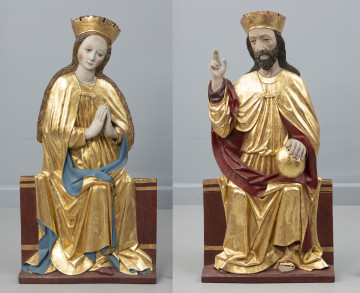
The Coronation of the Blessed Virgin Mary
circa 1450
National Museum in Szczecin
Part of the collection: Goldsmith craftsmanship
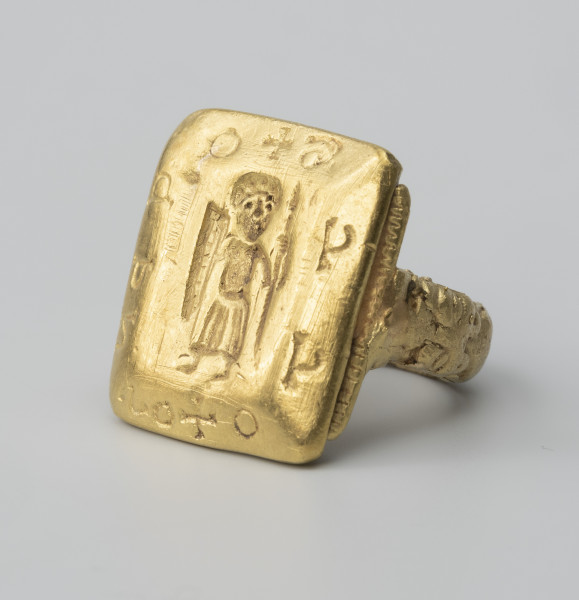
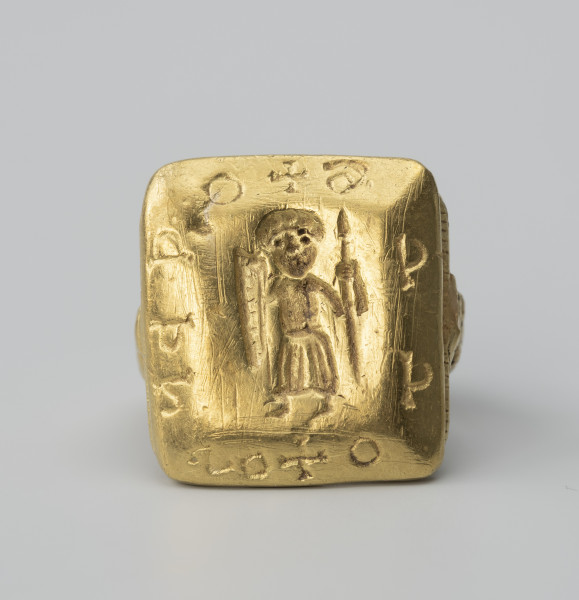
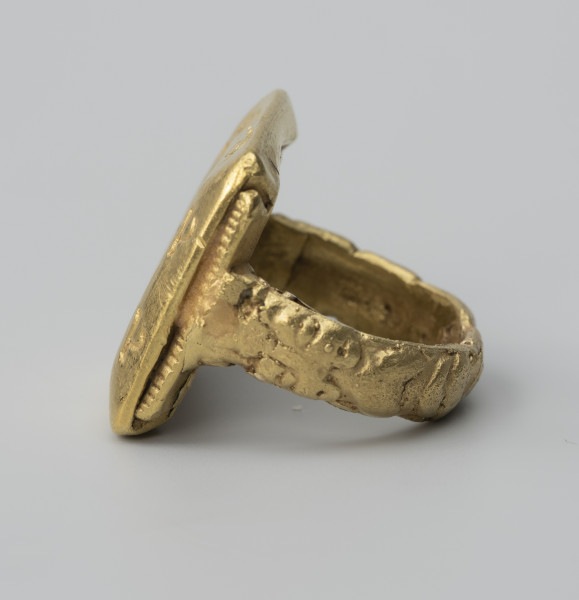
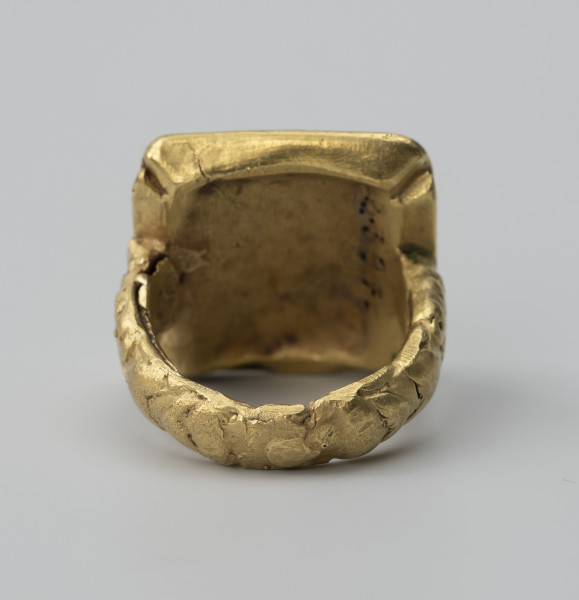
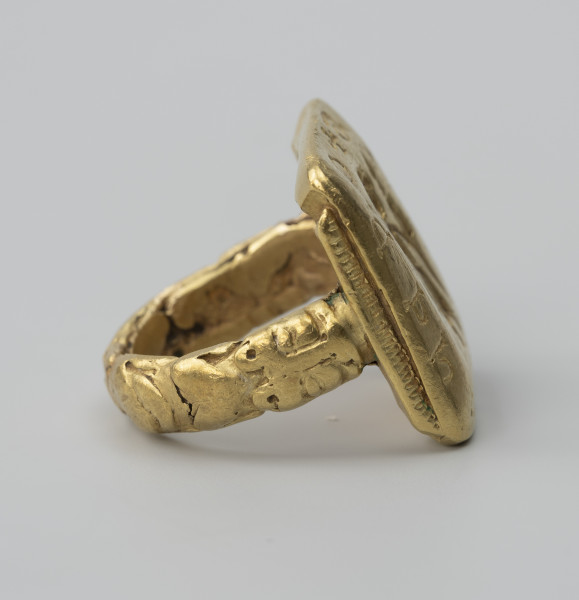
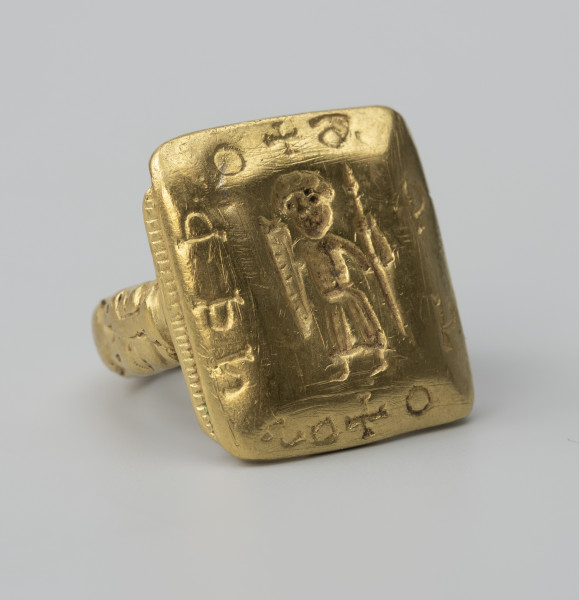
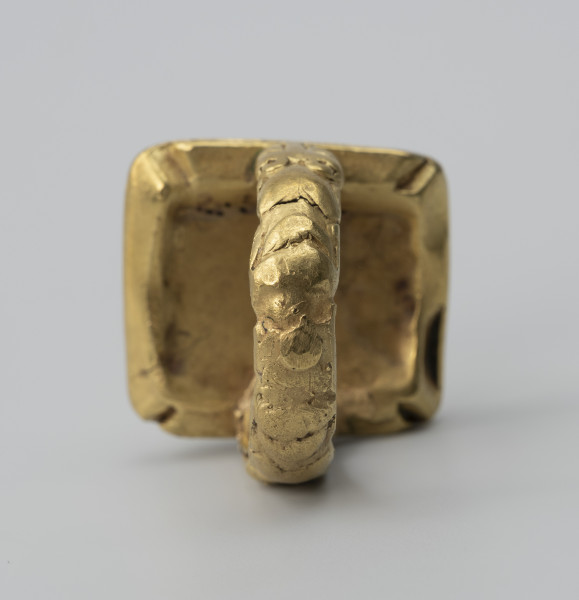
The medieval ring bearing the image of a knight was, according to accounts, one of two identical signet rings that remained in Pęzino Castle (West Pomeranian Voivodeship) until the end of World War II. Until the early 18th century, the estate belonged to the Pomeranian Borcke family and was later owned by the Puttkamer family. In the 1766 will of Adrian Ernest von Puttkamer, it was noted that the rings had been associated with Pęzino Castle “since ancient times” and belonged to the ancestors of his mother, Eva Diliana von Borcke. After World War II, the signet rings were considered lost. In the 1990s, one of them resurfaced in the collection of a private collector and was subsequently acquired for the museum collection by the Szczecin-based Bosman Brewery.
Researchers have long sought to decipher the mysterious symbols surrounding the image of the knight and to unravel the mystery of the two identical signet rings. Pre-war studies speculated that the rings might have been brought to Pomerania from a crusade to the Holy Land, serving as symbols of a secular association or a knightly order. They were linked to the Templars or the Knights Hospitaller, who owned Pęzino between 1382 and 1493.
The depiction of a standing knight with a spear and an elongated shield visible on the signet has many parallels in early medieval art. Similar imagery can be found on seals and coins of Central European rulers from the 12th and early 13th centuries. A comparable, schematically depicted figure with a distinctive hairstyle featuring evenly arranged curls around the head appears, for instance, on the denarii of Bolesław III Wrymouth (1086–1138). The iconography of the image suggests a type of seal belonging to a ruler – a duke or a magnate. However, for whom and for what purpose the two identical signet seals were created remains an unsolved mystery.
Monika Frankowska-Makała
Author / creator
Object type
signet rign
Technique
forging, engraving
Material
gold
Origin / acquisition method
donation
Creation time / dating
Creation / finding place
Owner
The National Museum in Szczecin
Identification number
Location / status
circa 1450
National Museum in Szczecin
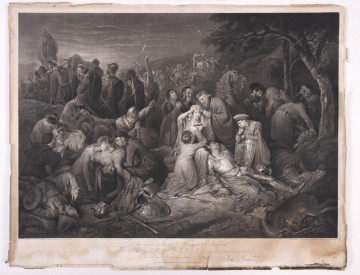
1814
National Museum in Szczecin
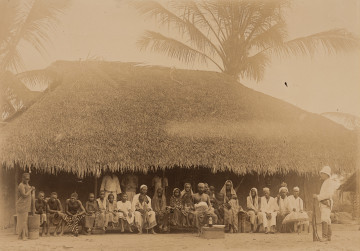
1893 — 1900
National Museum in Szczecin
DISCOVER this TOPIC
Museum of King Jan III's Palace at Wilanów
DISCOVER this PATH
Educational path