






Ornamental flowerpot
1501 — 1600
National Museum in Szczecin
Part of the collection: Middle Ages
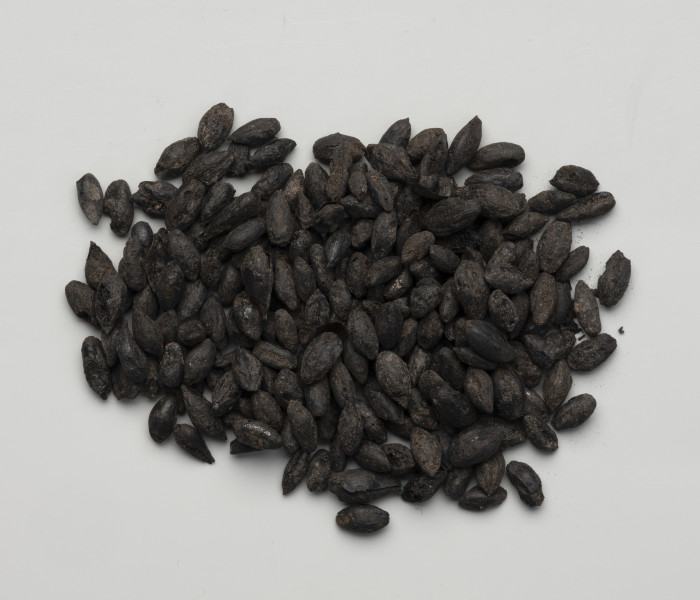
The foundation of the Slavic economy was agriculture, which dictated the rhythm of their daily lives. For this reason, settlement sites were chosen based on fertile soils and access to water. Surrounding areas were often adapted for cultivation by clearing or burning forests and woodlands. The most commonly grown grain in Western Pomerania was wheat in various varieties, though rye, millet, oats, and barley were also sown. Crop rotation was likely practised, with different grains planted each year, and some fields left fallow for periods of time. Harvests were cut using iron sickles and, after threshing, were stored in underground pits, likely lined with straw, or in large clay storage vessels. Grains were then ground on stone querns to the desired consistency for making porridge and flour. This flour was used to bake simple flatbreads, and later, bread, or added to cooked soups and gruels. Some of the harvest was set aside as fodder for livestock. In addition to cereals, the Slavs cultivated legumes such as peas and broad beans, as well as plants that provided both food and raw materials, flax and hemp, which were used for fibre and oil. Fruit trees were also planted. The plant-based diet of Western Pomerania’s inhabitants was supplemented by wild foods, including raspberries, blackberries, sorrel, mushrooms, and hazelnuts, which were particularly valuable in times of poor harvests. Ewa Górkiewicz-Bucka
Author / creator
Object type
cereal grains
Material
organic material
Origin / acquisition method
field research
Creation time / dating
Creation / finding place
Owner
The National Museum in Szczecin
Identification number
Location / status
1501 — 1600
National Museum in Szczecin

700 — 1250
National Museum in Szczecin
700 — 1250
National Museum in Szczecin
DISCOVER this TOPIC
Castle Museum in Łańcut
DISCOVER this PATH
Educational path