

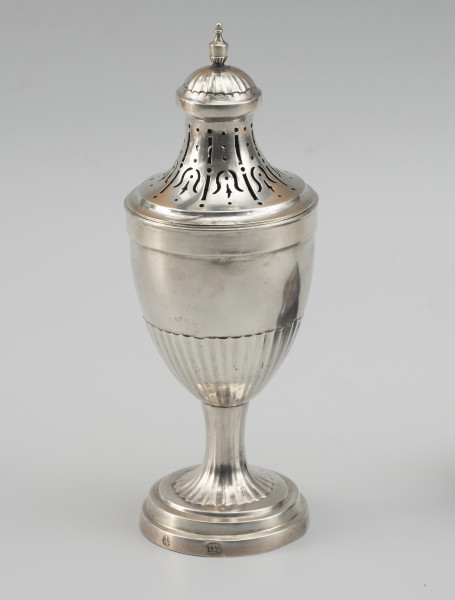


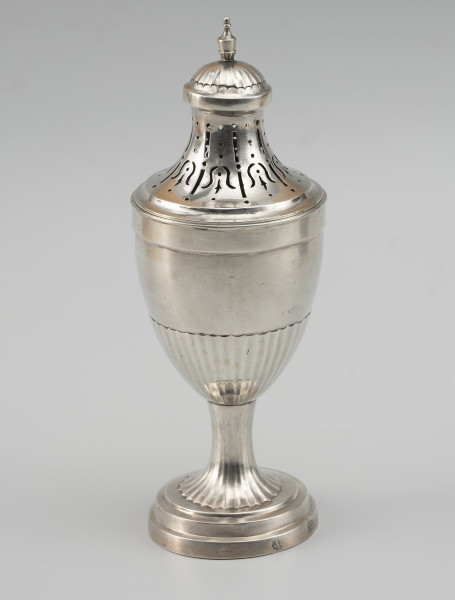
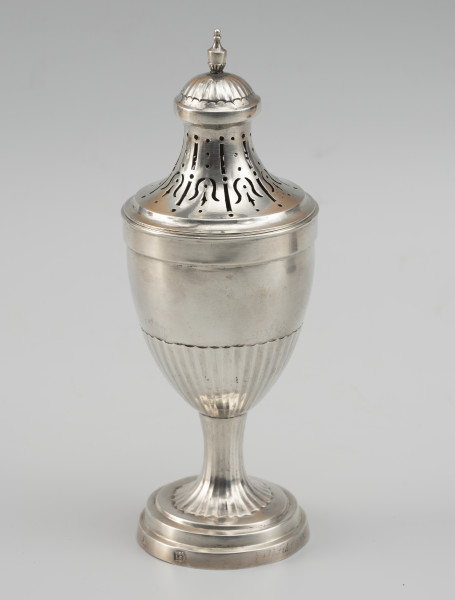
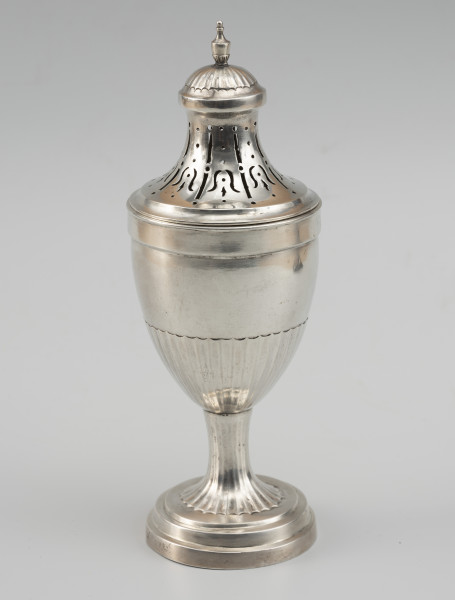
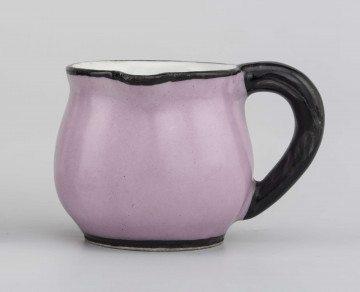
Creamer jug
1825 — 1835
National Museum in Lublin
Part of the collection: Goldsmith craftsmanship
The origins of Classicism are tied, among other things, to the discovery of ancient cities: Herculaneum in 1709 and Pompeii nearly forty years later. These cities had been buried under volcanic ash during the eruption of Mount Vesuvius in 79 CE. The findings from these excavations sparked a wave of fascination across Europe with the art of ancient Greece and Rome. The unearthed works were published, copied, and emulated, inspiring the development of a new artistic style. According to Johann Joachim Winckelmann (1717–1768), a German scholar of ancient art and one of the foremost theorists of Classicism, the ideal of beauty sought by contemporary artists was defined by “noble simplicity and quiet grandeur.” Classicist art was therefore characterised by symmetry, restraint in ornamentation, and references to ancient proportions, architectural orders, vessel shapes, and motifs.
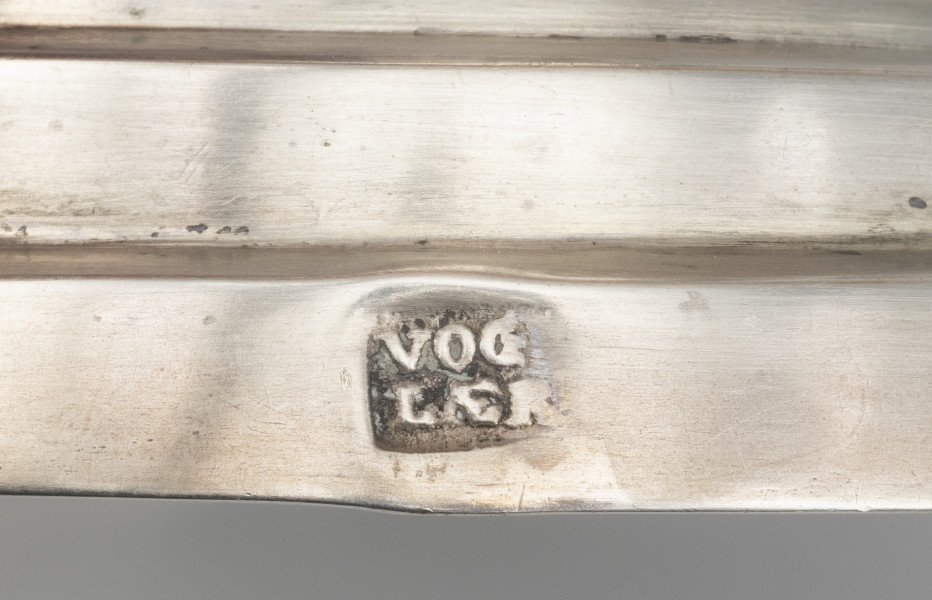
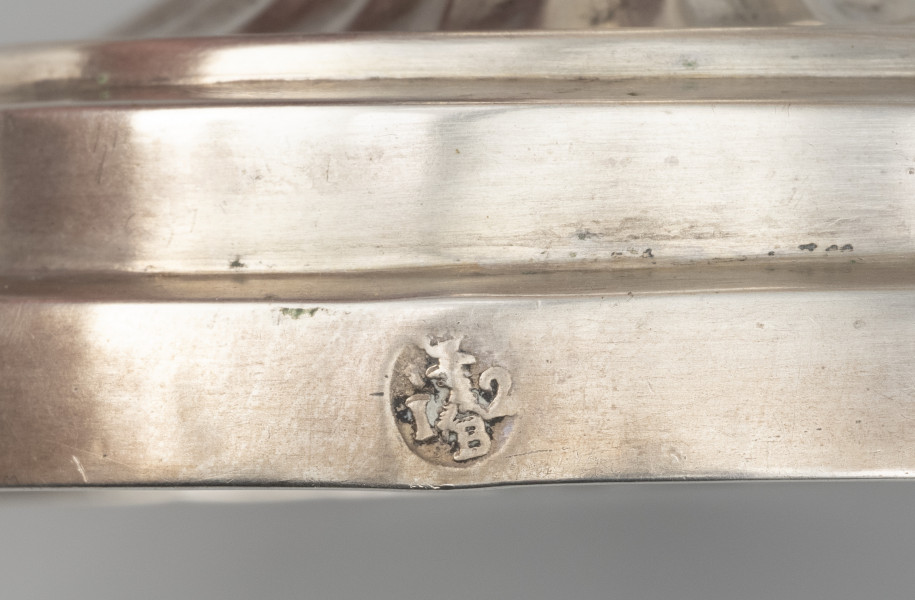
In Szczecin goldsmithing, Classicist tendencies emerged only in the 1780s and fully developed in the early 19th century. Few local examples of early Classicist works have survived to the present day. One of the most intriguing examples is a powdered sugar bowl, designed in the form of a lidded container with perforations, created in 1795 by Szczecin goldsmith Martin Ephraim Voggelaer (1761–1825). Its slender vase-like shape with a high, concave-sided lid topped by a semicircular dome draws inspiration from antiquity but is not a faithful reproduction of ancient vessels. The design is marked by a lightness of form, accentuated by delicate fluted decoration. The perforations for sprinkling sugar form a rhythmic pattern with stylised campanula motifs – bell-shaped flowers.
Monika Frankowska-Makała
Author / creator
Object type
sugar bowl
Technique
forging, repoussage, cutting out
Material
silver
Origin / acquisition method
purchase
Creation time / dating
Creation / finding place
Owner
The National Museum in Szczecin
Identification number
Location / status
1825 — 1835
National Museum in Lublin
1762 — 1770
National Museum in Szczecin

circa 1750 — 1770
National Museum in Szczecin
DISCOVER this TOPIC
Castle Museum in Łańcut
DISCOVER this PATH
Educational path