




Floating fishing rod
1920 — 1950
National Museum in Szczecin
Part of the collection: Traditional fishing
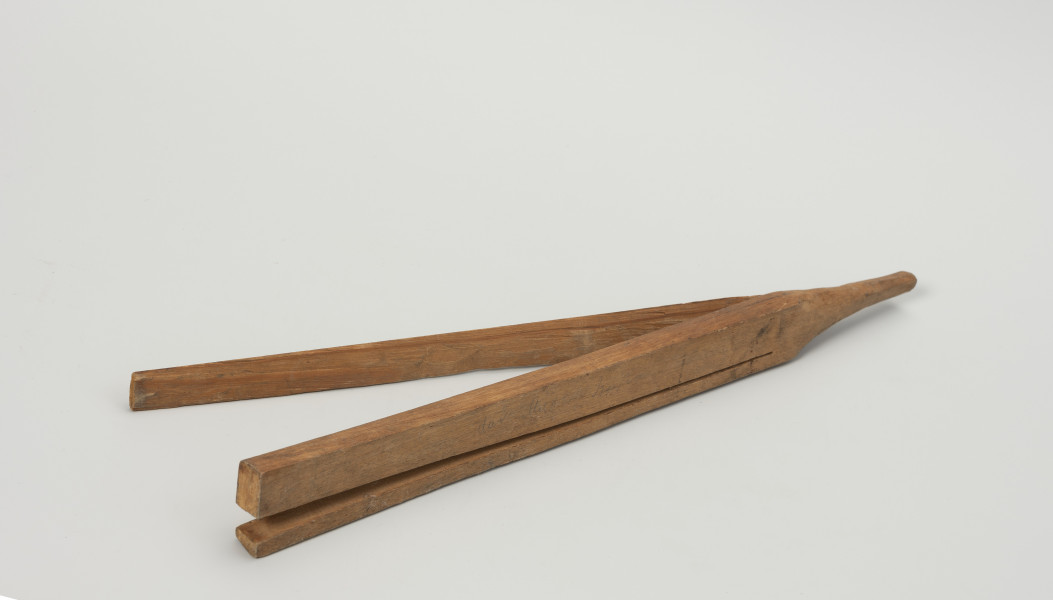
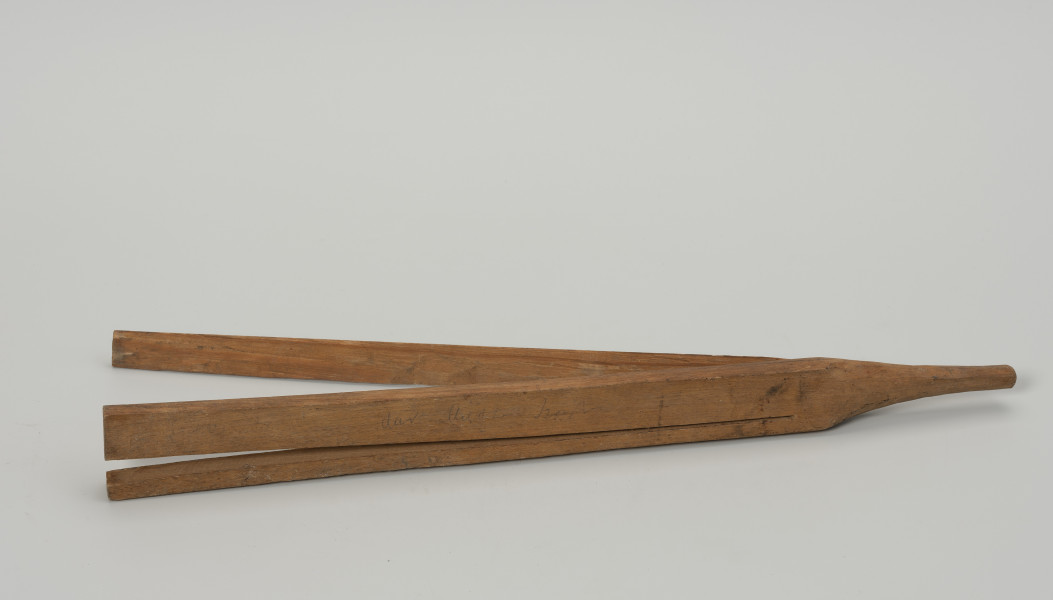
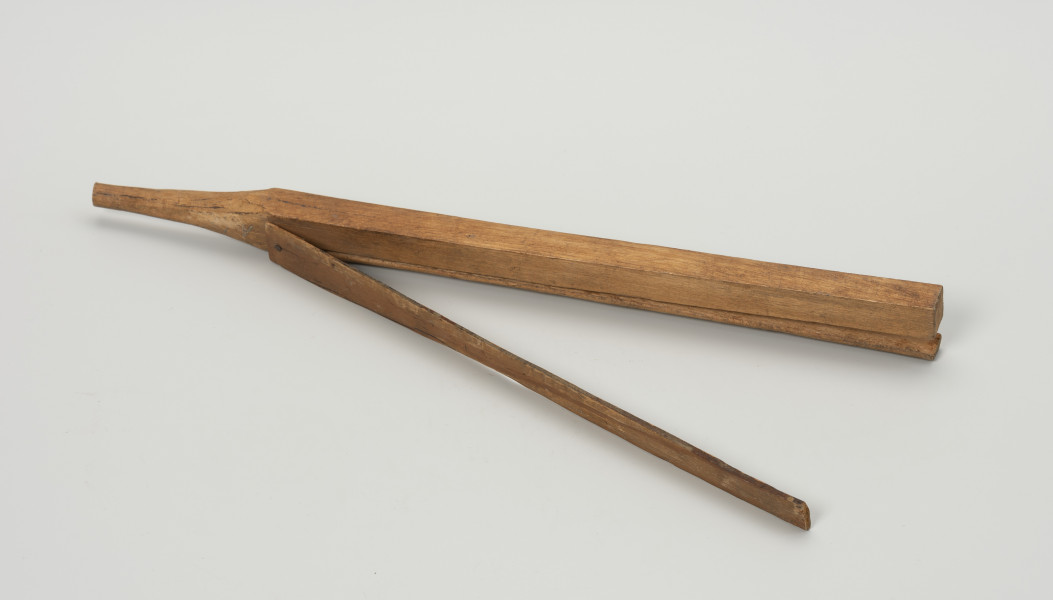
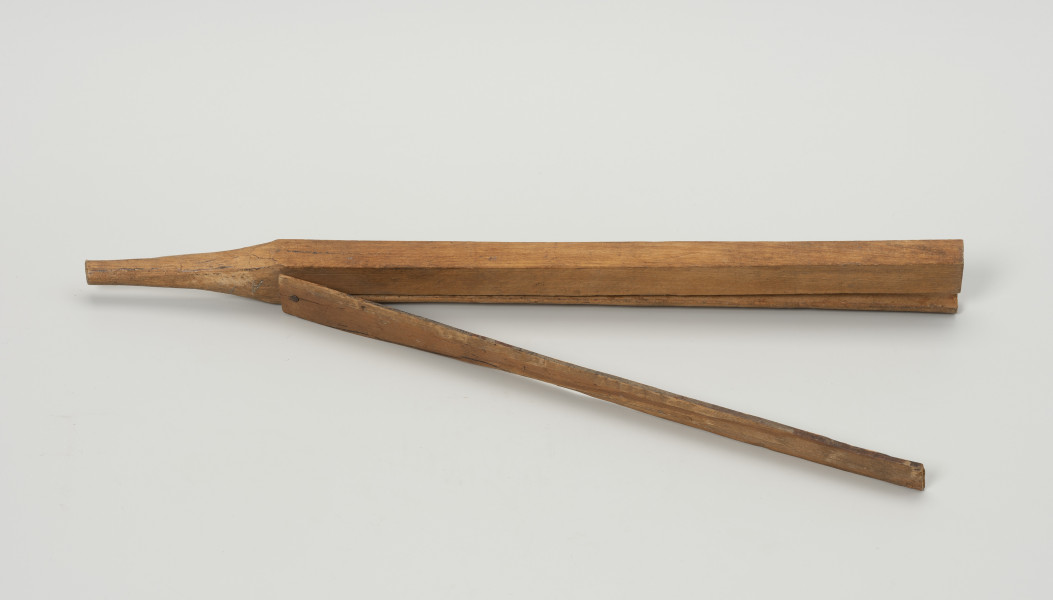
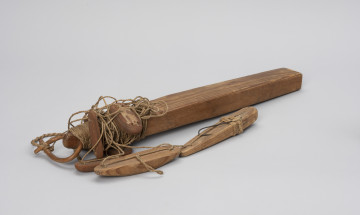
In the past, fishermen used racks to dry fish hooks and bait, shaped like a pole placed in a base. Horizontally attached to it were three or four boards with holes into which the hook clasps were inserted. The ethnographic collection of the National Museum in Szczecin contains 26 such clasps. The example here was donated, along with a set of various types of fishing equipment, by a fisherman from Międzywodzie to the Pomeranian Ethnography Department of the Szczecin museum in 1949. It has the shape of an elongated slat, split along 3/4 of its length at one end, with a sharpened tip at the other end, which fits into a hole in the arm of the drying rack. In the split middle of the clasp, strings with hooks – usually 100 in a set – were placed, maintaining their order on the main line, which formed a complete set of lines, called a klema. Above the slit, a flat pressing slat secured with a small nail was placed. These sets, hung on hooks (klogi) and placed on racks (kamdzeli), dried until the next fishing trip. Hook clasps were also commonly used in eel line fishing. For eel fishing, worms, crabs, and shrimp were used as bait, which was placed on the hooks in the morning. This task was usually assigned to women, children and the elderly. It was hard work in cold, damp farm buildings, and the bait had to be changed every day. Małgorzata Kłosińska-Grzechowiak
Author / creator
Object type
buckle, fishing tackle
Technique
hewn, planing
Material
wood, iron
Origin / acquisition method
donation
Creation time / dating
Creation / finding place
Owner
The National Museum in Szczecin
Identification number
Location / status
1920 — 1950
National Museum in Szczecin
1901 — 1950
National Museum in Szczecin
1901 — 1950
National Museum in Szczecin
DISCOVER this TOPIC
Castle Museum in Łańcut
DISCOVER this PATH
Educational path