



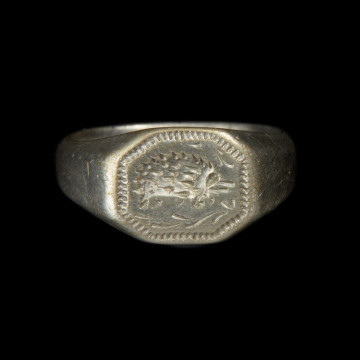
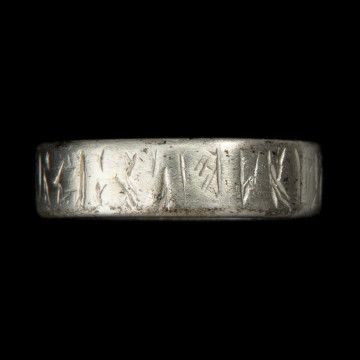
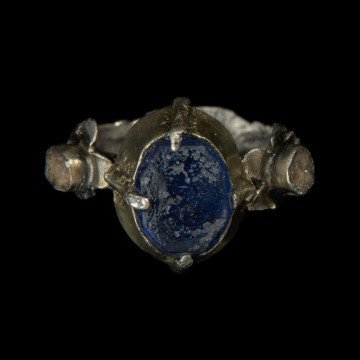
Signet ring with hedgehog
przełom XIV i XV wieku
National Museum in Szczecin
Part of the collection: Past attires
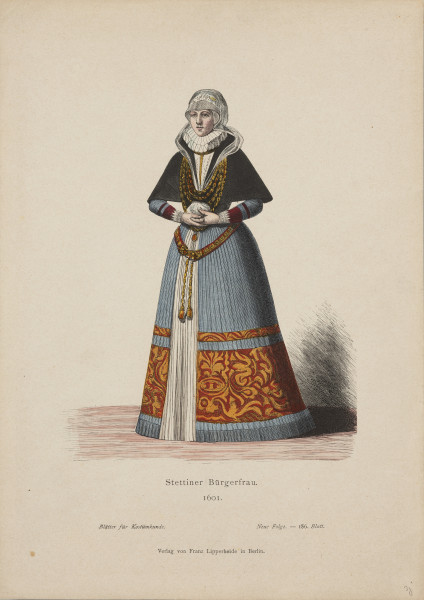
Interest in the folk culture of various German regions became evident during the Romantic period when artists sought inspiration in local folklore, the charm of rural landscapes, folk costumes, songs, and legends. The artistic admiration and collection of knowledge about the culture of different parts of the country formed the foundation of the emerging German national consciousness. It also solidified the birth of regional studies at the end of the 19th century, often pioneered by collectors and enthusiasts of history, literature, and art. An intriguing collection in the field of German costume history belonged to the Berlin publishing couple Franz von Lipperheide (1838–1906) and his wife Frieda (1840–1896). Frieda, who came from a baronial family, joined the editorial team of the fashion magazine Der Bazar as a young illustrator and writer, where she met her future husband, the bookseller Franz Lipperheide. Together, they founded the Franz Lipperheide publishing house, producing publications on the history of clothing and the women's magazine Die Modenwelt, which, translated into several languages, was distributed in many European cities. The Lipperheides became pioneers of costume studies, collecting archival materials and artifacts related to historical customs and fashion, particularly embroidery and lacework, as well as jewelry and military uniforms. In 1892, they donated their impressive collection to the royal museums in Berlin. The National Museum in Szczecin holds a printed engraving depicting the costume of a Szczecin townswoman from 1601, published by their Berlin publishing house Blätter für Costümkunde, edited by the artist and costume expert August von Heyden (1827–1897). The townswoman is shown wearing a richly decorated outfit indicative of her wealth. Around her waist hangs an ornate belt, and four gold chains, a typical piece of jewelry for affluent German women of the late 16th century, dangle from beneath the ruffled Renaissance collar around her neck. The cap on her head, covered with a delicate white scarf, signifies that she is married. The conical shape of her skirt and the ruff reflect the influence of Spanish fashion, which also shaped the tastes of the Pomeranian region at the turn of the 16th and 17th centuries. Małgorzata Peszko
Author / creator
Object type
graphic, illustration
Technique
drzeworyt sztorcowy barwny
Material
paper
Origin / acquisition method
purchase
Creation time / dating
Creation / finding place
Owner
The National Museum in Szczecin
Identification number
Location / status
przełom XIV i XV wieku
National Museum in Szczecin
przełom XIV i XV wieku
National Museum in Szczecin
National Museum in Szczecin
DISCOVER this TOPIC
Museum of King Jan III's Palace at Wilanów
DISCOVER this PATH
Educational path