

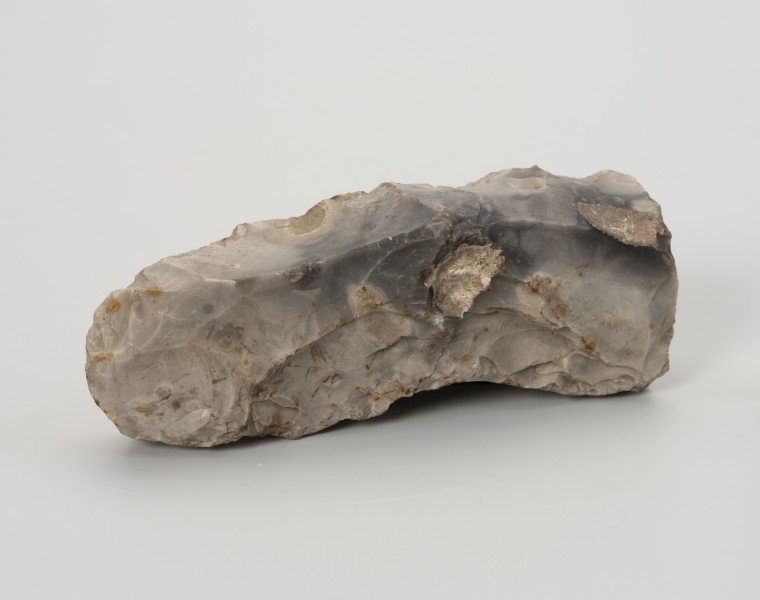


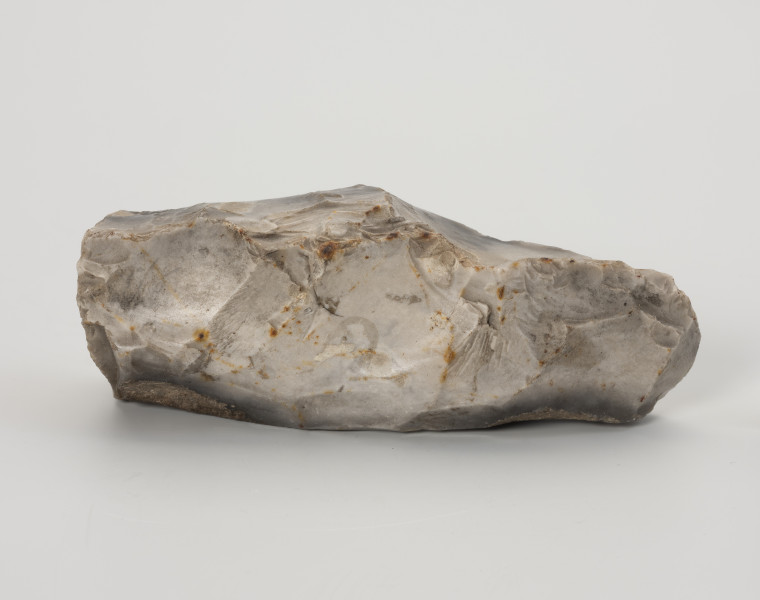
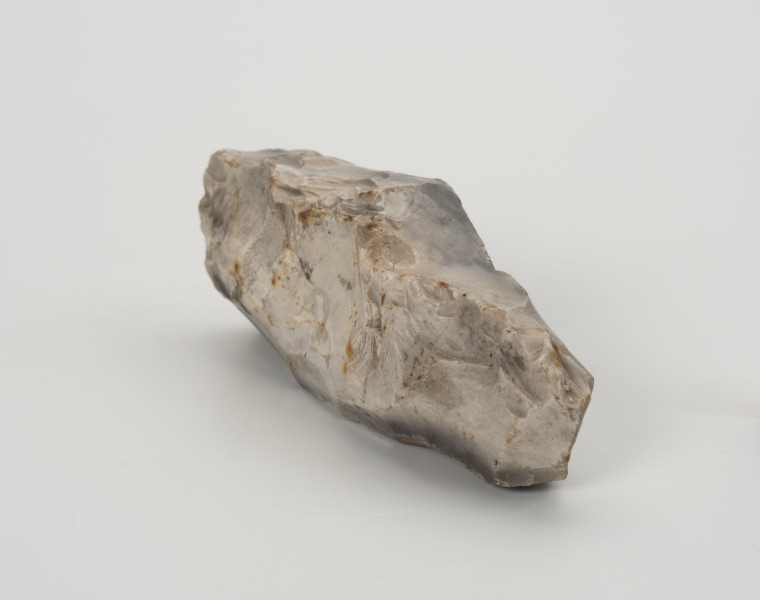
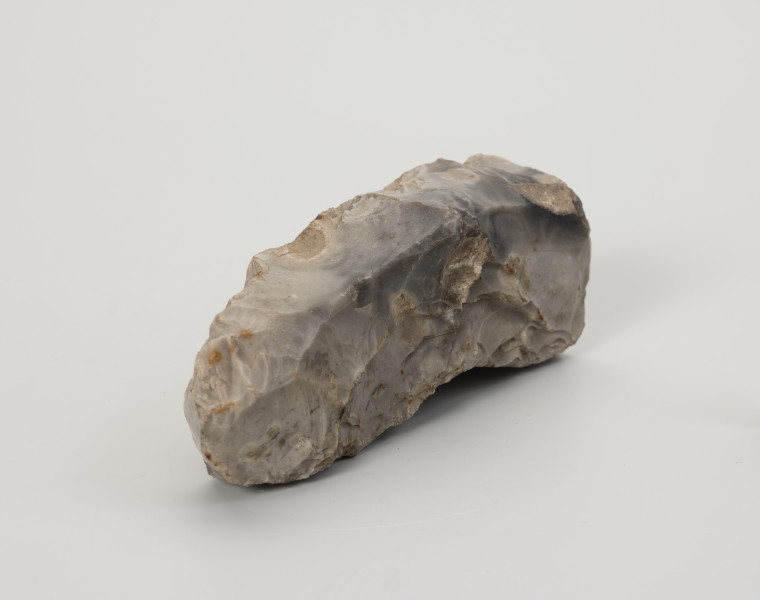
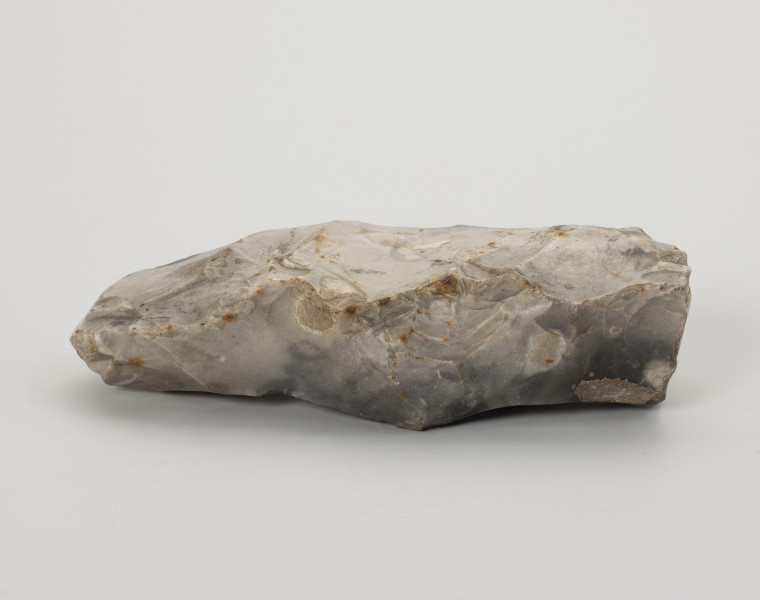
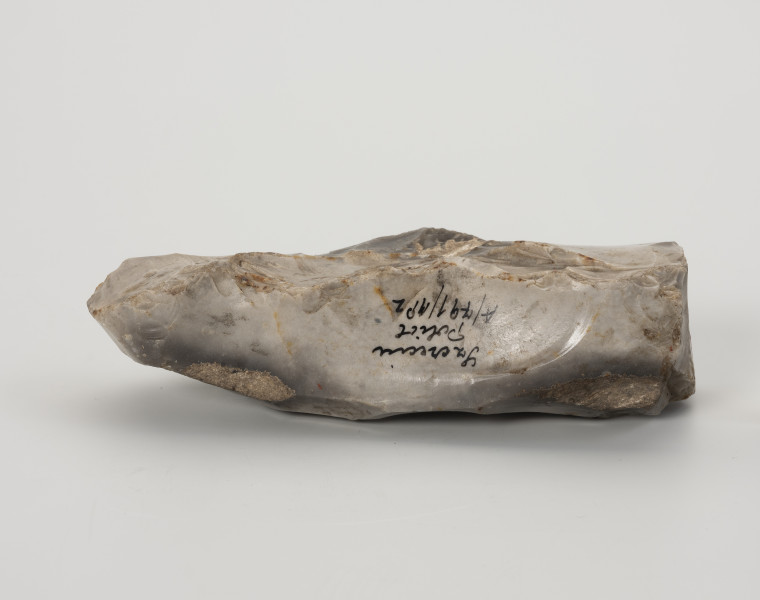

Single-jagged edge
11900 p.n.e. — 11000 p.n.e.
National Museum in Szczecin
Part of the collection: Stone Age
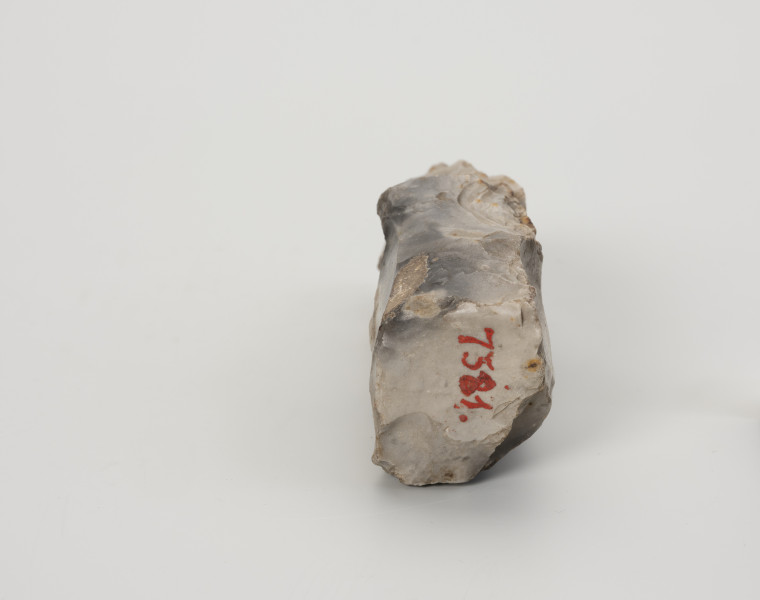
The precise context in which the presented chopper from Police was discovered remains unknown. Its original inventory number from the Gesellschaft für Pommersche Geschichte und Altertumskunde (1824–1945) suggests that it was donated to the Society in the second or third decade of the 20th century. The entire collection was later transferred to the Provinzialmuseum Pommerscher Altertümer, opened in 1927 and operating under the name Pommersches Landesmuseum in Stettin from 1934 to 1945. The chopper was made from a high-quality nodule of locally occurring Cretaceous flint. It takes the form of an elongated wedge with a quadrangular cross-section. The tool was shaped from a small core using a hard hammerstone. However, the butt end was left as a natural, unmodified surface. The entire surface of the chopper shows significant wear in the form of crushing, polishing and flaking, most likely caused by heavy use – probably digging. This suggests that it served as the head of a pick or hoe. Choppers are tools designed for heavy-duty tasks, typically used as heads for composite implements consisting of shafts, bindings and working parts made from stone, flint, bone, antler and wood. They were used to process both hard materials, such as wood, antler or bone, and soft ones like skin and meat. They were also used for digging or breaking through ice. Such tools were a typical element of the toolkit of Mesolithic hunter-gatherer communities living in the forests of Western Pomerania during the early and middle Holocene (c. 9600–4100 BC). Michał Adamczyk
Author / creator
Object type
axe (mesolithic tool)
Technique
hard-hammer knapping
Material
chalk flint
Origin / acquisition method
acquisition
Creation time / dating
Creation / finding place
Owner
The National Museum in Szczecin
Identification number
Location / status
11900 p.n.e. — 11000 p.n.e.
National Museum in Szczecin
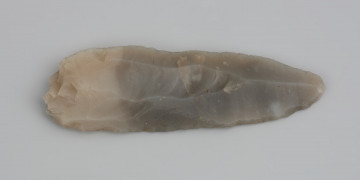
11900 p.n.e. — 11000 p.n.e.
National Museum in Szczecin
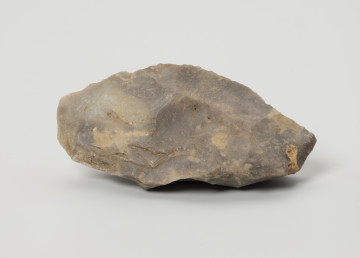
7800 p.n.e. — 7000 p.n.e.
National Museum in Szczecin
DISCOVER this TOPIC
National Museum in Lublin
DISCOVER this PATH
Educational path