



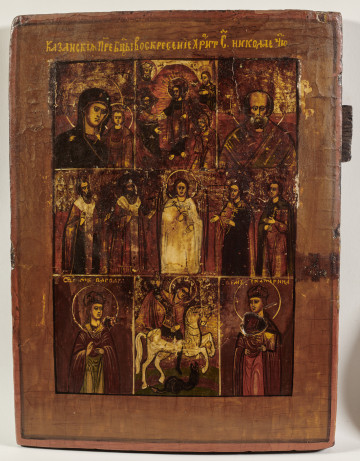
A multi-field icon, the Mother of God Odigitria of Kazan; the Resurrection of Christ; St. Nicholas, Archangel with saints; St. Barbara; St. George the Martyr, St. Catherine
2nd half of the 19th century
Castle Museum in Łańcut
Part of the collection: Ikony
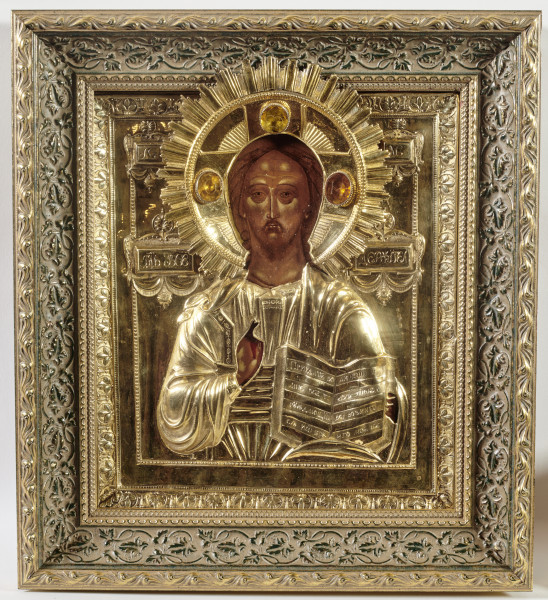
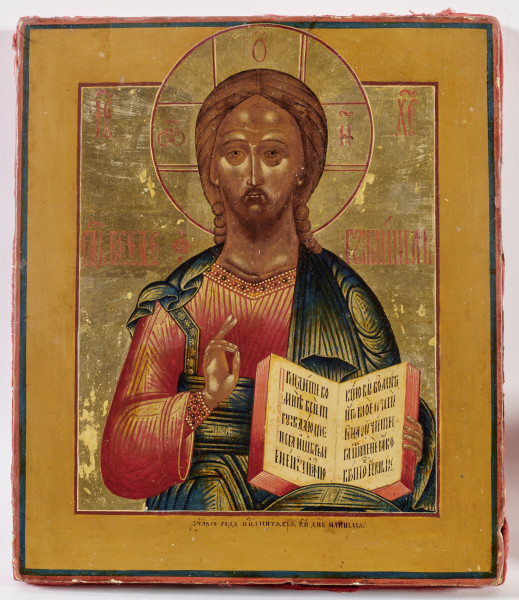
In accordance with the council canons, God was pictured only in the person of Christ, the Incarnate Word, equally important as God the Father in the art of the Eastern Church. The oldest representations of the Saviour included paintings showing the omnipotence and divine nature of Christ called the Ruler of Everything or the Pantocrator in Greek. The Saviour as the Ruler of the Universe began to be depicted in 4th to 6th century resembling an earthly ruler with all the symbols of imperial grandeur. The figure of Christ, always depicted frontally, was placed in the domes of temples symbolising heaven. Over time, the image of the Pantocrator took central position in representations of Deesis with the figures of the Mother of God and John the Baptist adoring the Enthroned Saviour and offering intercessory prayers to him for the human race. His Pantocrator-type image also appears in the major row of the altar partition known as the iconostasis. Christ the Omnipotent is shown standing fully erect or seated on a throne, and is more often painted in bust in later iconography. The fingers of the right hand, raised to breast, are usually arranged in the shape of the monogram IC XC, signifying the name of Christ. The scroll or open book in the Saviour's left hand expresses the mission of teaching. Pantocrator-type images of Christ are also a frequent subject of domestic icons used for home worship.
Teresa Bagińska-Żurawska https://orcid.org/0000-0002-9243-3967
Author / creator
Object type
ikony
Technique
tempera, metaloplastyka, stolarskie
Material
wood, chalk, distemper, gold, silver, crystal, glass
Creation time / dating
Creation / finding place
Owner
Muzeum - Zamek w Łańcucie
Identification number
Location / status
2nd half of the 19th century
Castle Museum in Łańcut
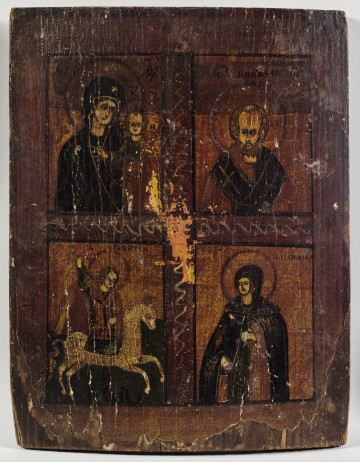
XIX/XX wiek
Castle Museum in Łańcut
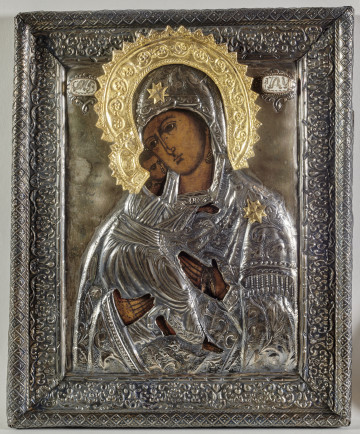
początek XX w.
Castle Museum in Łańcut
DISCOVER this TOPIC
Museum of King Jan III's Palace at Wilanów
DISCOVER this PATH
Educational path