



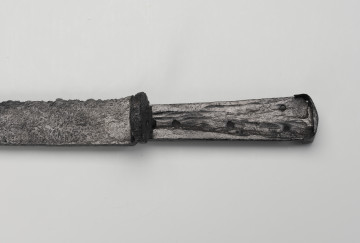
Falchion
1400 — 1500
National Museum in Szczecin
Part of the collection: Militaria
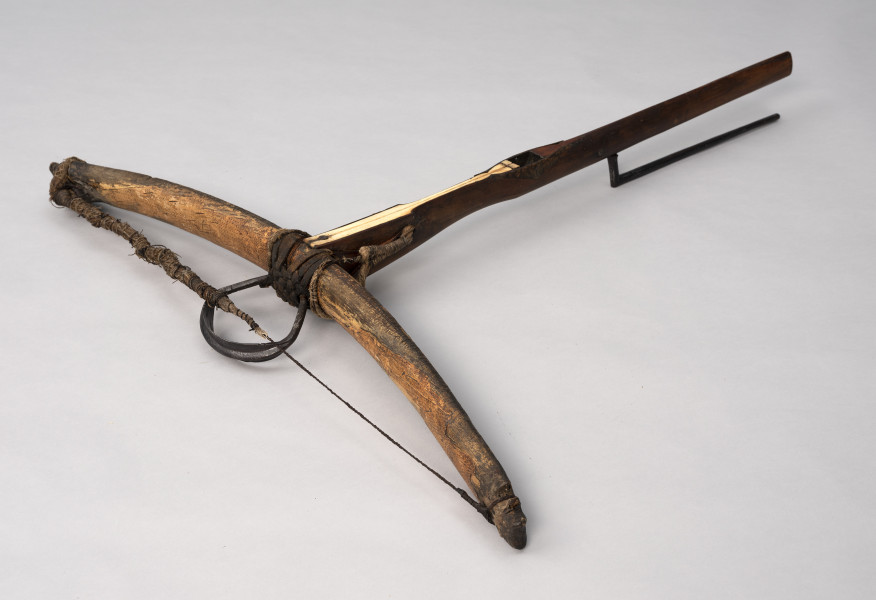
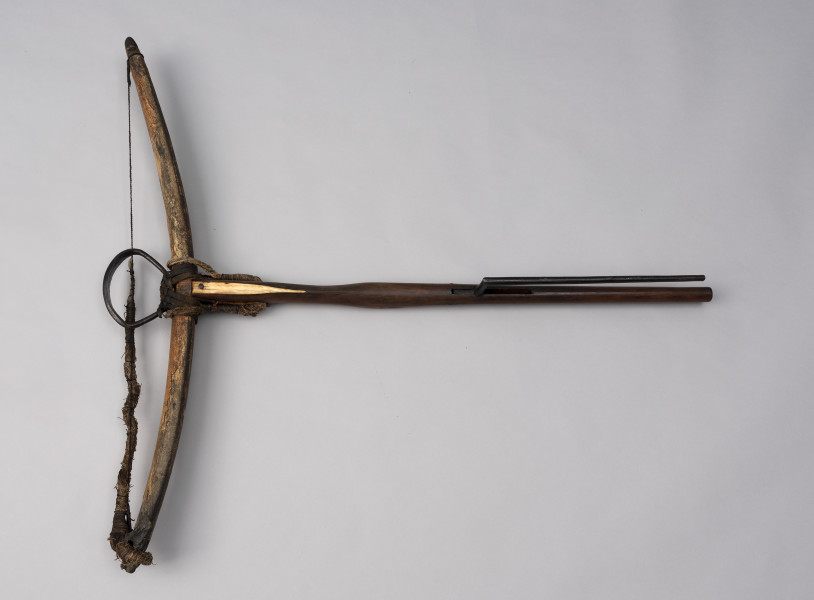
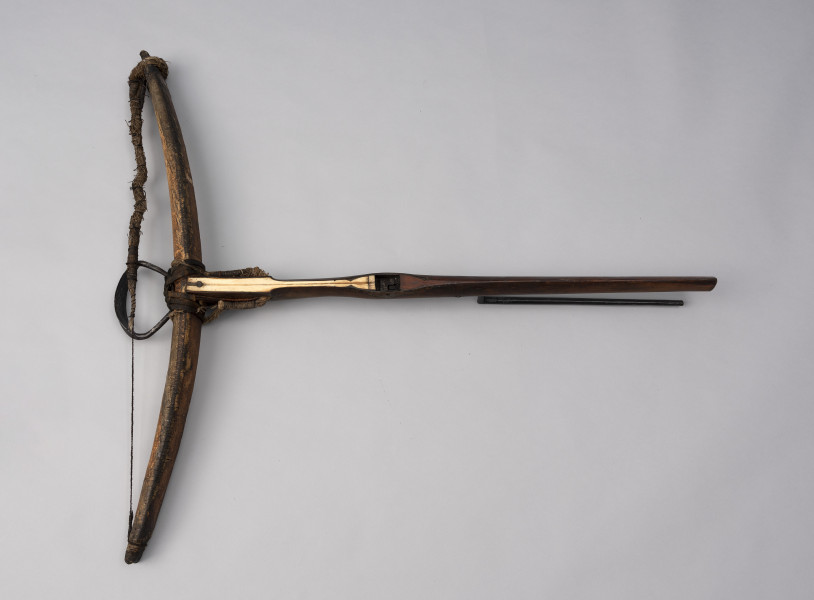
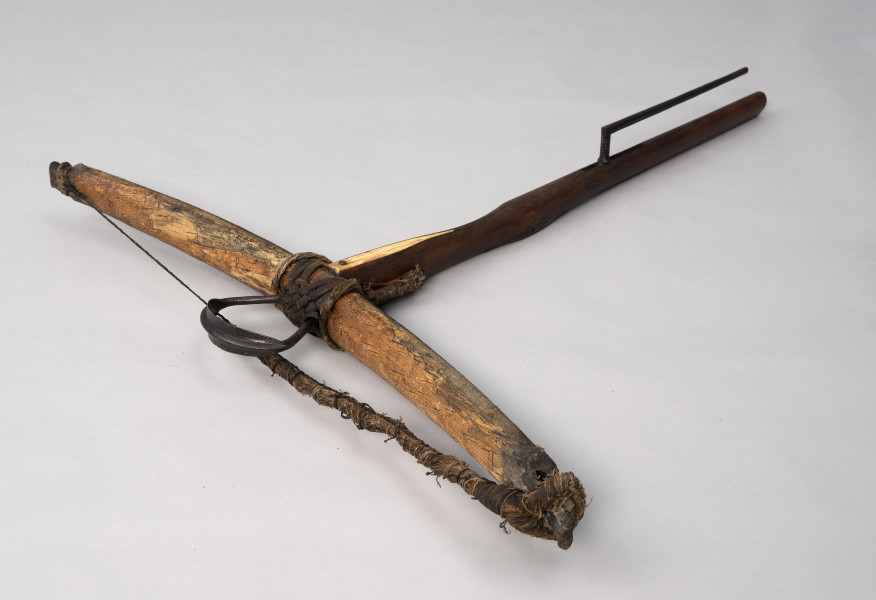
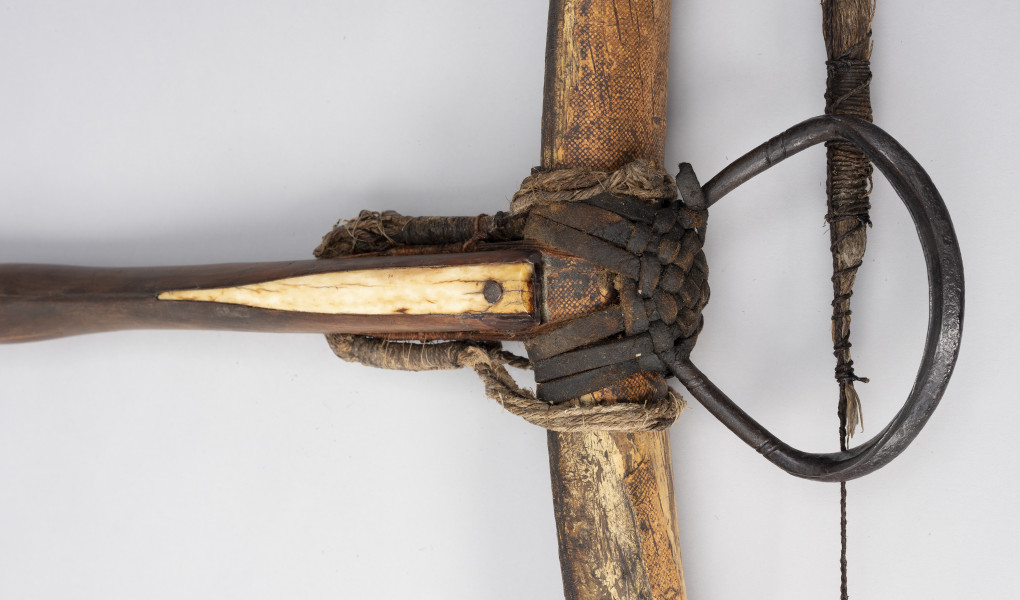
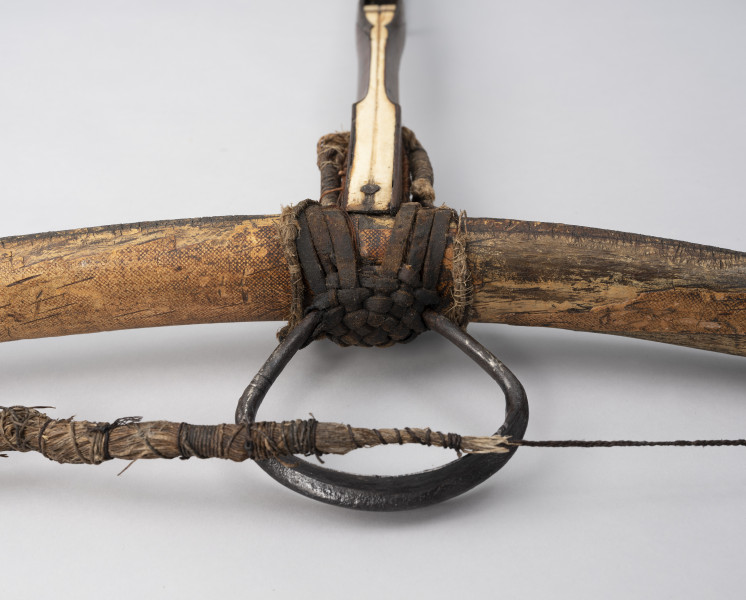
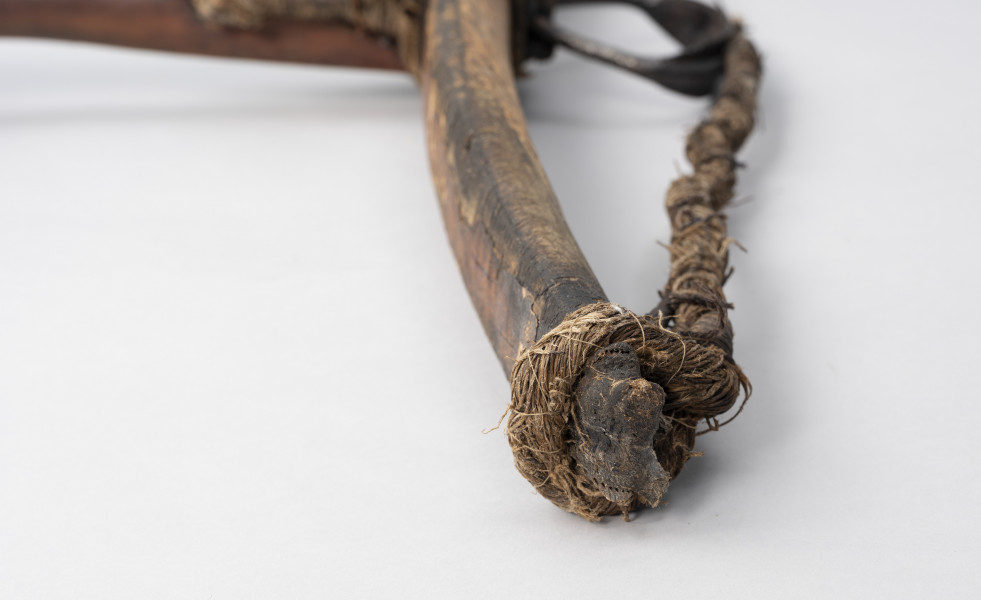
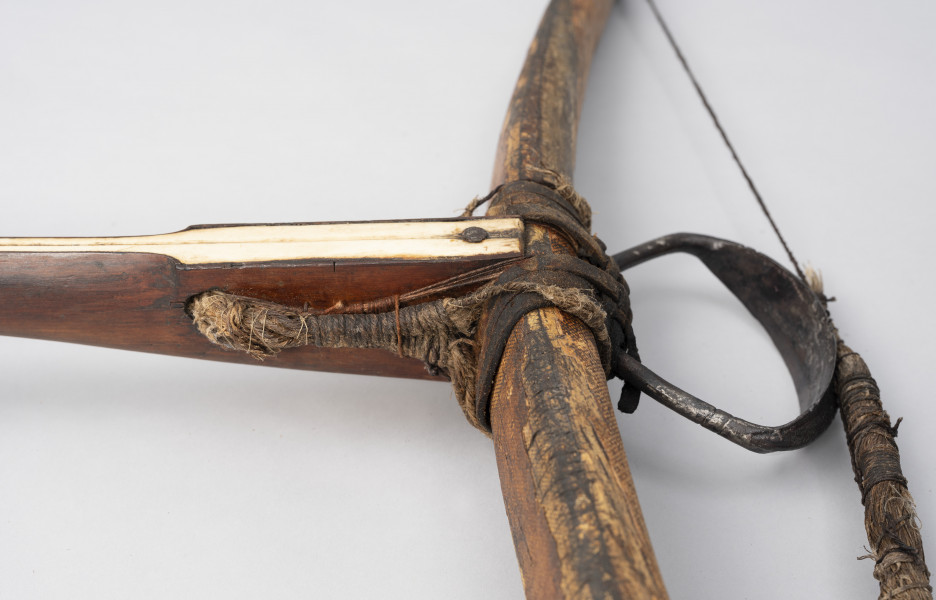
Crossbows were considered dishonourable weapons during the Middle Ages. At the Second Lateran Council (1139), their use against Christians was prohibited. However, the high effectiveness of crossbows in combat led many European armies to establish units of crossbowmen. This weapon was used by knights, mercenaries, townsfolk, and even peasants. Crossbows allowed for long-distance attacks, creating an element of surprise. They were characterised by their extensive range, silence, and bolts that traveled faster and on a flatter trajectory compared to arrows shot from bows. Additionally, they were easy to operate. The presented crossbow, dating to the turn of the 14th and 15th centuries, has an early design with a very simple trigger mechanism. The bow and stock are bound together with leather straps. The bow, also known as the prod, curves outward. When drawn, the bow was reinforced with layers of thin strips of corrugated horn glued together, covered with animal sinew, and overlaid with a thin layer of birch bark to protect it from moisture. To cock the string, it was drawn back and hooked into a notch in a circular nut mounted on the stock. However, this particular example is missing that part of the trigger mechanism, which was typically made from antler or bone, and later from wood or metal. A simple metal lever, mounted underneath and functioning as a trigger, released the nut, launching the bolt. The stock is lined with bone, featuring a groove on top for the bolt. At the front, a stirrup is attached to assist with cocking the string. The stirrup was used to anchor the weapon by placing a foot through it while drawing the string. Initially, string tension was achieved with belt hooks, later replaced by cranks or levers. This is likely the earliest crossbow in Polish museum collections. Justyna Bądkowska
Author / creator
Object type
crossbow
Technique
wood processing, turning (machining), assembling, planing, gluing
Material
wood, bone, leather, steel, birch bark, nut wood
Origin / acquisition method
acquisition
Creation time / dating
Creation / finding place
Owner
The National Museum in Szczecin
Identification number
Location / status
1400 — 1500
National Museum in Szczecin
circa 1590 — 1610
National Museum in Szczecin
1501 — 1600
National Museum in Szczecin
DISCOVER this TOPIC
Museum of King Jan III's Palace at Wilanów
DISCOVER this PATH
Educational path