



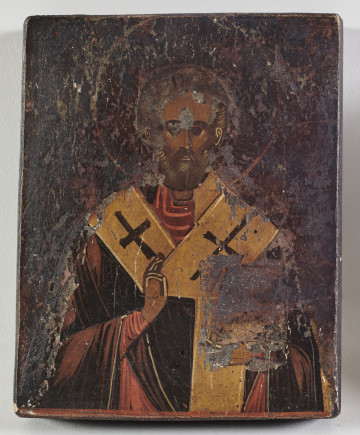
Saint Nicholas the Wonderworker
4. ćwierć XIX wieku
Castle Museum in Łańcut
Part of the collection: Ikony
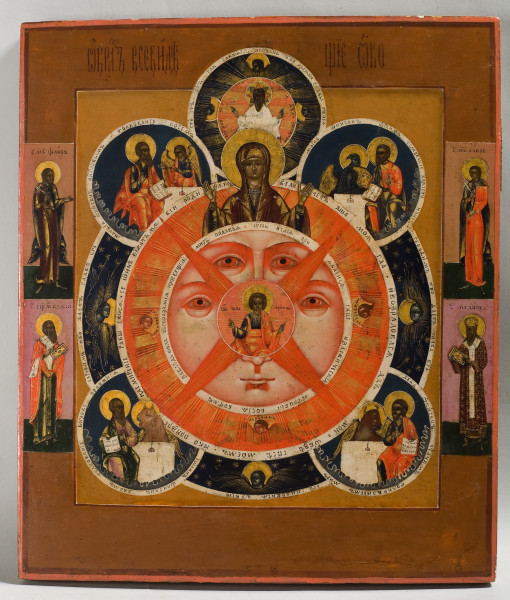
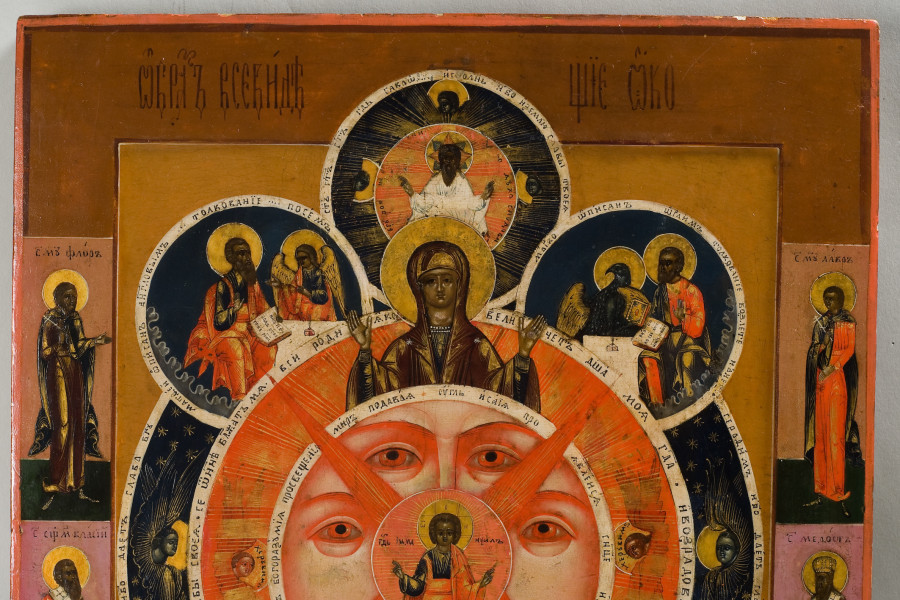
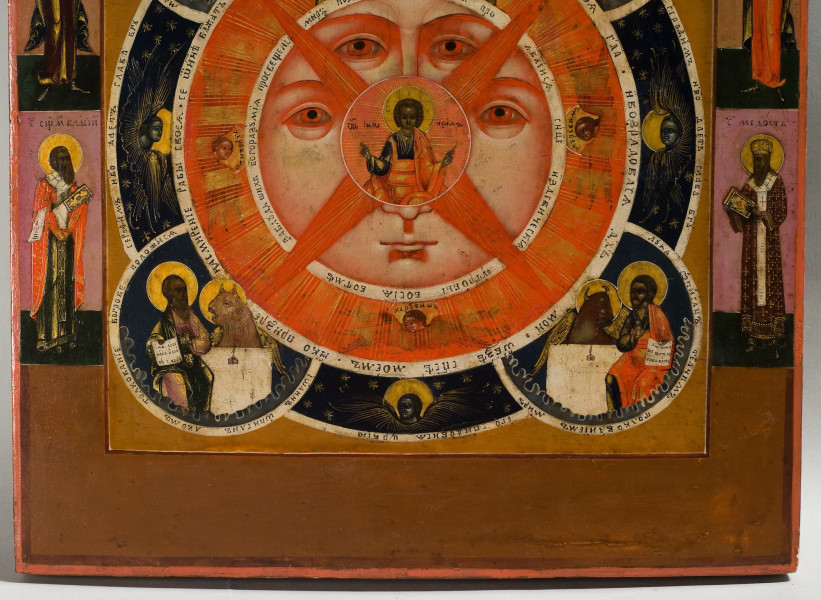
The first depictions of the All-Seeing Eye of God appeared in Russian Orthodoxy at the end of the 18th and the beginning of the 19th centuries. Initially, these were frescoes placed in the domes of churches. Over time, the theme transitioned into panel painting. The icon stands out due to its complex symbolism. It illustrates the visible and supernatural worlds coexisting within a strictly defined hierarchy in the Universe created by the Almighty, All-Seeing God. In the icon, He is presented as the Seeing Sun, with a central image of the Incarnate Son—blessing Christ Emmanuel, born of the Virgin Mother through the Holy Spirit. The dogmatic basis for the iconography of the All-Seeing Eye of God is found in Psalm 33:18 (Vulgate 32:18): "But the eyes of the Lord are on those who fear him, on those whose hope is in his unfailing love." The symbolic and allegorical content is portrayed through an orderly and harmonised composition of four overlapping circles, complemented by smaller ones depicting the Evangelists and their attributed symbols, with the composition crowned by a circle showing the Lord of Hosts. The colours of the circles play a significant role in illustrating the theme, as do the Cyrillic inscriptions associated with the different spheres or figures that complement the representation.
Teresa Bagińska-Żurawska https://orcid.org/0000-0002-9243-3967
Author / creator
Object type
ikony
Technique
tempera, pozłotnictwo
Material
wood, chalk, distemper, gold
Creation time / dating
Creation / finding place
Owner
Muzeum - Zamek w Łańcucie
Identification number
Location / status
4. ćwierć XIX wieku
Castle Museum in Łańcut

XIX/XX wiek
Castle Museum in Łańcut
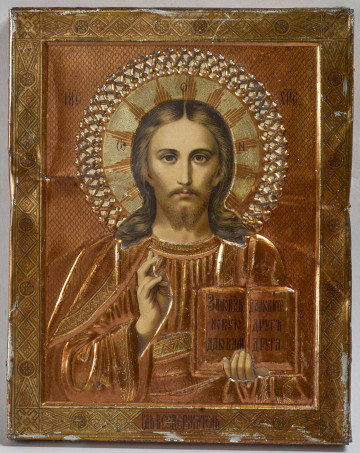
20th century
Castle Museum in Łańcut
DISCOVER this TOPIC
National Museum in Szczecin
DISCOVER this PATH
Educational path