




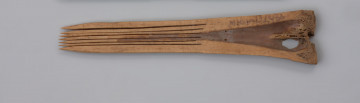
Long comb
1176 — 1225
National Museum in Szczecin
Part of the collection: Militaria
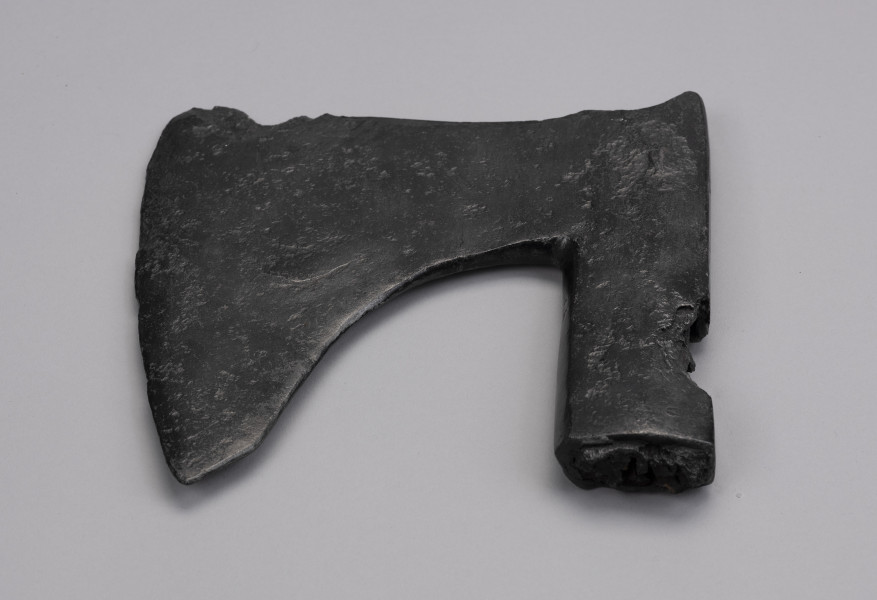
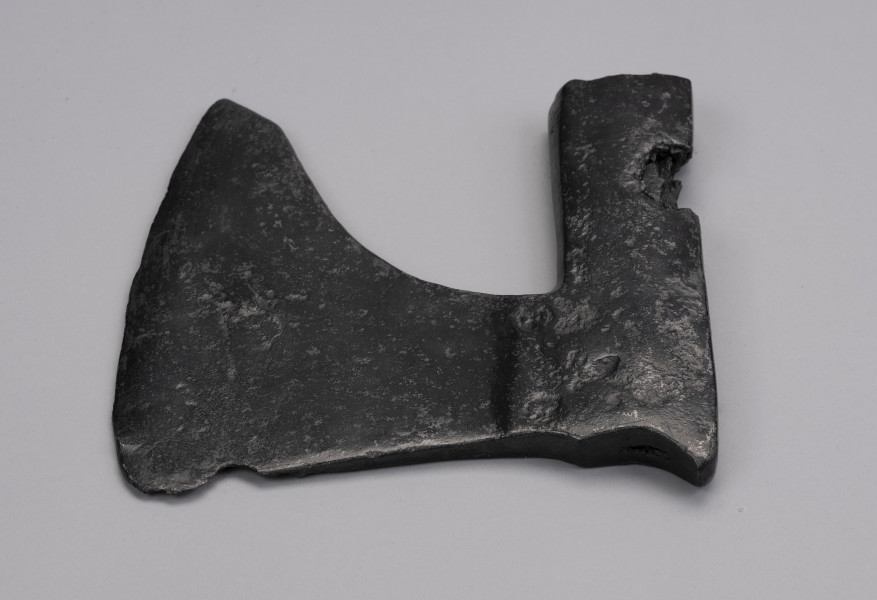
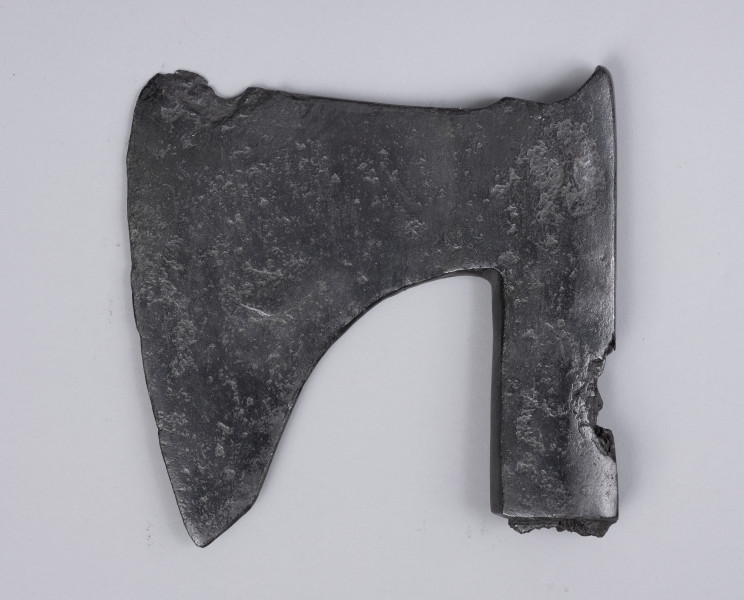
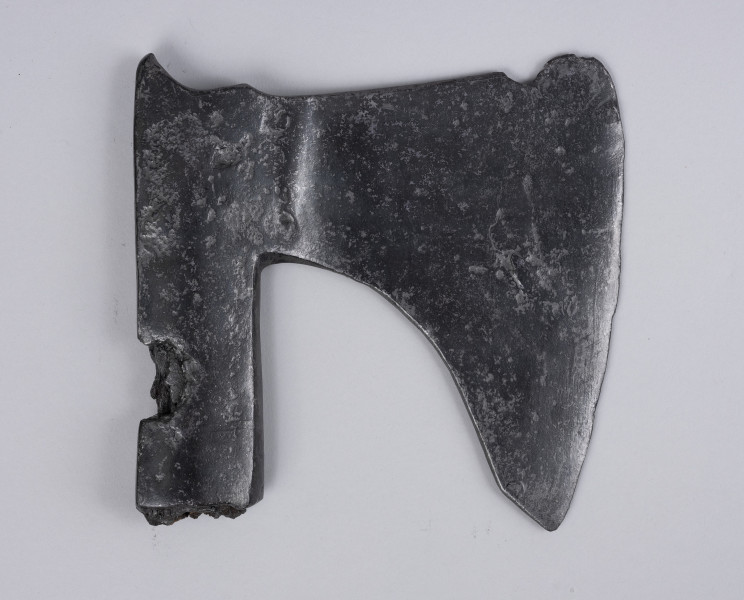
In the Middle Ages, axes were used as tools for carpentry, execution, and butchery, but they also served effectively as striking and cutting weapons, even throwable over a distance. At the same time, they were versatile tools for warriors, particularly useful for camp work. Their functionality, availability, and low cost compared to swords contributed to their popularity among common infantry. However, knights also carried axes, which subsequently became one of the symbols incorporated into late medieval heraldry. Until recently, all medieval axes were classified as weaponry in academic literature. As late as 1996, in a publication by arms expert Marian Głosek on late medieval blunt weapons, examples were identified that could serve both for combat and for carpentry, particularly for tasks associated with wagon trains. Today, axes considered strictly for combat are those with symmetrical blades, which typically inflicted injuries to soft tissue. Meanwhile, blows with the blunt side could even split an opponent's skull. Carpentry axes, on the other hand, were sharpened on one side only, giving their blades an asymmetrical shape. This allowed strikes to be made at a smaller angle to the workpiece, creating smoother surfaces on processed wood. Based on these distinctions, the 15th-century axe presented here from the National Museum in Szczecin's weapons collection should be classified as a carpentry tool due to the shape of its blade. A similar axe (a XII-type pollaxe) is depicted on the wing of an altarpiece showing the Martyrdom of Saint Peter, created by a Franconian workshop in the 1450s or 1460s (inventory no. MNS/Szt/131). The axes differ only in the shape of the collar on the socket: on the altarpiece, it is prominent and thickened, whereas on the displayed example, it transitions smoothly into the socket and is distinguished only by a protruding sharp tip. In the painting, the tool lies in the grass, presumably left there by a carpenter who had just erected the cross and prepared the site for Saint Peter's execution. Justyna Bądkowska
Author / creator
Object type
axe, hatchet, blunt weapon, blunt-edge weapon
Technique
forging
Material
steel, iron, wood
Origin / acquisition method
acquisition
Creation time / dating
Creation / finding place
Owner
The National Museum in Szczecin
Identification number
Location / status
1176 — 1225
National Museum in Szczecin
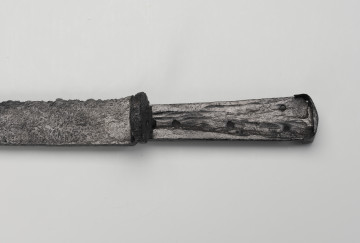
1400 — 1500
National Museum in Szczecin
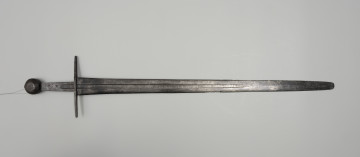
1250 — 1325
National Museum in Szczecin
DISCOVER this TOPIC
Castle Museum in Łańcut
DISCOVER this PATH
Educational path