




Falchion
1400 — 1500
National Museum in Szczecin
Part of the collection: Militaria
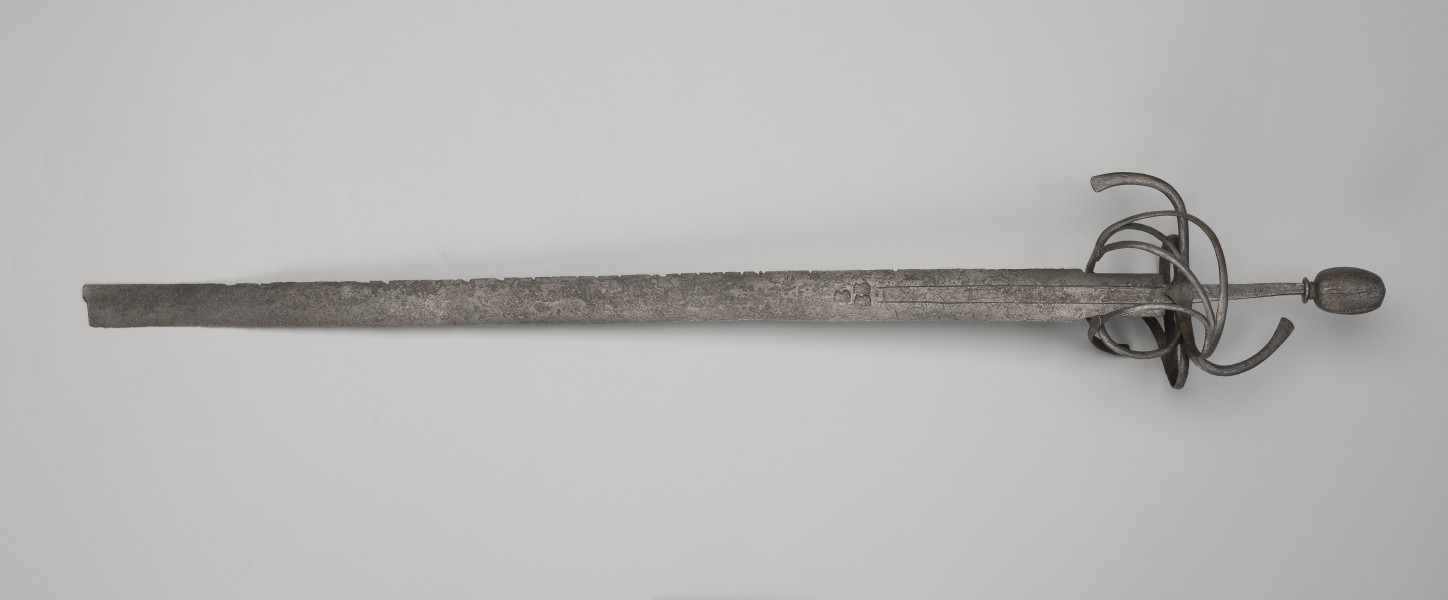
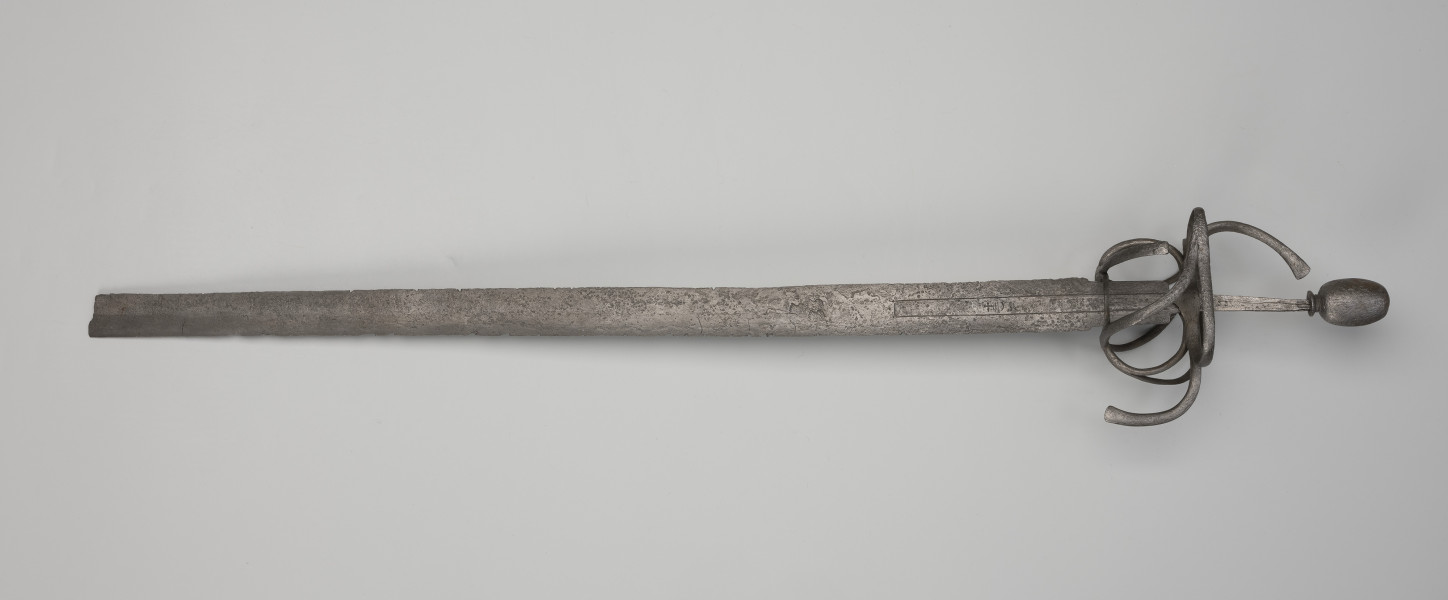
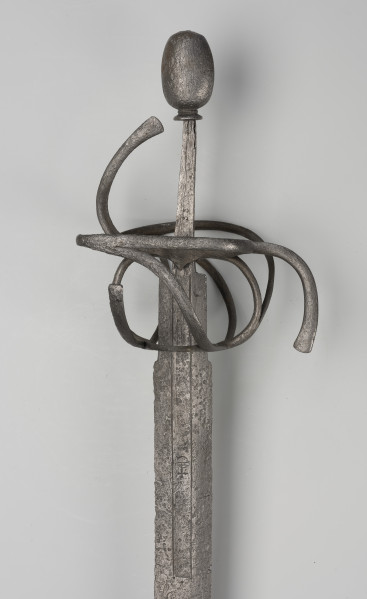
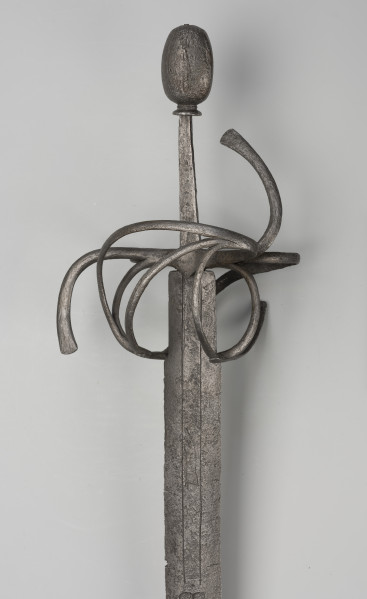
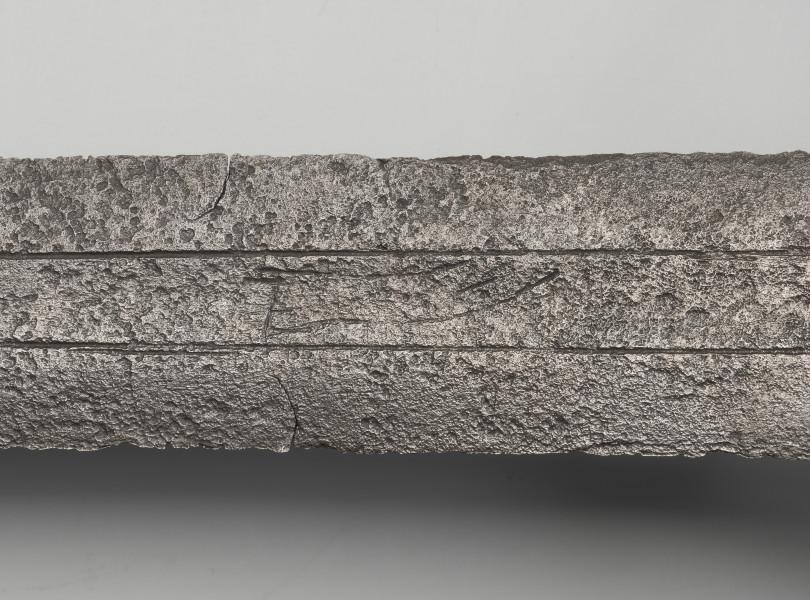
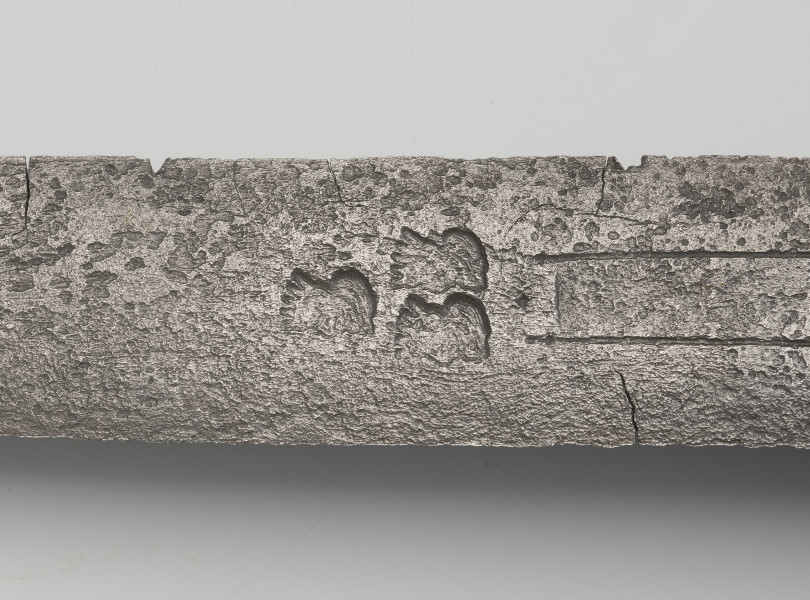
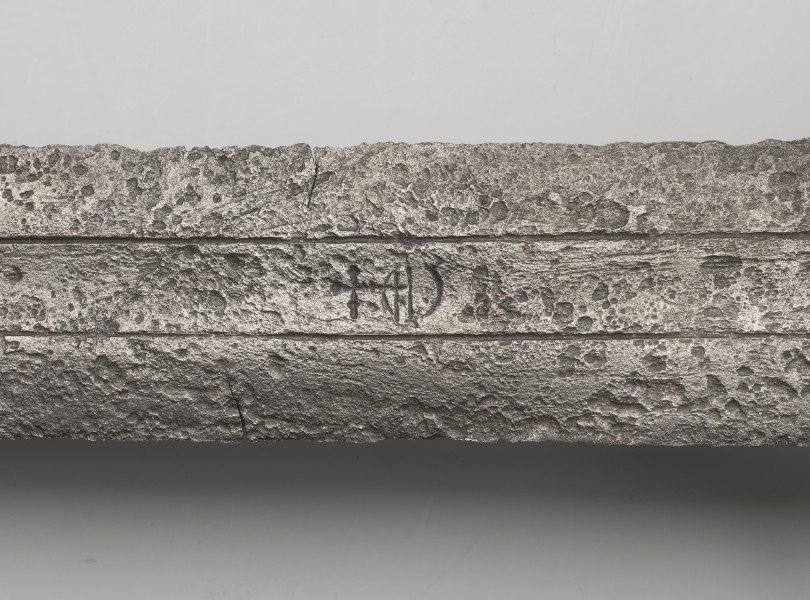
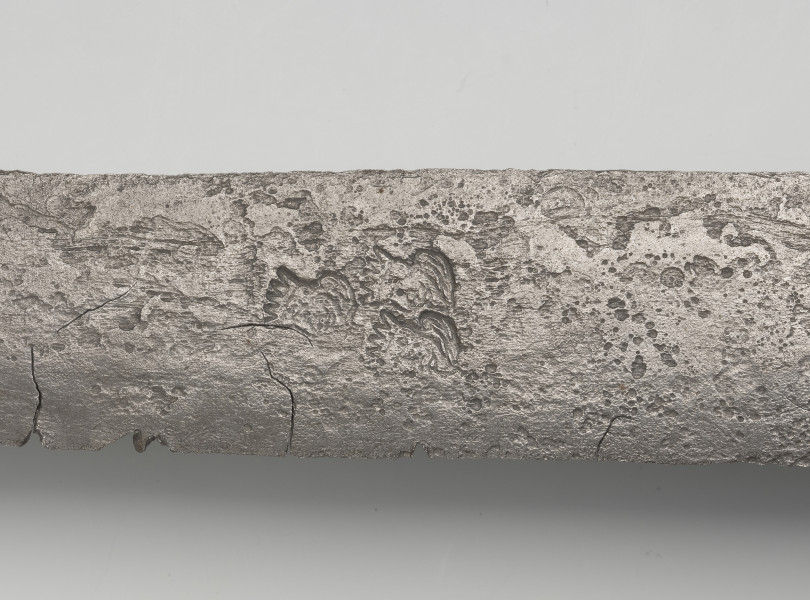
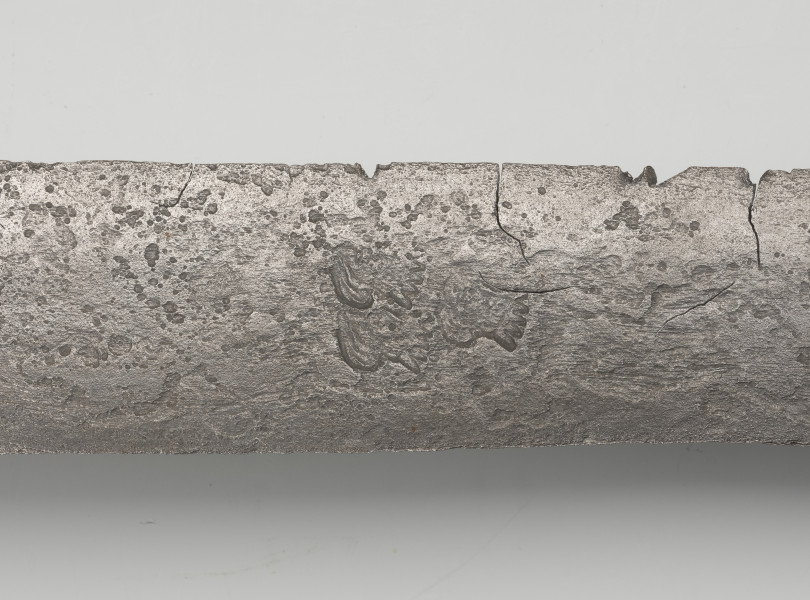
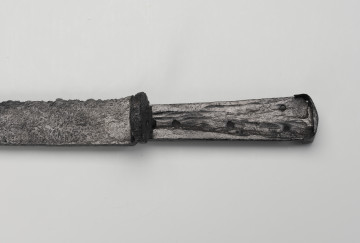
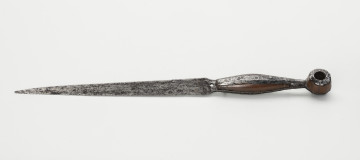
The rapier, as a cut-and-thrust weapon, developed from the sword in the 16th century. This type of weapon features a straight, narrow blade designed for both thrusting and cutting, or exclusively for thrusting. Below the hilt, near the grip, the blade of the rapier is blunt, allowing it to be held with the hand. This section is known as the ricasso. Another significant feature is the elaborate guard, equipped with numerous bars and loops to protect the hand. Combat rapiers were not decorated, but due to the intricate form of their guards, richly ornamented versions quickly emerged, intended for the wealthiest members of society. These decorative rapiers became symbols of prestige and affluence for their owners. The rapier in the collection of the National Museum in Szczecin dates to the turn of the 16th and 17th centuries. Its blade bears stamps depicting an imperial orb and three crowned, bearded king’s heads facing the same direction. These marks, arranged with one head at the top and two below, were used by the swordsmith Johannes Wundes the Elder, who worked in Solingen from 1560 to 1610. Wundes produced high-quality bladed weapons, many of which are now housed in prestigious museum collections, such as the Heeresgeschichtliches Museum in Vienna and the National Museum in Kraków. The Wundes family remained active in the trade until the 18th century, when they sold their "bearded king" mark to the Weyersberg family. Additionally, the blade features the image of a running wolf, a symbol of quality craftsmanship. Originally used by swordsmiths in Passau, this mark is often referred to as the "Passau wolf." It was later adopted by artisans in Solingen. Justyna Bądkowska
Author / creator
Object type
rapier
Technique
forging
Material
steel
Origin / acquisition method
acquisition
Creation time / dating
Creation / finding place
Owner
The National Museum in Szczecin
Identification number
Location / status
1400 — 1500
National Museum in Szczecin

1390 — 1430
National Museum in Szczecin
1400 — 1500
National Museum in Szczecin
DISCOVER this TOPIC
Castle Museum in Łańcut
DISCOVER this PATH
Educational path