





Flint axe
3100 p.n.e. — 2500 p.n.e.
National Museum in Szczecin
Part of the collection: Stone Age
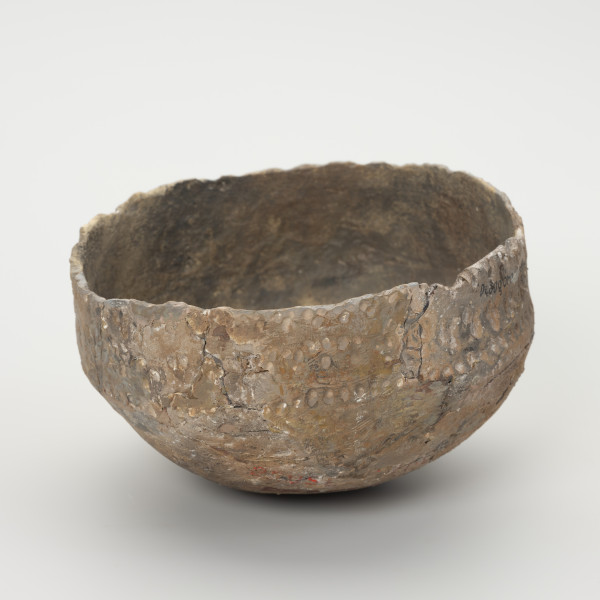
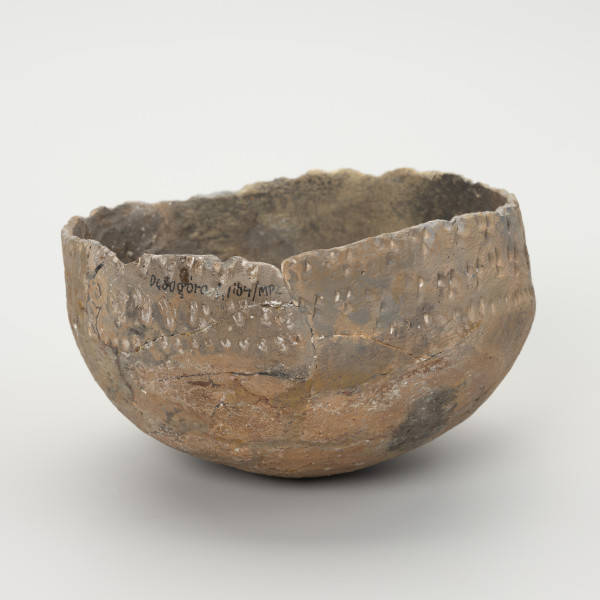
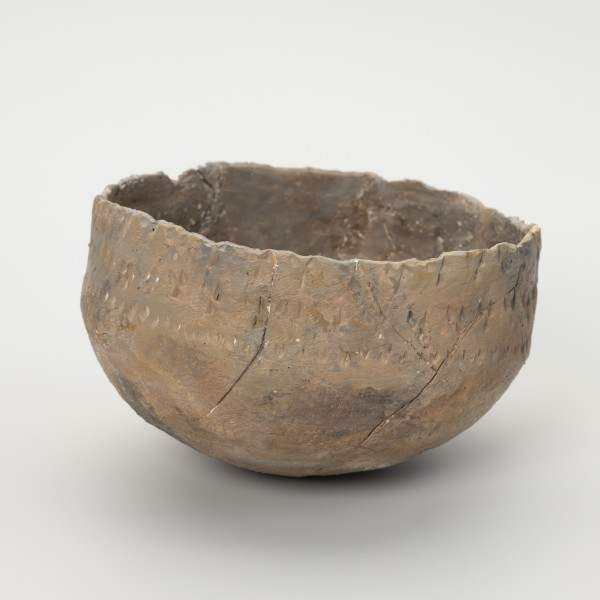
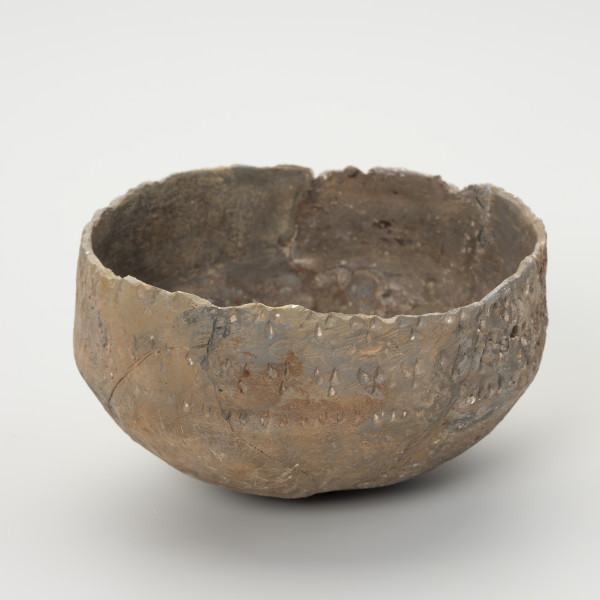
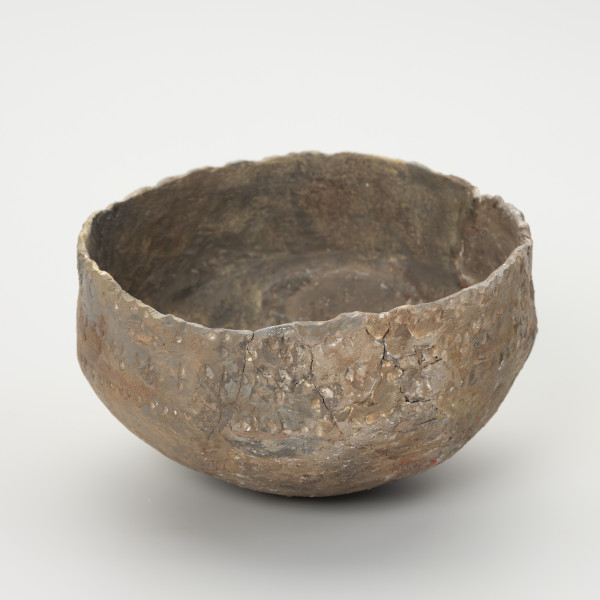
The reconstructed, decorated clay bowl with a rounded base comes from the grave goods of a tomb belonging to the Globular Amphora culture, which was accidentally destroyed in early February 1934 during stone blasting works in a forest near Dębogóra, as part of the construction of the road from Gryfino to Widuchowa. News of the discovery was telegraphed to the museum in Szczecin by Richard Hackbarth, headmaster of the school in Widuchowa. The owner of the Dębogóra estate, Captain Walter Coste, was also notified. Just a few days later, he played an active role in securing and studying another Neolithic grave revealed in similar circumstances. When Hans Jürgen Eggers (1906–1975), curator of the Szczecin archaeological collection, arrived at the site, he was only able to establish that the destroyed tomb had been constructed from large stone slabs forming a box-like chamber, half of which had lain beneath a glacial erratic with a diameter of three to four metres. The boulder had not been transported or deliberately placed as a capstone. Rather, the people of the Globular Amphora culture – who between the mid-4th and mid-3rd millennium BCE maintained a tradition of building monumental tombs with stone elements – likely chose the site of the natural boulder on purpose, setting the chambered grave beside it to give the whole structure a megalithic character. Sadly, no information survives about the burial itself. Alongside the decorated bowl – which broke into pieces when removed – the grave also contained a flint axe, which had been placed inside the vessel. A similar assemblage and likely a similar tomb structure were found in the early 20th century in Wierzchowo, in Drawsko County, where a flint axe and a decorated clay bowl were discovered beneath a large glacial erratic. Krzysztof Kowalski
Author / creator
Object type
bowl-shaped vessel, bowl, ceramic
Technique
manual modelling, firing
Material
ceramic
Origin / acquisition method
acquisition
Creation time / dating
Creation / finding place
Owner
The National Museum in Szczecin
Identification number
Location / status
3100 p.n.e. — 2500 p.n.e.
National Museum in Szczecin
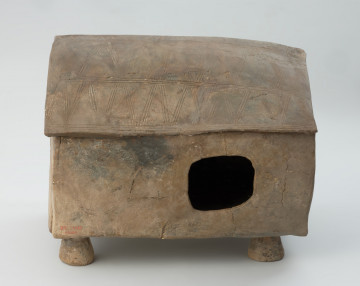
around 750 p.n.e. — 550 p.n.e.
National Museum in Szczecin
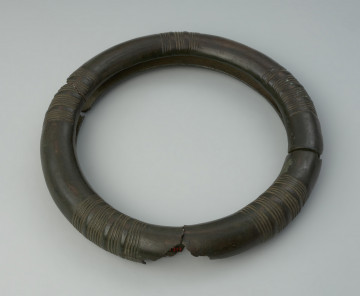
around 600 p.n.e. — 400 p.n.e.
National Museum in Szczecin
DISCOVER this TOPIC
Museum of King Jan III's Palace at Wilanów
DISCOVER this PATH
Educational path