



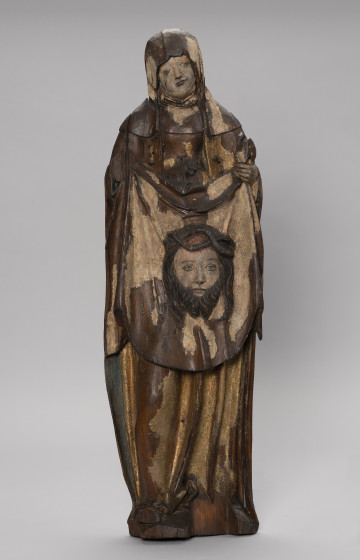
Saint Veronika
circa 1520 — 1530
National Museum in Szczecin
Part of the collection: Medieval sculpture of West Pomerania
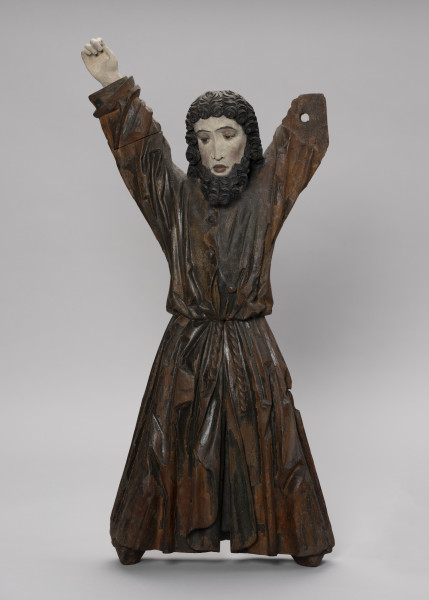
Saint Andrew – the patron saint of fishermen and travelers – suffered martyrdom during his apostolic mission in Greece. According to medieval tradition, he was bound to a cross in the shape of an X, the first letter of Christ's name in Greek. This cross, commonly known as Saint Andrew’s Cross and referred to in Latin as crux decussata, became his attribute. In medieval depictions, the Apostle is often shown holding the cross or with it placed behind him.
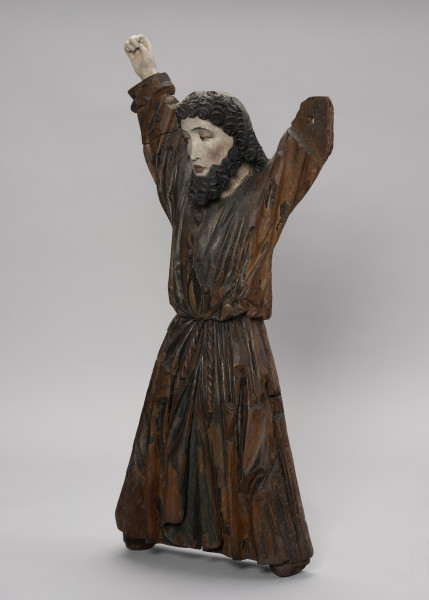
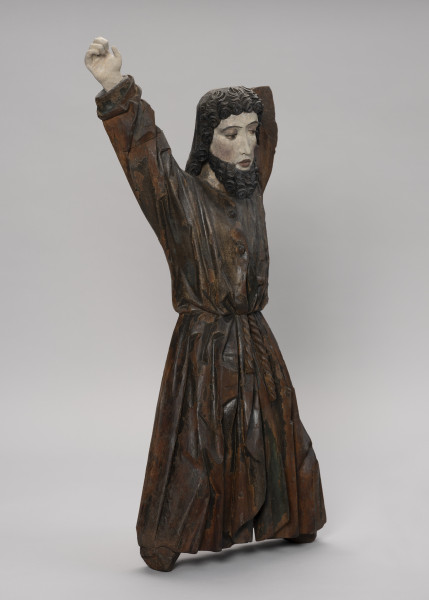
The figure on display, of unknown origin, presents an unusual interpretation of the saint. The figure’s pose mirrors the shape of his attribute. The voluminous tunic, fastened at the top with buttons and tied at the waist with a thick cord, naturally spreads open at the stomach due to the raised arms and widely spaced legs. The lower edges of the garment part to the sides. The sculpture is notable for the stylised rendering of the head, with meticulously carved curls arranged in spirals around a slender face with full lips and large, half-closed eyes.
This naturalistic treatment of the drapery and the similar type of depiction are characteristic of works associated with late-medieval Szczecin craftsmanship. Clear similarities can be observed with pieces documented in archival photographs, such as the figure of Saint John from the Crucifixion Group in Stargard and the reliefs depicting the Arrest and Crucifixion of Saint Andrew from the former von Borck family collection in Starogard Łobeski. These were works from a Szczecin workshop that also created the Passion Altar from Dąbie, dated to around 1510–1520.
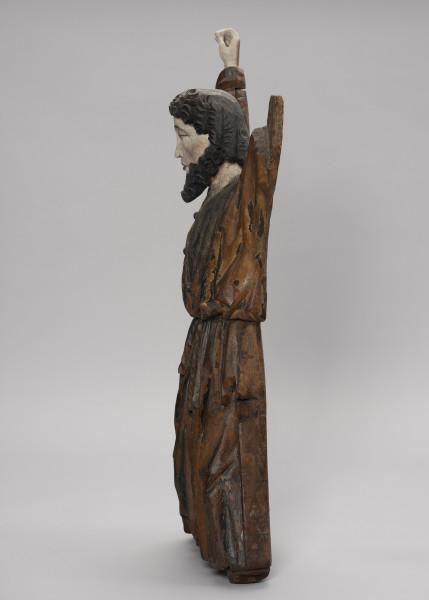
The sculpture’s flat, partially hollowed-out back suggests it originated as part of an altarpiece retable.
This figure of Saint Andrew is displayed in the permanent exhibition The Mystery of Light: Medieval Art in Pomerania.
Kinga Krasnodębska
Author / creator
Object type
sculpture, figure, altar element, sacred object
Technique
sculpture, polychrome
Material
linden wood, paint
Origin / acquisition method
acquisition
Creation time / dating
Creation / finding place
Owner
The National Museum in Szczecin
Identification number
Location / status
circa 1520 — 1530
National Museum in Szczecin
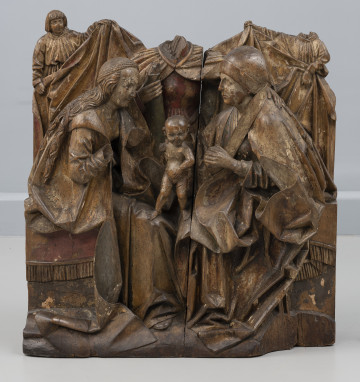
circa 1515 — 1520
National Museum in Szczecin
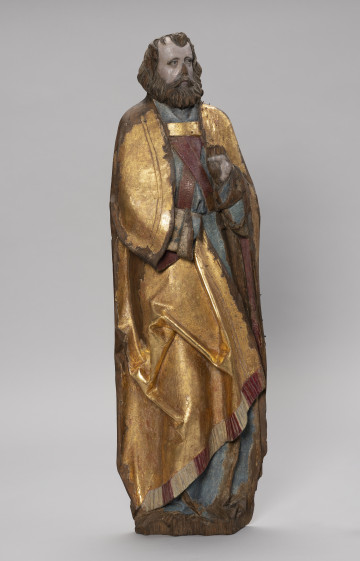
1520 — 1530
National Museum in Szczecin
DISCOVER this TOPIC
Castle Museum in Łańcut
DISCOVER this PATH
Educational path