



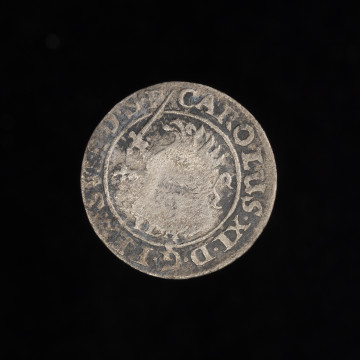
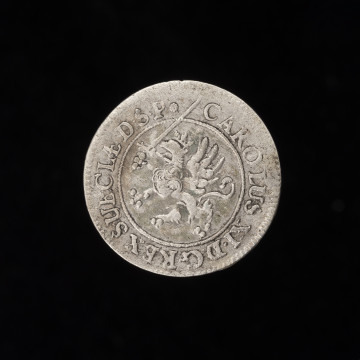
Witten (1/192 of a thaler)
1674
National Museum in Szczecin
Part of the collection: Pomeranian coins
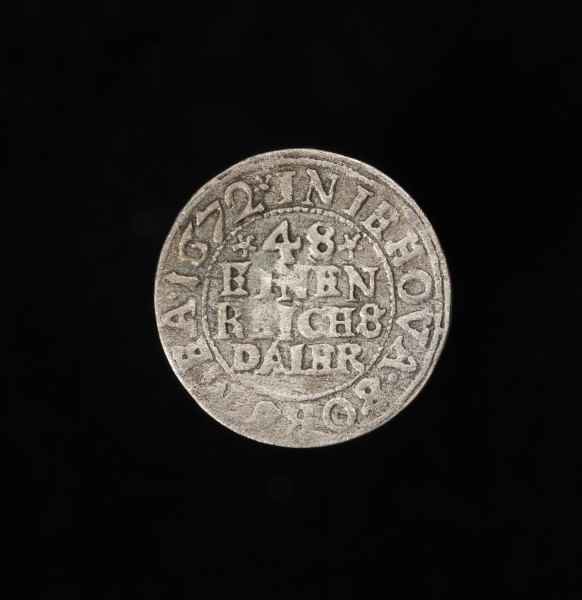
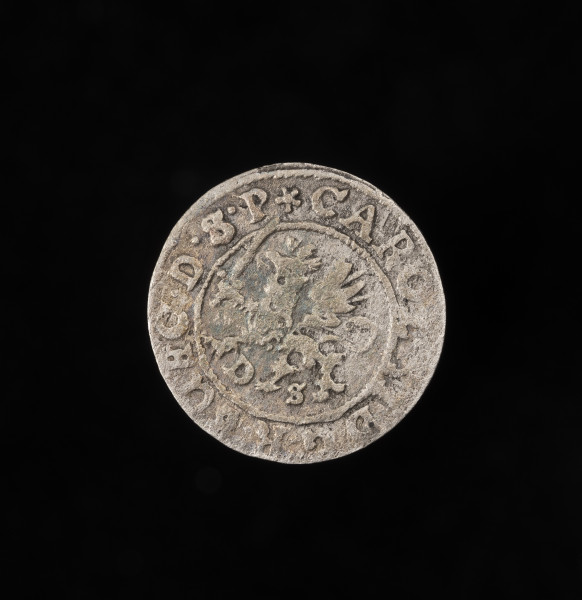
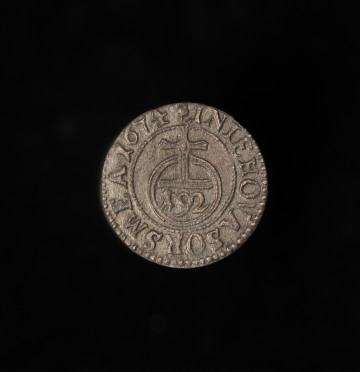
Pomeranian coinage under Swedish King Charles XI (1655–1697) was marked by a wide variety of denominations but also by concerning levels of inflationary issues. Rising silver prices led to the collapse of the Reich’s 1559 monetary system, prompting the introduction of a new minting standard in 1667 under the Treaty of Zinna (Germany), along with regulated exchange rates for coins. The mint in Szczecin operated intermittently, with its management and coin production leased to private minters. Between 1672 and 1676, it was controlled by mintmaster Daniel Syvertz, who was authorised to strike silver coins, including wittens, schillings, groschen, 1/3 and 2/3 thalers according to the 10.5-thaler Zinna standard, and full thalers under the 9-thaler Reich standard. Syvertz also minted gold ducats. His initials appear on all of his coins except for the wittens. For small denominations from the Szczecin mint, strict limits were set on the amount of silver used. The permitted issue of schillings (with a fineness of 375/1000) was capped at 4,000 thalers. However, neither these limits nor the required silver content were adhered to. Schilling emissions were particularly numerous in 1672 and 1673, as standards were lowered to finance ongoing wars. In 1674, Sweden invaded Brandenburg, further increasing the military’s financial demands. Due to rising inflation and widespread debasement, the final year of Charles XI’s reign saw the necessary devaluation of all circulating schillings by half their value, followed by their replacement with new two-groschen coins. Throughout their entire production period (1661–1694), schillings retained the same design and inscriptions. The obverse featured an armed griffin and the royal title, while the reverse displayed the denomination as a fraction of a thaler, along with the motto: *IN JEHOVA SORS MEA* ("My fate is in God"). Genowefa Horoszko
Author / creator
Object type
coin
Technique
coining
Material
silver
Origin / acquisition method
acquisition
Creation time / dating
Creation / finding place
Owner
The National Museum in Szczecin
Identification number
Location / status
1674
National Museum in Szczecin
1691
National Museum in Szczecin
1672
National Museum in Szczecin
DISCOVER this TOPIC
National Museum in Szczecin
DISCOVER this PATH
Educational path