

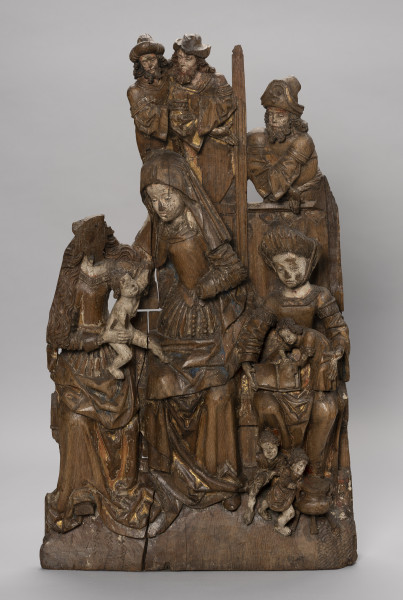


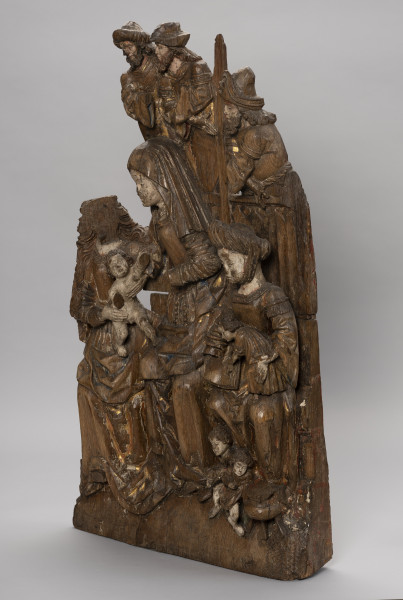
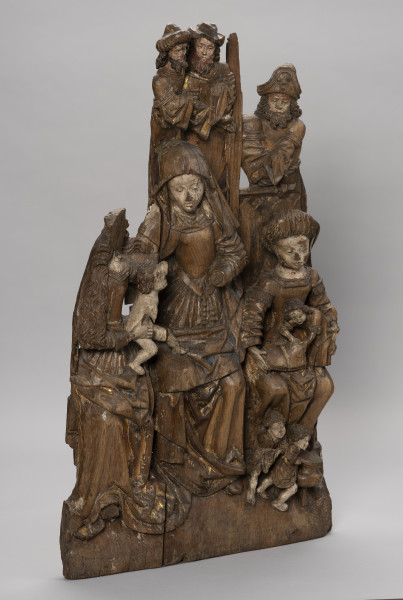
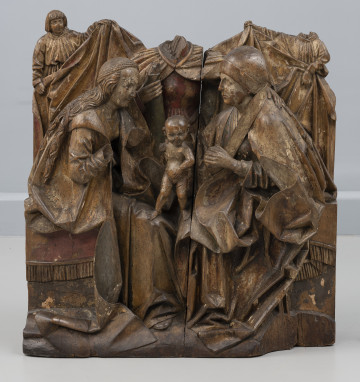
Saint Anne with Mary, the Christ Child, and Emerentia
circa 1515 — 1520
National Museum in Szczecin
Part of the collection: Medieval sculpture of West Pomerania
The depiction of the Extended Family of Mary was a popular theme in late medieval art, especially in the regions of present-day northern Germany. Representations of the three generations of Mary of Nazareth’s family are primarily based on apocryphal texts and medieval legends, which spread folk beliefs about Mary’s parents.
The partially preserved relief, showing a typical variant of this iconography, once formed the central panel of the Holy Family altar in the church in Krummin on the island of Usedom. The central figure of the scene, Saint Anne – mother of Mary and grandmother of Jesus – is emphasised through her larger proportions. To her right is the second central figure, Mary, Anne’s daughter from her first marriage to Joachim, and the mother of Jesus. Flanking them are Mary’s half-sisters, daughters of Anne from her second and third marriages after the deaths of her previous husbands: Mary Cleophas and Mary Salome – sisters of Mary and aunts of Jesus. Above are depicted their husbands, though damage to the section featuring Mary Salome means only Joachim, Cleophas, and Alphaeus remain visible. On the laps and at the feet of the seated women, their children play carefree, including the central figure of the naked Jesus, balancing on the laps of his mother and grandmother, along with future apostles and companions of Jesus.
With details such as clothing styled according to early 16th-century fashions, children’s toys – like the hobby horse held by Saint James the Lesser – and the serene, loving atmosphere of familial togetherness, the portrayal of Mary’s family takes on a genre-like and didactic character. The protagonists of the story of salvation are thus presented as models of social behavior for late medieval bourgeois families.
The composition of the Krummin relief is reminiscent of works from the Netherlands and engravings by the German master Martin Schongauer (c. 1450–1491). The gentle expressions of the figures and the meticulously crafted details of elegant dresses and headwear testify to the extraordinary skill of the altar’s creator, an unnamed master active in Stralsund at the beginning of the 16th century.
In addition to the panel discussed here, three other side panels from the Krummin altar survive: The Annunciation, The Adoration of the Christ Child, and The Circumcision – all of which are displayed in the permanent exhibition The Mystery of Light: Medieval Art in Pomerania.
Kinga Krasnodębska
Author / creator
Object type
relief, altarpiece panel, sacred object
Technique
sculpture, polychrome, gilding
Material
oak wood, paint, gold
Origin / acquisition method
legal transfer
Creation time / dating
Creation / finding place
Owner
The National Museum in Szczecin
Identification number
Location / status
circa 1515 — 1520
National Museum in Szczecin
circa 1520 — 1530
National Museum in Szczecin
circa 1430
National Museum in Szczecin
DISCOVER this TOPIC
National Museum in Szczecin
DISCOVER this PATH
Educational path