



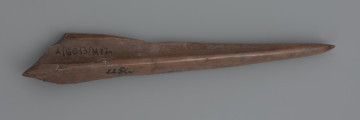
Perforator
9600 p.n.e. — 4100 p.n.e.
National Museum in Szczecin
Part of the collection: Militaria
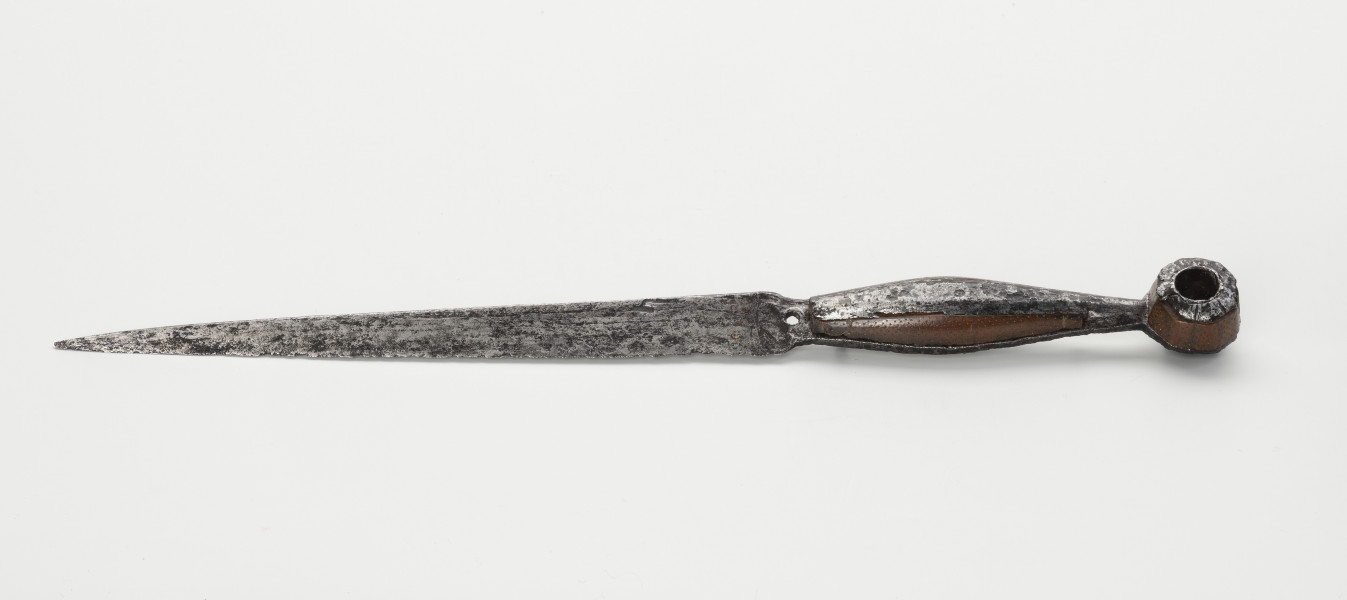
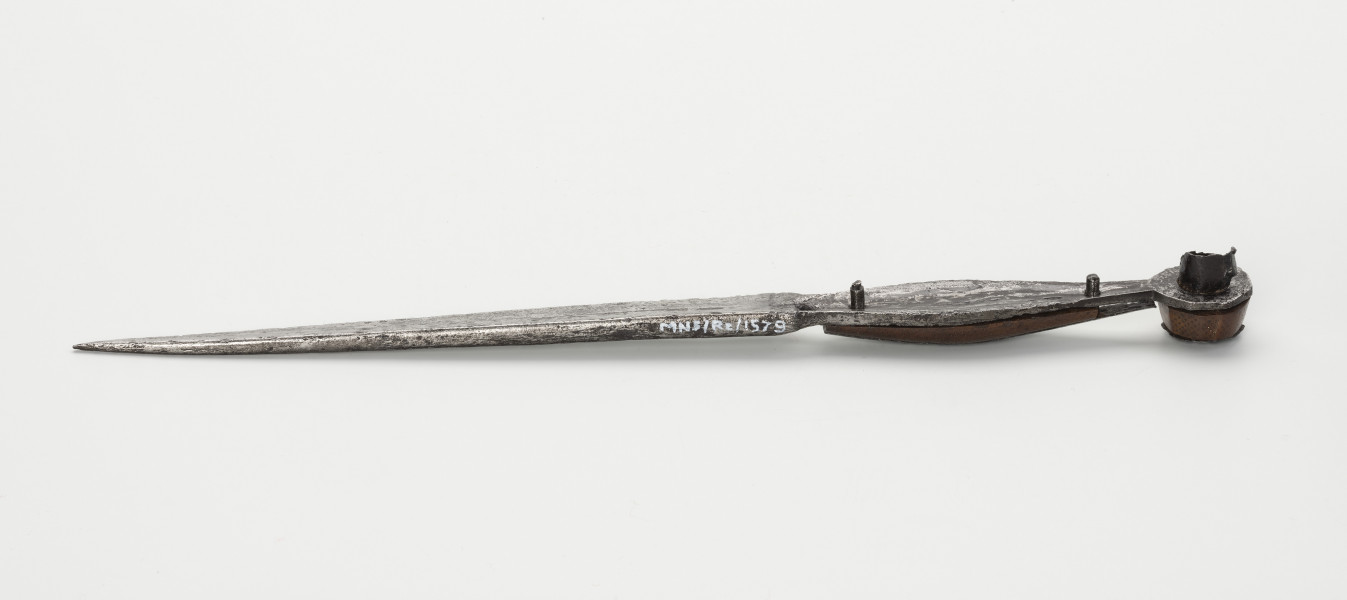
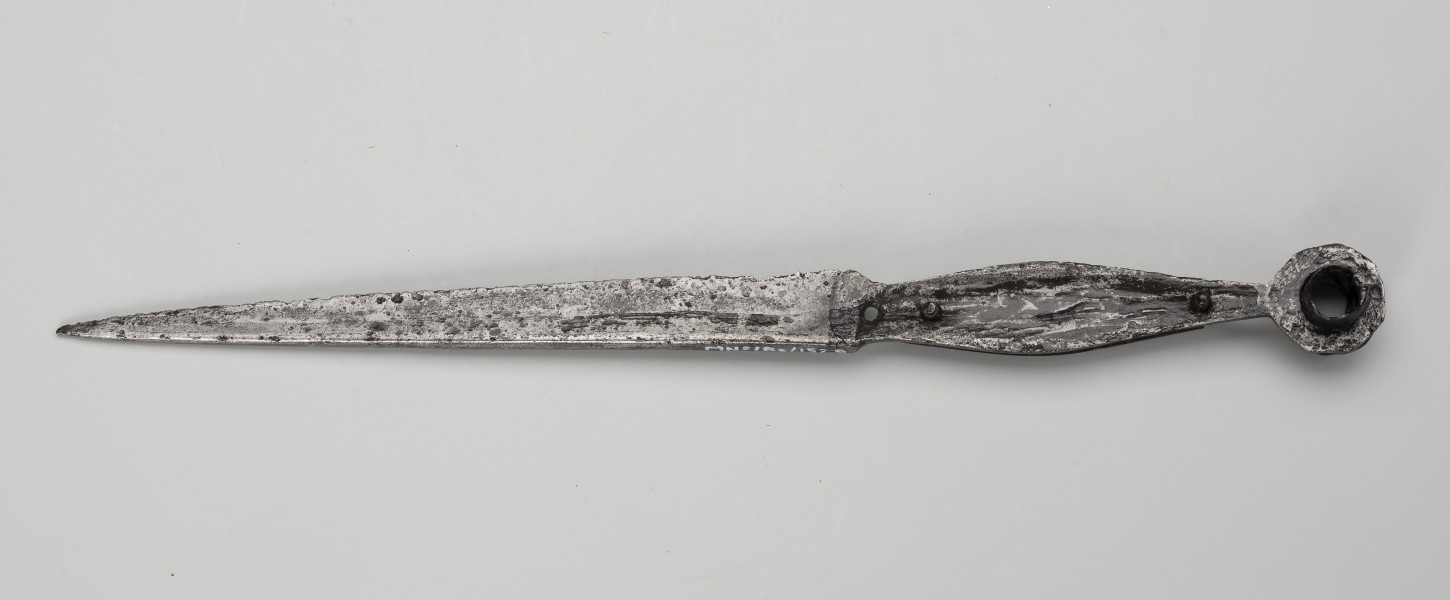
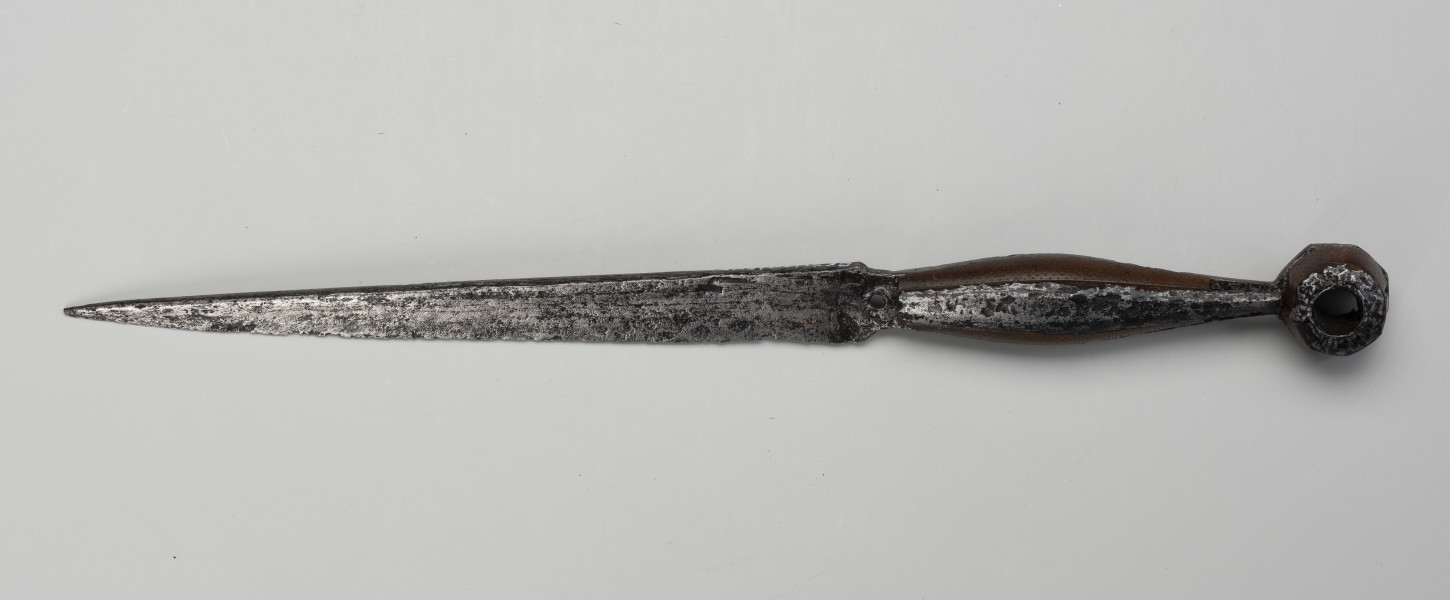
Daggers were commonly used during the Middle Ages, although their everyday use was subject to regulations, particularly in urban centres. Unlike swords, daggers were considered an unworthy weapon for knights, becoming instead a symbol of assassins. A death caused by a dagger was seen as disgraceful. Beyond their symbolic aspects, daggers were primarily practical tools for daily life. They were typically worn attached to the belt. This particular dagger stands out for its distinctively shaped pommel, which features a ring-shaped hole through which a leather strap would be threaded. Before its restoration in 2023, this hole was filled with a piece of leather and hardened silt. Despite visible traces of corrosion, the dagger still bears decorative elements that highlight its high-quality craftsmanship. These include a steel overlay on the pommel, shaped like flower petals, and a bone handle adorned with silver studs forming a pattern of shiny dots on its surface. The dagger also features a maker’s mark – a small axe stamped onto the blade. A similar dagger, dated to the 15th century, was discovered in Beeskow, Lusatia, during excavation work and is now part of the collection at the Deutsches Historisches Museum in Berlin. The dagger from the National Museum in Szczecin was recovered in 1890 during the dredging of the Roztoka Odrzańska (German: Pappenwasser) near Trzebież. The find was handed over, along with other recovered artefacts, to the collection of the Szczecin Historical Society, Gesellschaft für Pommersche Geschichte und Altertumskunde (1824–1918), and later to the Pomeranian State Museum, Pommersches Landesmuseum in Stettin (1927–1945), which was established in 1927. Justyna Bądkowska
Author / creator
Object type
dagger, edged weapon, knife
Technique
forging, nabijanie, engraving
Material
steel, róg, silver
Origin / acquisition method
acquisition
Creation time / dating
Creation / finding place
Owner
The National Museum in Szczecin
Identification number
Location / status
9600 p.n.e. — 4100 p.n.e.
National Museum in Szczecin
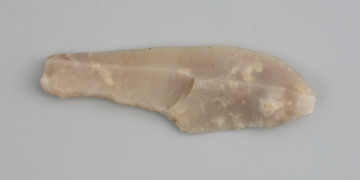
11900 p.n.e. — 11000 p.n.e.
National Museum in Szczecin
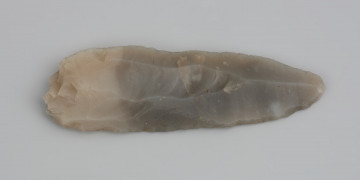
11900 p.n.e. — 11000 p.n.e.
National Museum in Szczecin
DISCOVER this TOPIC
Museum of King Jan III's Palace at Wilanów
DISCOVER this PATH
Educational path