

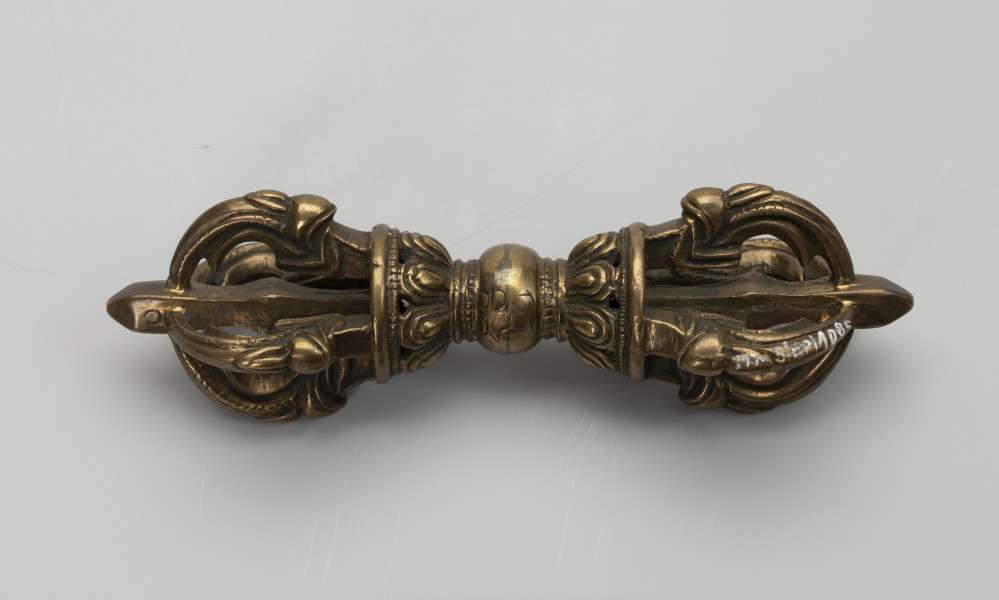


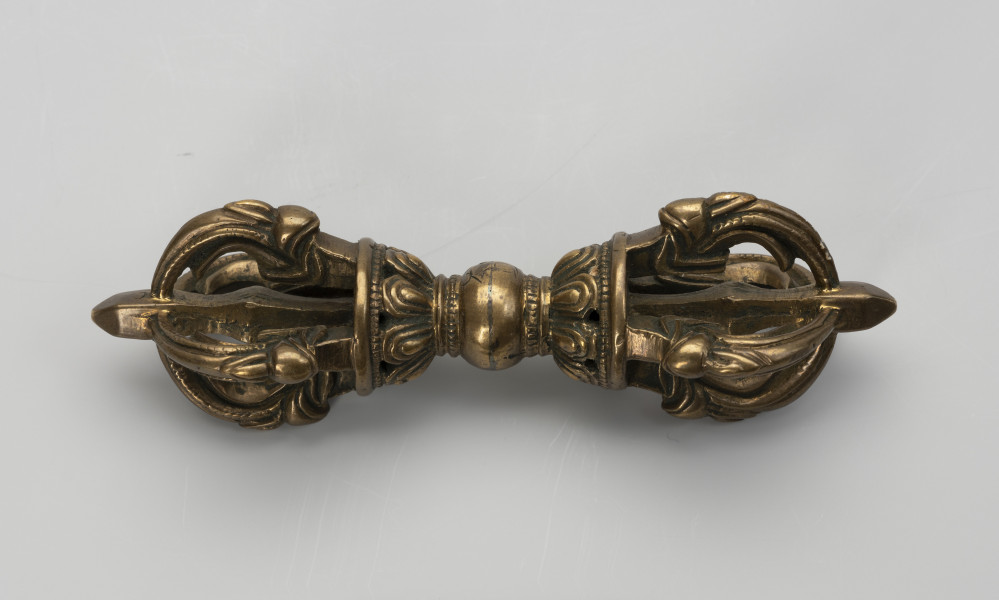
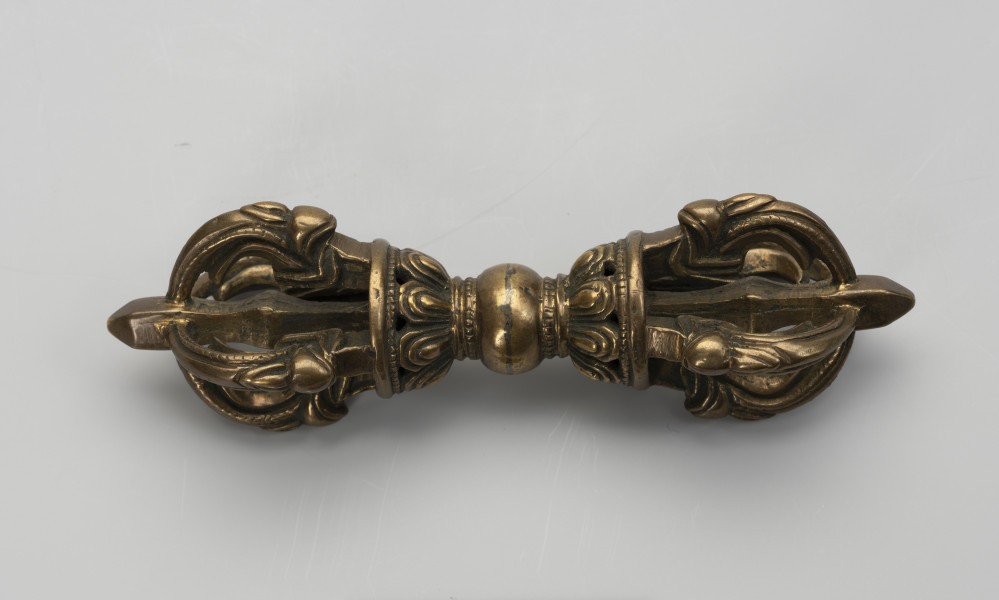
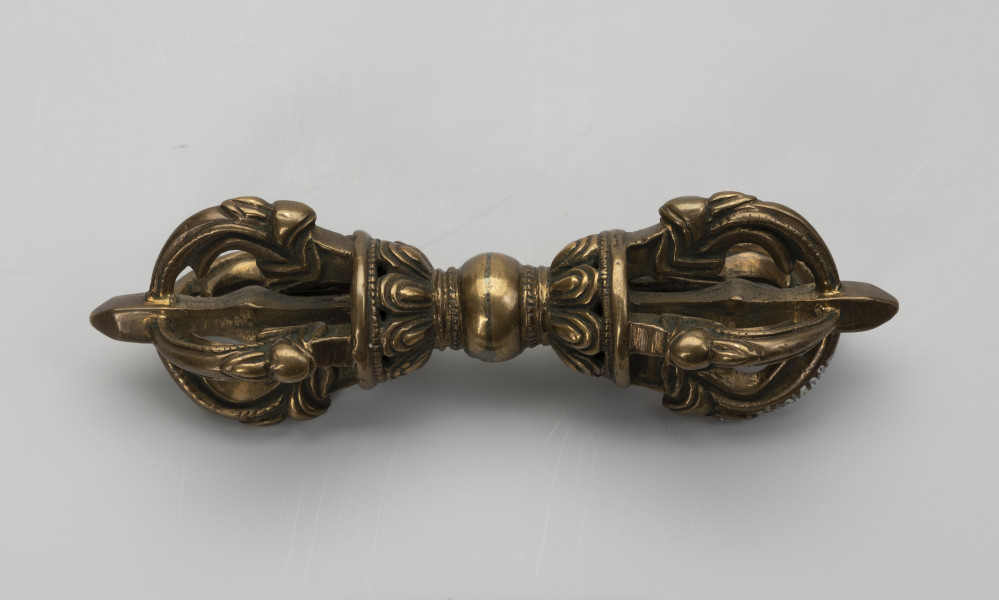

Vajrapani
circa 1891 — 1910
National Museum in Szczecin
Part of the collection: Asian art
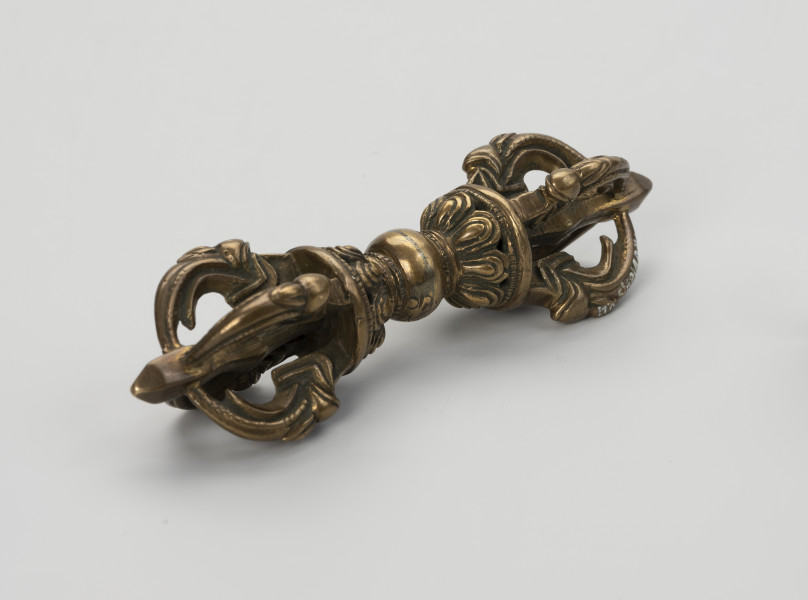
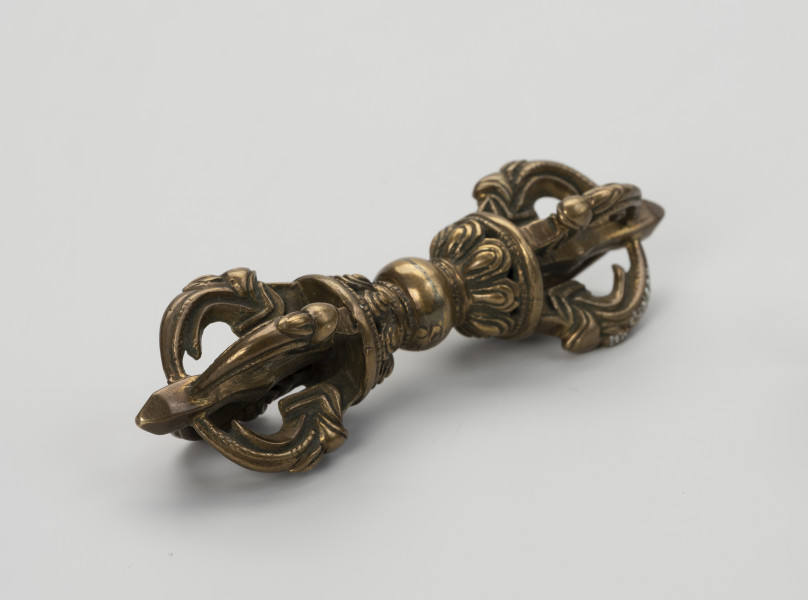
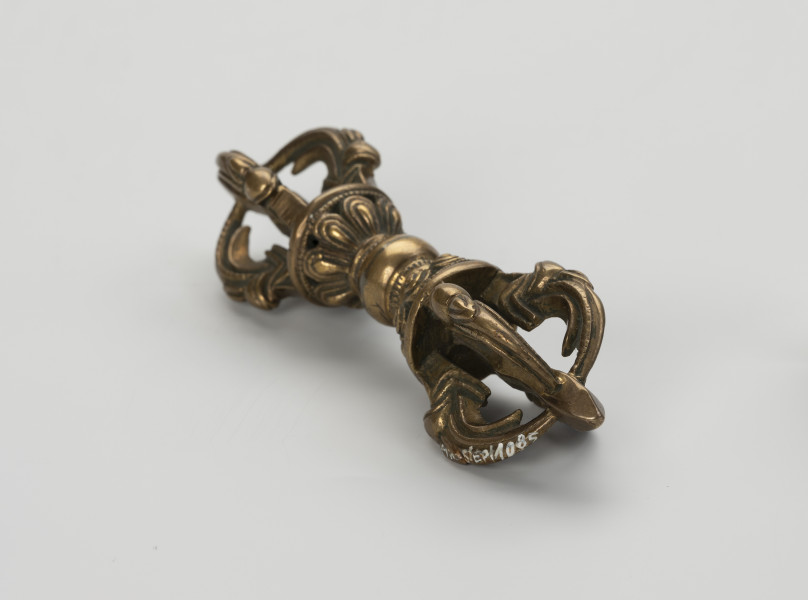
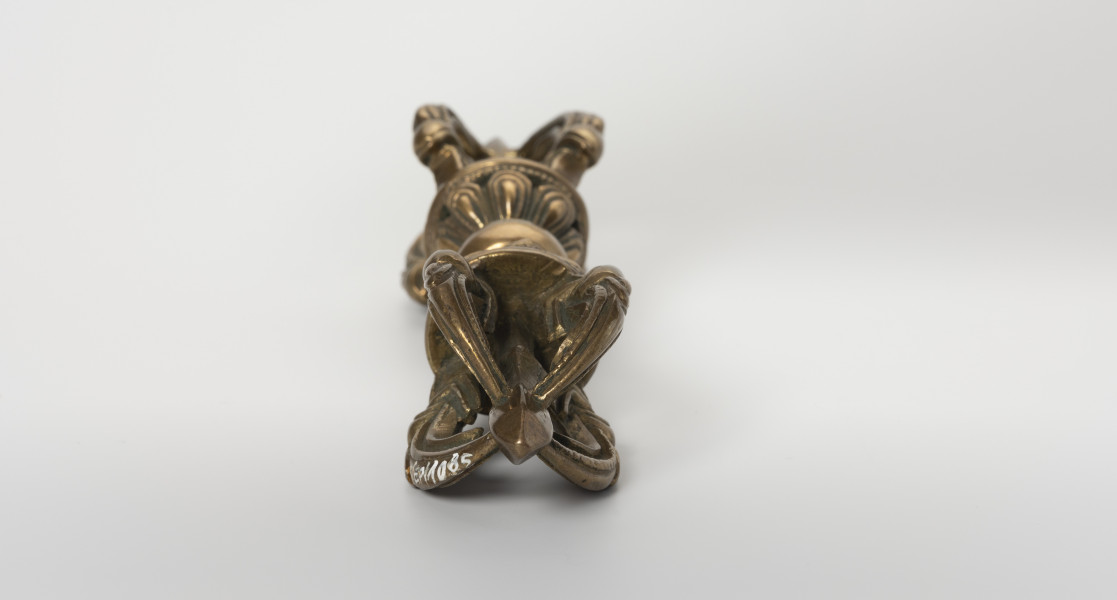
Called the scepter of spiritual power or the diamond scepter of lamas, the vajra (also known as dorje or ochir) has a double meaning in Sanskrit: it means both "diamond" and "thunderbolt." Alongside the bell, it is one of the most important ritual objects used in Vajrayana — the youngest branch of Buddhism. Known as the Diamond Way, Vajrayana originally emerged in India and is today practiced in Tibet and Mongolia (Tibetan and Mongolian Buddhism). Combining the qualities of a jewel and a thunderbolt, the vajra is considered infinitely powerful and capable of overcoming all obstacles. It is a symbol of liberating methods and the perfection of mind. During Buddhist ceremonies, it is used together with the bell: held in the right hand, the vajra symbolizes compassion and masculine energy, while the bell in the left hand represents wisdom and feminine power. In Buddhist iconography, it is depicted as a stylized thunderbolt as well as a ritual implement. This intricately crafted object comes in various two- or four-pronged versions. At its center is a sphere symbolizing reality, which serves as the scepter’s grip. From this emerge two lotuses with four or eight petals, from which usually four arms decorated with stylized heads of the mythical makara extend. These arms converge at the central point, which forms the axis of the entire vajra. The two lotuses growing in opposite directions represent the duality of existence — the splitting of reality into two poles — with each set of five arms signifying an opposing world. The first is the ideal world of meditation and enlightenment, symbolized by the Five Cosmic Buddhas; the second is the unenlightened world, comprising the five elements (earth, fire, water, air, space), the five aggregates of conditioned existence (form, sensations, perception, mental formations, consciousness), and the five mental poisons (ignorance, aversion, pride, passion, envy). Both worlds are aspects of one and the same reality — a representation of the unity of opposites. Katarzyna Findlik-Gawron
Author / creator
Object type
vajra, sceptre
Technique
odlew metodą traconego wosku, fine detail finishing, repustowane, engraving
Material
bronze
Origin / acquisition method
purchase
Creation time / dating
Creation / finding place
Owner
The National Museum in Szczecin
Identification number
Location / status
circa 1891 — 1910
National Museum in Szczecin

1801 — 1900
National Museum in Szczecin

1891 — 1910
National Museum in Szczecin
DISCOVER this TOPIC
Museum of King Jan III's Palace at Wilanów
DISCOVER this PATH
Educational path