






Summer dress by DANA
1967 — 1989
National Museum in Szczecin
Part of the collection: Everyday life in the Polish People's Republic
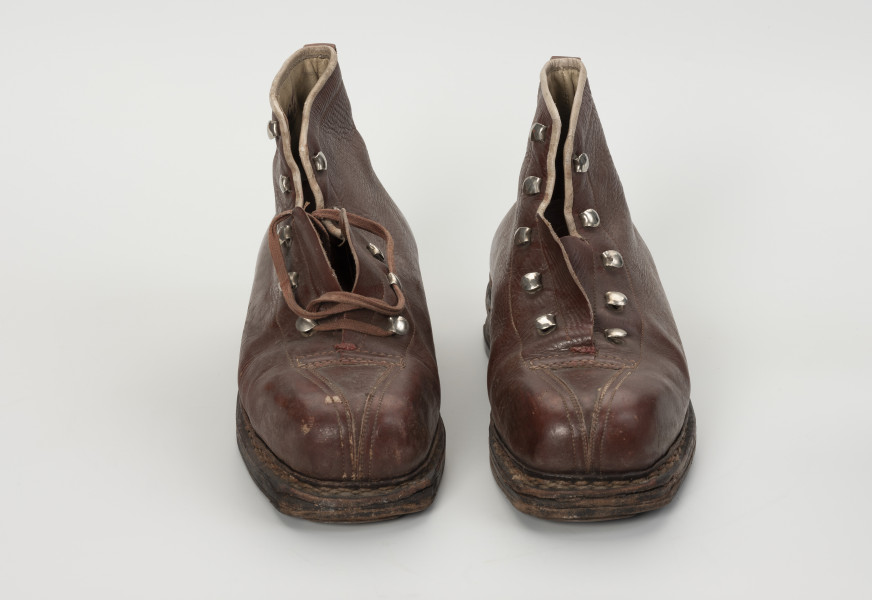
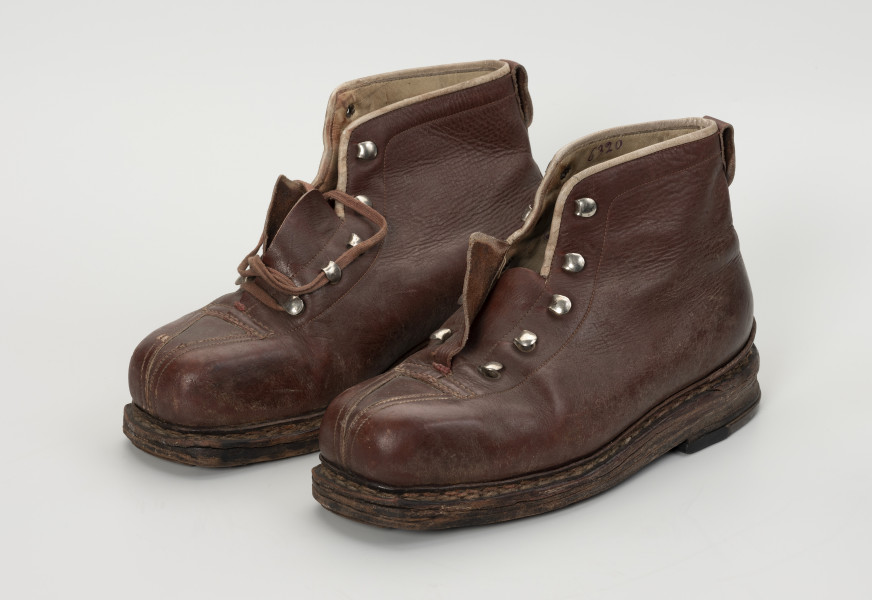
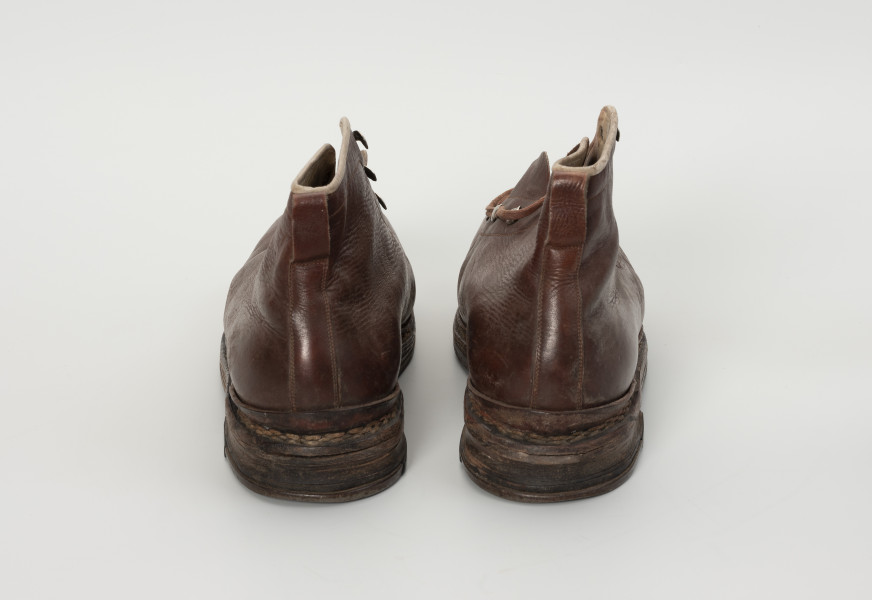
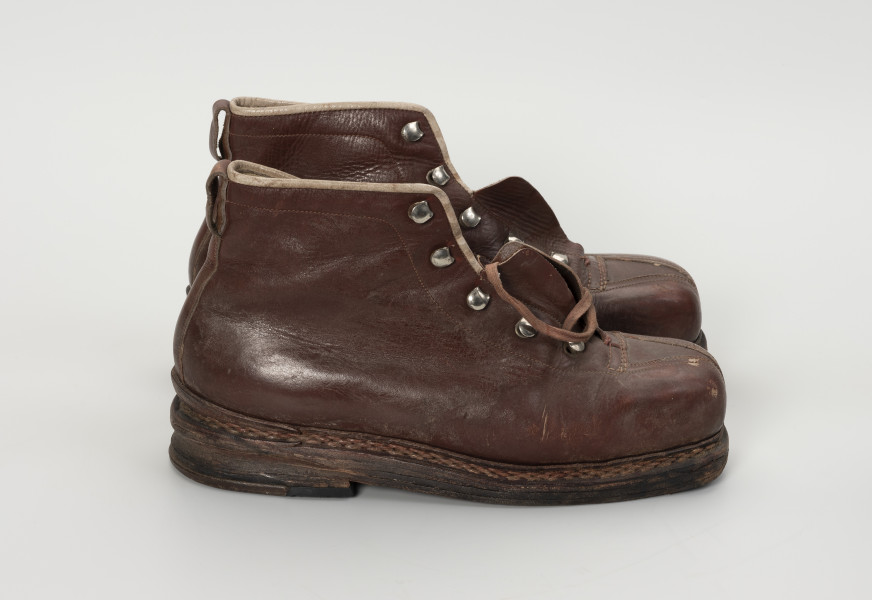
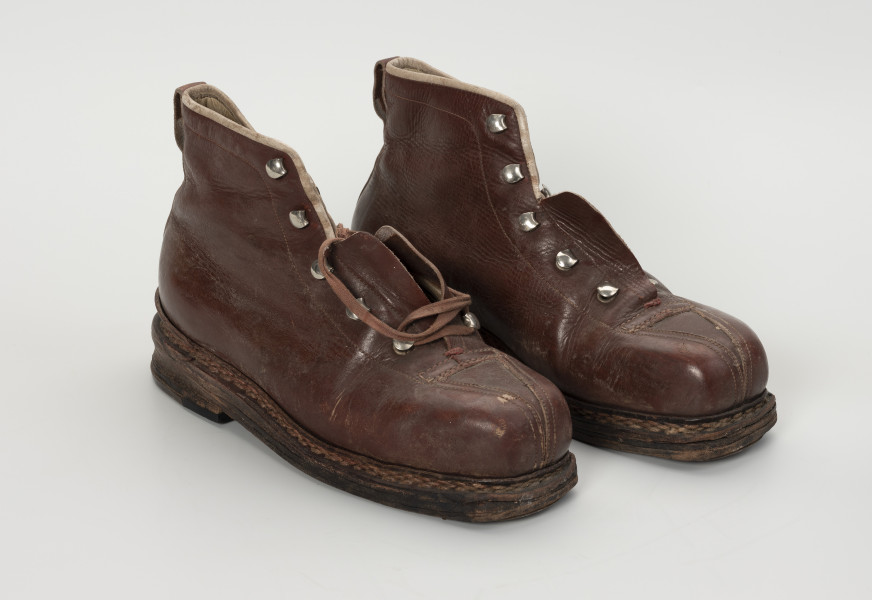
In the early post-war years, footwear, like all clothing, had to be above all practical. The main priority was protection against cold and damp. A lack of materials and widespread poverty shaped the way people dressed. In some cases, winter boots were improvised by attaching pieces of fox fur to wooden soles. Old items of clothing, even when damaged or very worn, were not thrown away but repaired, just like this pair of trzewiki boots.
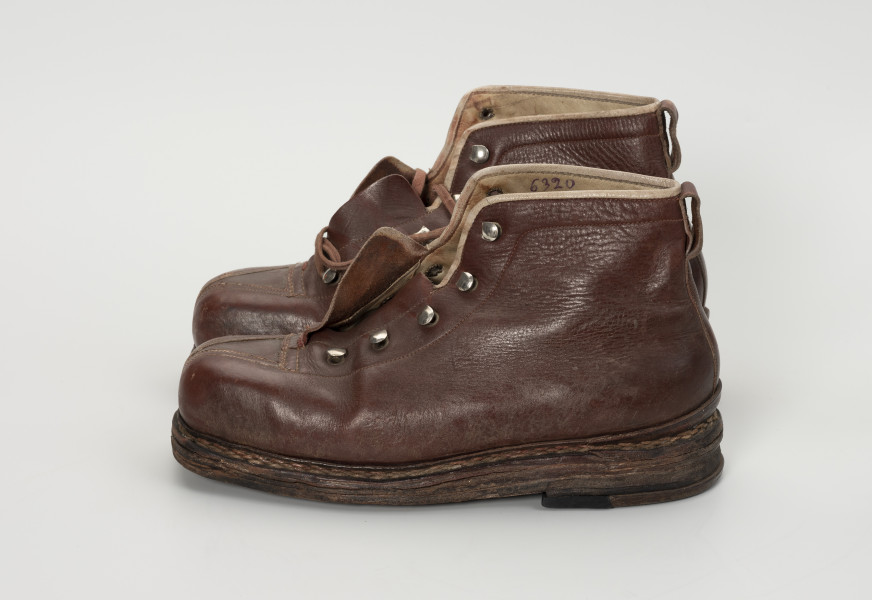
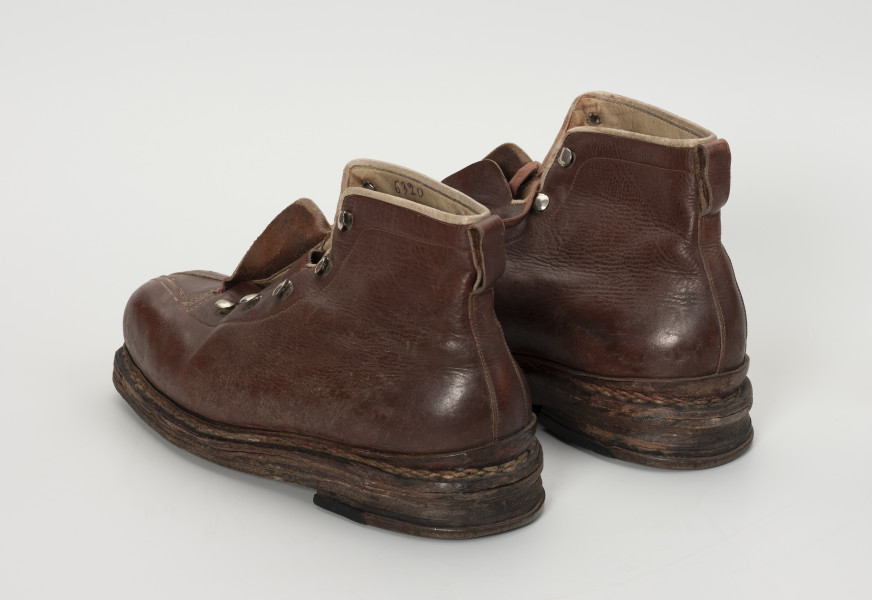
These brown lace-up boots have an additional fastening strap with a metal buckle. The lace holes are reinforced with metal rings. The uppers are made from full-grain cowhide leather, with the outer layer treated mechanically and chemically to create a smooth finish. Extra layers of leather were sewn into the toe and heel areas to strengthen them. The uppers were stitched to the soles with triple seams. The soles themselves are made from several layers of crust leather, which is the thickest part of raw cowhide.
Over time, new layers of crust leather were added to the front part of the soles due to wear, along with replacement heel pieces made from shoe rubber. The heel parts have extra metal reinforcement at the edges. At the front of the soles, there are visible marks where similar metal pieces used to be, but they are now missing. The soles and heels were attached using nails. The insoles are made of jute and show clear signs of heavy use.
The boots, especially the soles and jute insoles, show signs of intensive wear as well as multiple repairs.
This pair of boots was brought from Szczawnica to Greater Poland by Mrs Janina Koczorowska (1906–1998) shortly after the end of the Second World War. White shoelaces were added in Poznań. The other repairs were carried out at various, unknown times. Eventually, the boots moved with the Koczorowski family to Szczecin.
Author / creator
Object type
footwear, pair
Technique
shoemaking techniques, artisan production
Material
leather, rubber, metal, cotton
Origin / acquisition method
donation
Creation time / dating
Creation / finding place
Owner
The National Museum in Szczecin
Identification number
Location / status
1967 — 1989
National Museum in Szczecin

1967 — 1989
National Museum in Szczecin
circa 1520 — 1530
National Museum in Szczecin
DISCOVER this TOPIC
Castle Museum in Łańcut
DISCOVER this PATH
Educational path