


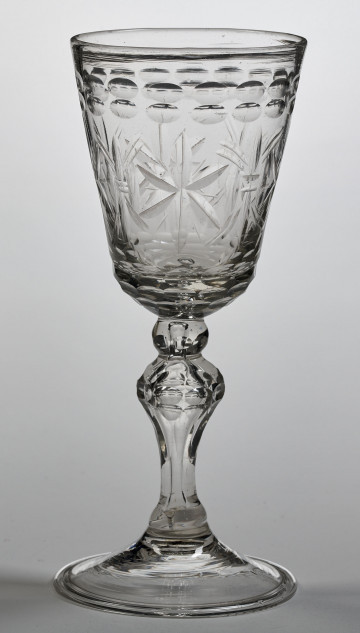
Chalice with rosettes
half of the 18th century
Castle Museum in Łańcut
Part of the collection: Glass
The drinking flute was made in the second half of the 18th c. in Saxony. Saxon products did not turn up in the Łańcut Castle's eighteenth-century glass collection accidentally. During the period of the personal union between Saxony and Poland, Saxony supplied Polish glassworks with specialists and treated Poland as an export destination for its products. Saxon glass was also purchased by the Polish magnates during their frequent trips to Dresden. The above drinking flute was made of clear glass. The glass has a large foot with a curled edge, a spiral stem partially tinted with cobalt, and a slender, conical bowl. At the top, the bowl is decorated with a carved Harlequin figure standing on grass, and below, with a garland. Around the edge of the bowl, there is a row of round facets.
Author / creator
Dimensions
height: 32 cm
Object type
Glass
Material
glass
Creation time / dating
Creation / finding place
Owner
Castle Museum in Łańcut
Identification number
Location / status
half of the 18th century
Castle Museum in Łańcut
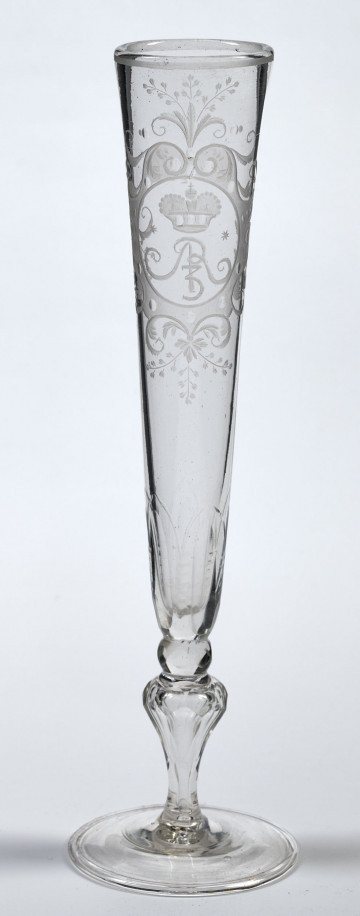
1st half of the 18th century
Castle Museum in Łańcut
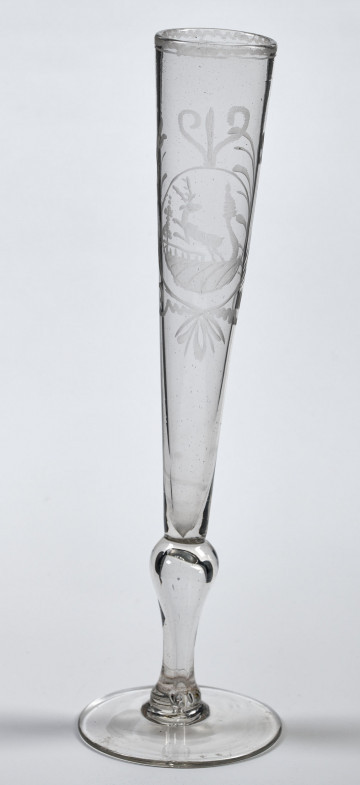
1st half of the 18th century
Castle Museum in Łańcut
DISCOVER this TOPIC
Castle Museum in Łańcut
DISCOVER this PATH
Educational path