




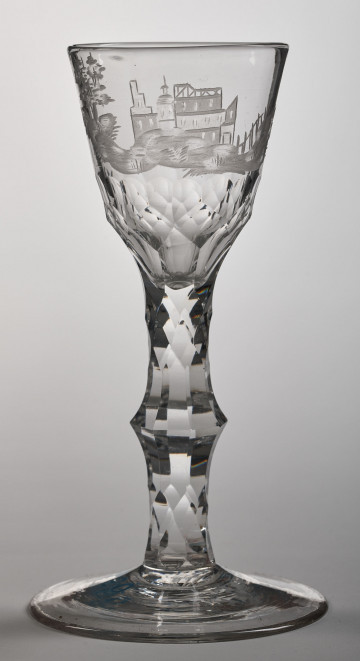
A wine goblet of the “Römer” type
początek XX w.
Castle Museum in Łańcut
Part of the collection: Glass
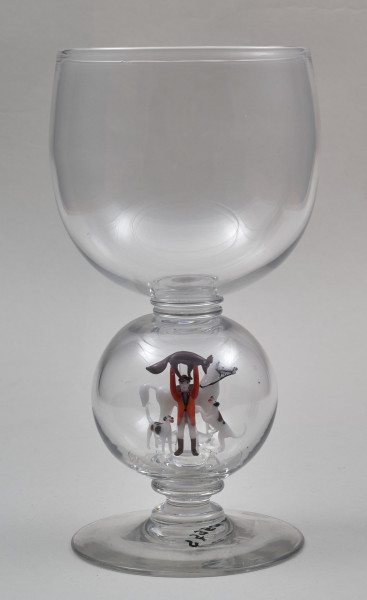
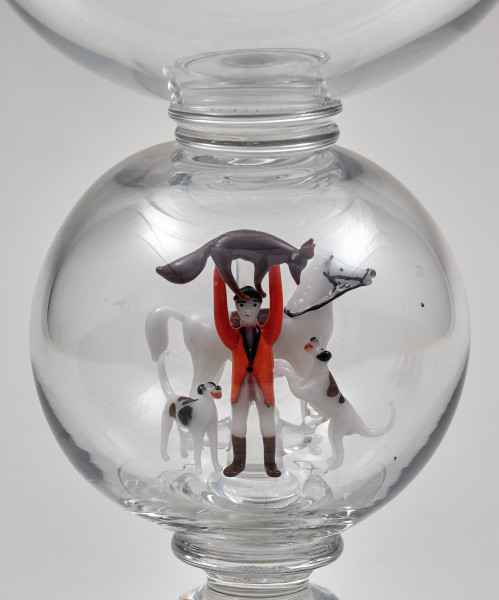
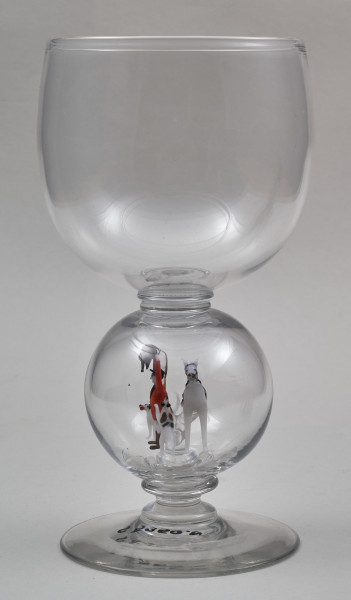
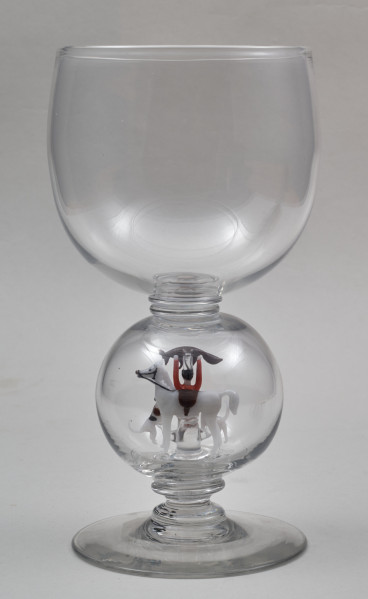
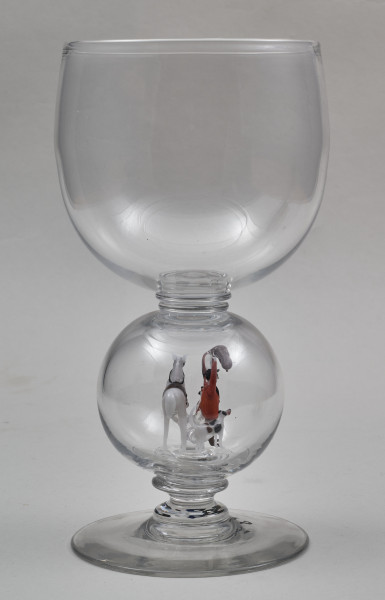
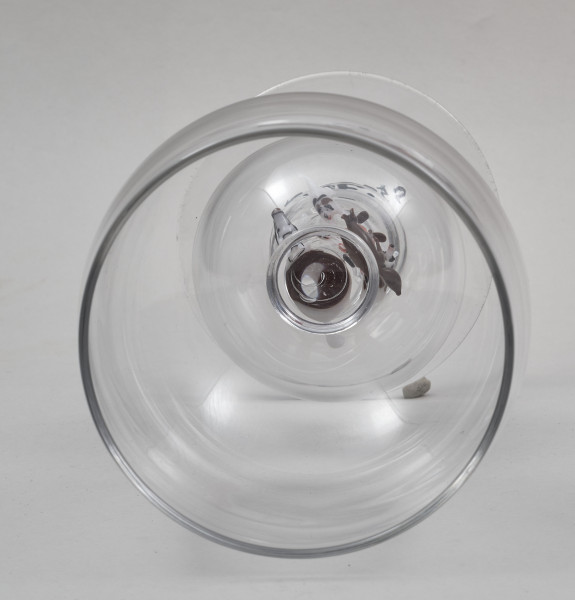
A wine goblet of the “Römer” type. It has a semi-circular cup with a cylindrical narrowing at the top. The ball-shaped nodus is its distinctive feature. The goblet ends with a round, smooth foot. The foot and bowl are connected to the nodus by rings. In the nodus, there is an embedded hunting scene from a traditional English type of par force hunting, made of tinted glass. A standing hunter is depicted, holding the body of a killed fox above his head in his outstretched hands. The man is wearing brown high boots, white trousers and a red jacket. Next to him, there are two greyhounds; one leans his front paws against its master, the other stands calmly on the other side of the hunter. Behind the man, there is a white horse with a brown harness and saddle.
Glass goblets of this type were used in Europe primarily in 17th and 18th century. They were used by the bourgeoisie and nobility to drink wine. Most of them were produced in Cologne, from where they were transported to other centres on the Rhine and the Netherlands. This goblet comes from England. It was made by William Swingewood of the Stevens and Williams factory in 1930s.
The small figure of the hunter, along with the dogs and horse, was embedded in glass using the lampwork technique, i.e. heating and melting glass in a flame.
Michał Rajchert
Author / creator
Object type
glass
Material
glass
Creation time / dating
Creation / finding place
Owner
Muzeum - Zamek w Łańcucie
Identification number
początek XX w.
Castle Museum in Łańcut

początek XX w.
Castle Museum in Łańcut
18th century
Castle Museum in Łańcut
DISCOVER this TOPIC
National Museum in Szczecin
DISCOVER this PATH
Educational path