

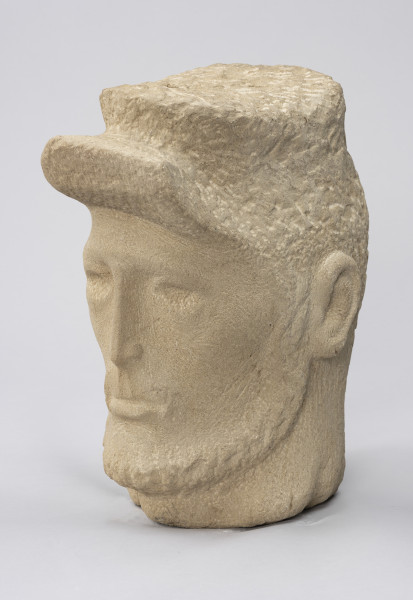
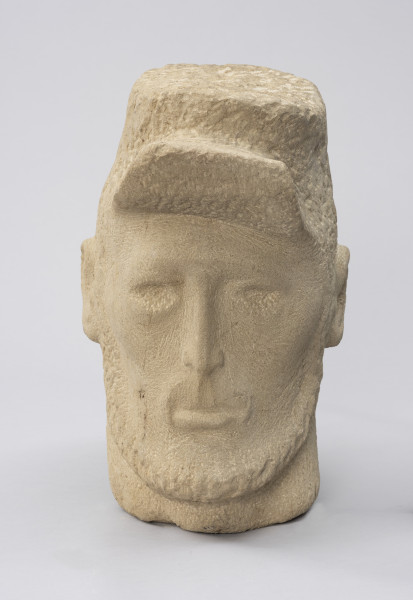
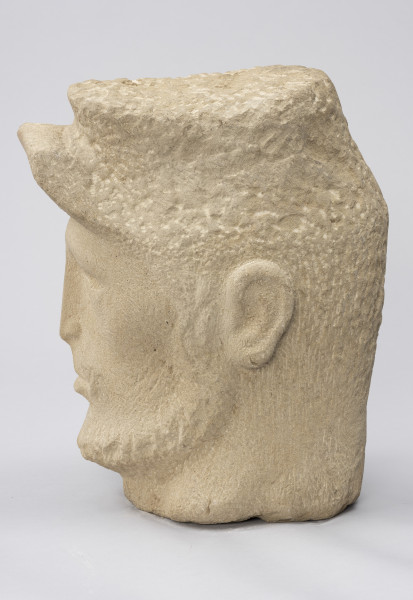
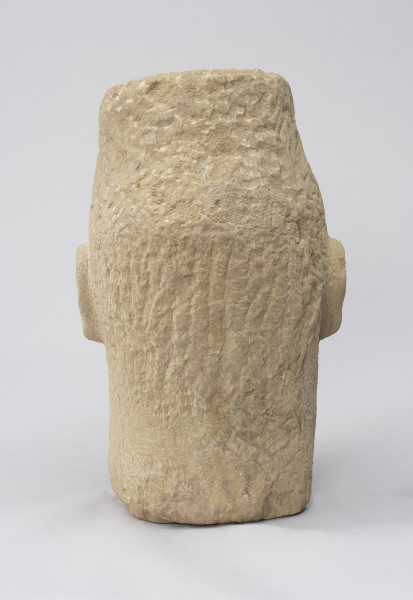
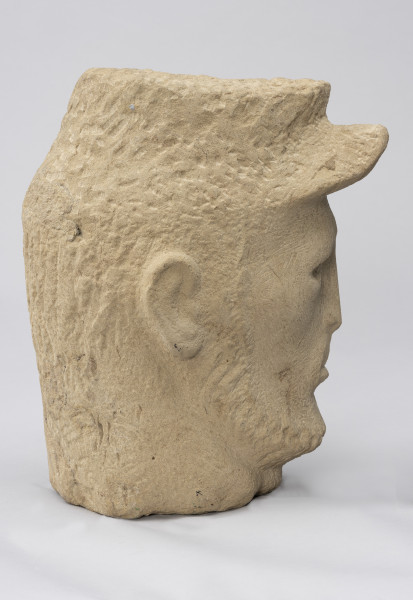
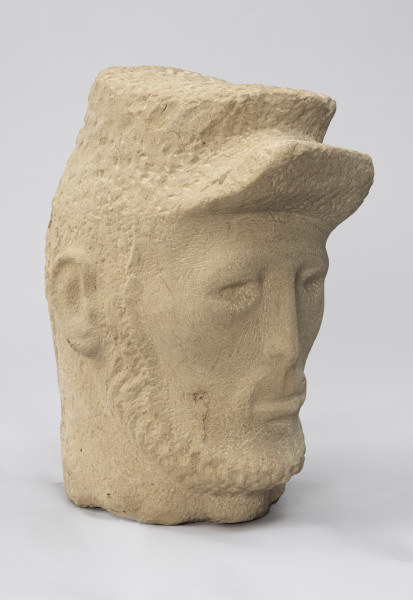

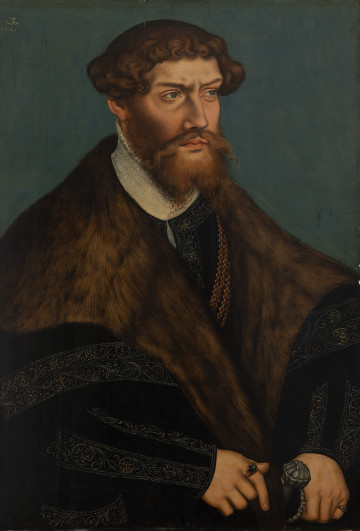
Portrait of Prince Philip I
1541
National Museum in Szczecin
Part of the collection: European classics of modernity
Having settled permanently in Szczecin in 1946, Sławomir Lewiński took an active part in the consolidation of the local community, co-organised the local branch of the Association of Polish Visual Artists, and from the second exhibition of the works of its members, he regularly presented his works to the general public.
In 1948, he received his first decorative sculptural commission – the composition Fisherwoman for the Social Security building on what is now Piłsudskiego Street (today the Marshal's Office). In spring 1949, at the People and work exhibition at the Western Pomerania Museum, Lewiński presented small mosaics on genre themes and a full-plastic cement bust of a steelworker (now in the garden of the Maritime University of Technology in Szczecin). All of them revealed a tendency to simplify and monumentalize the form, which aroused divergent reflections from Stalinist critics. When Lewiński won second place in the national competition for the local Monument of Gratitude to the Soviet Army, the simplicity of the proposed eight-metre-tall statue of a soldier was defended in the press by Emanuel Messer, who distinguished Lewiński's language from the procedures employed by modernists excluded by Socialist Realism, such as Xawery Dunikowski, Alberto Giacometti, Jean-Robert Ipoustéguy and Marino Marini. In reality, however, they were becoming an important point of reference for an artist of immense visual erudition.
He also alluded to Western formal ideas and universal history with the portrait he presented of an unnamed participant in the Paris Commune (1871). Discovered in sandstone after the Gomulka thaw, in 1957, it continues Lewiński's interests already revealed in the previous period. The first plaster version of Communards (1952) found its way – presumably as a deposit – to the permanent exhibition of contemporary art at Szczecin's museum at 27 Staromłyńska Street, adjacent to a monumental representation of contemporary protest by Gérard Singer: 14 February 1950 in Nice (1950-1951).
Revolutionary themes also manifested themselves in Lewiński's sculpture Head of Marat (1954), inspired by a painting by Jeacques-Louis David, and Against War (1954), for which a Korean student from the Szczecin Navigation and Maritime Technical School posed.
Szymon Piotr Kubiak
Author / creator
Object type
sculpture
Technique
dłutowanie
Material
sandstone
Origin / acquisition method
purchase
Creation time / dating
Creation / finding place
Owner
The National Museum in Szczecin
Identification number
Location / status
1541
National Museum in Szczecin

circa 1603
National Museum in Szczecin

1618
National Museum in Szczecin
DISCOVER this TOPIC
National Museum in Lublin
DISCOVER this PATH
Educational path