

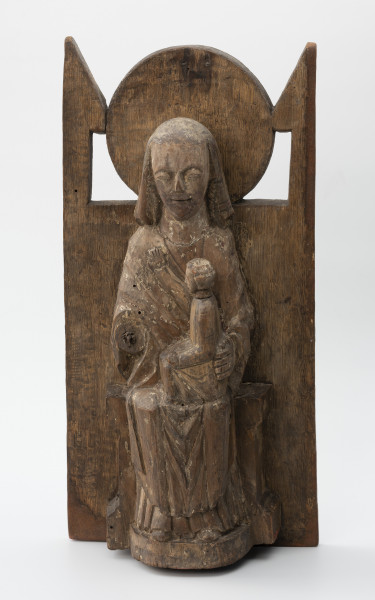


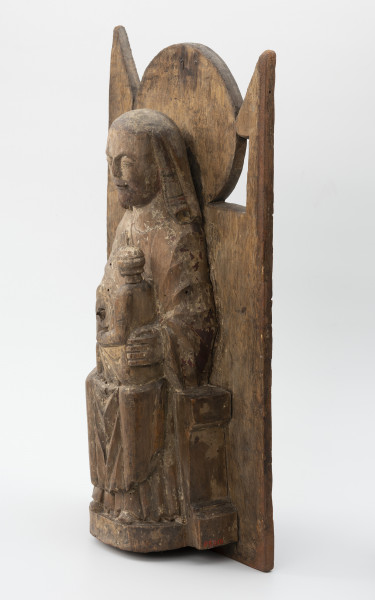
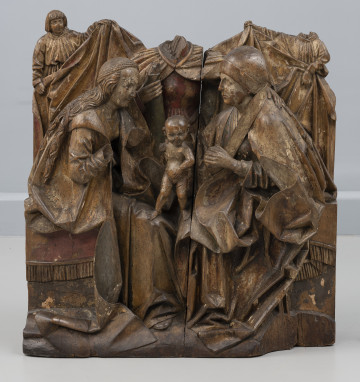
Saint Anne with Mary, the Christ Child, and Emerentia
circa 1515 — 1520
National Museum in Szczecin
Part of the collection: Medieval sculpture of West Pomerania
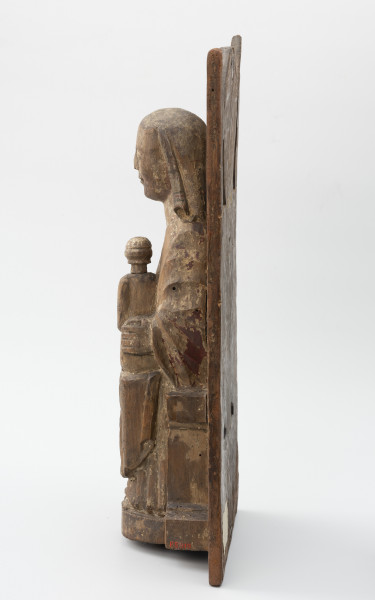
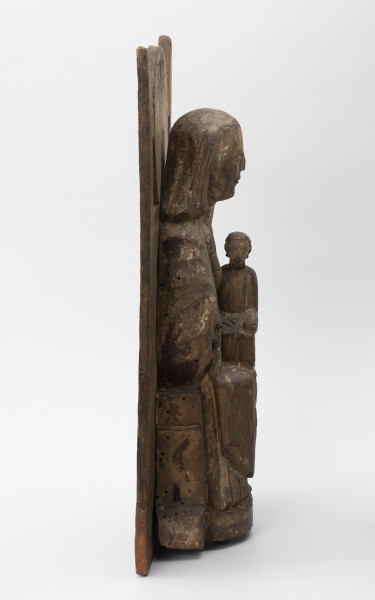
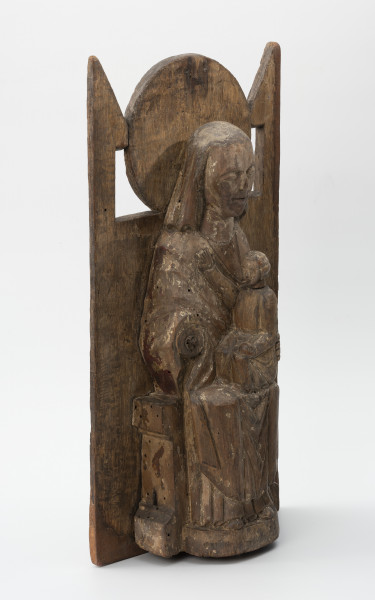
This sculpture of Mary seated frontally in a majestic pose represents the Throne of Wisdom (Sedes Sapientiae) type, popular in art from the second half of the 10th century, especially in Cistercian circles. These figures, typically crafted as fully three-dimensional, were often mobile. Depending on religious practices, they were placed on altars or carried during processions. The wall-mounted design of the sculpture from Gardno suggests it was used exclusively on an altar, while its small size indicates it was intended for private devotional practices.
The sculpture’s style and composition are rooted in Scandinavian models from the 12th and 13th centuries, particularly Swedish examples. Similar figures are known to have been incorporated into canopy altars, functioning as small chapels dedicated to a single figure. A distinctive feature of this representation is the high, throne-like backrest with a geometric openwork crown affixed to the figure. Comparable elements can be found in Scandinavian works such as the Madonna of Appuna (c. 1180–1200) and the Saint from Hörsne on Gotland (13th century).
This is the second oldest depiction of an enthroned Madonna from Pomerania preserved in the Szczecin collections (MNS/Szt/179). Both sculptures share a similar iconographic type, a close date of creation, stylistic influences from 13th-century Scandinavian art, and a foundation attributed to Pomeranian Cistercians. As a result, they are often discussed together in the literature. Their origins are linked to the village of Gardno (Gryfino County), though archival notes about this sculpture also reference the village of Stawno (Goleniów County) in this context.
The sculpture is displayed in the permanent exhibition The Mystery of Light: Medieval Art in Pomerania.
Kinga Krasnodębska
Author / creator
Object type
figure, sacred object, altar element
Technique
sculpture, polychrome
Material
oak wood, linden wood, paint
Origin / acquisition method
legal transfer
Creation time / dating
Creation / finding place
Owner
The National Museum in Szczecin
Identification number
Location / status
circa 1515 — 1520
National Museum in Szczecin
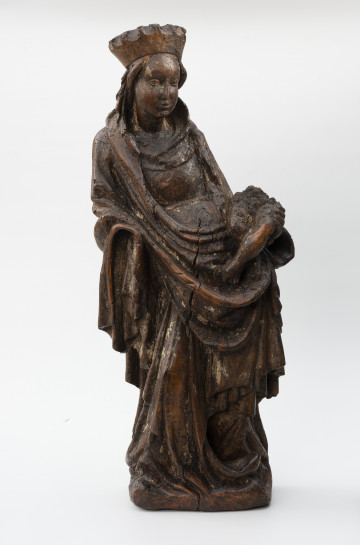
circa 1430
National Museum in Szczecin
circa 1520 — 1530
National Museum in Szczecin
DISCOVER this TOPIC
Castle Museum in Łańcut
DISCOVER this PATH
Educational path