




Grooved stone (fluted stone)
1500 p.n.e. — 700 p.n.e.
National Museum in Szczecin
Part of the collection: Bronze Age
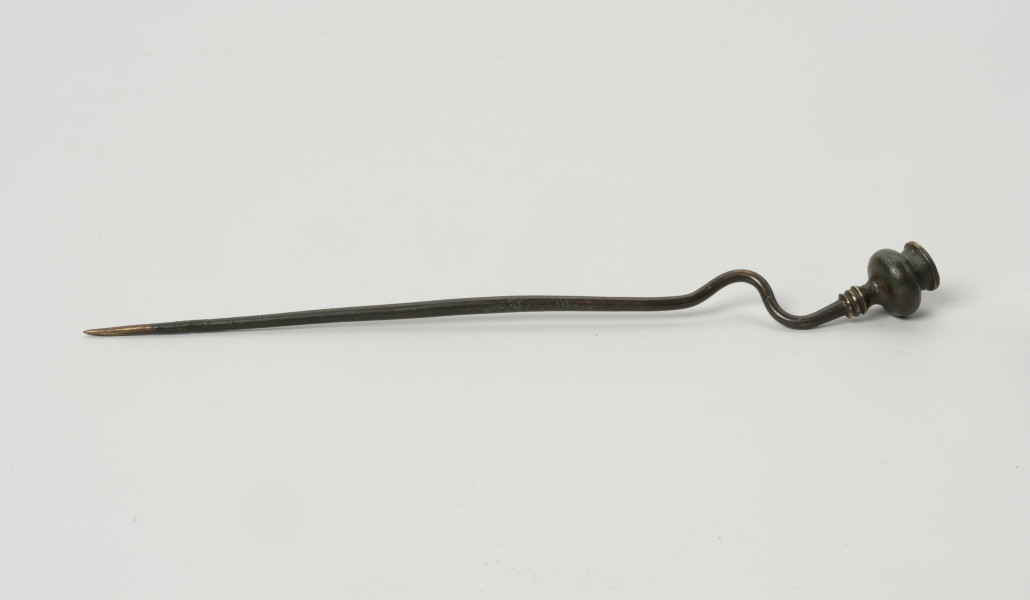
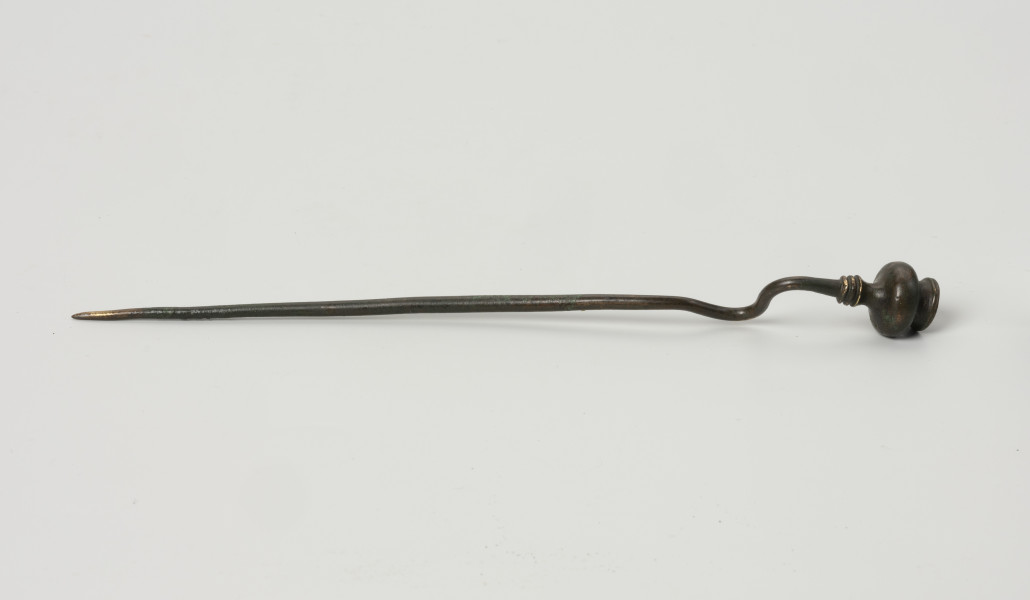
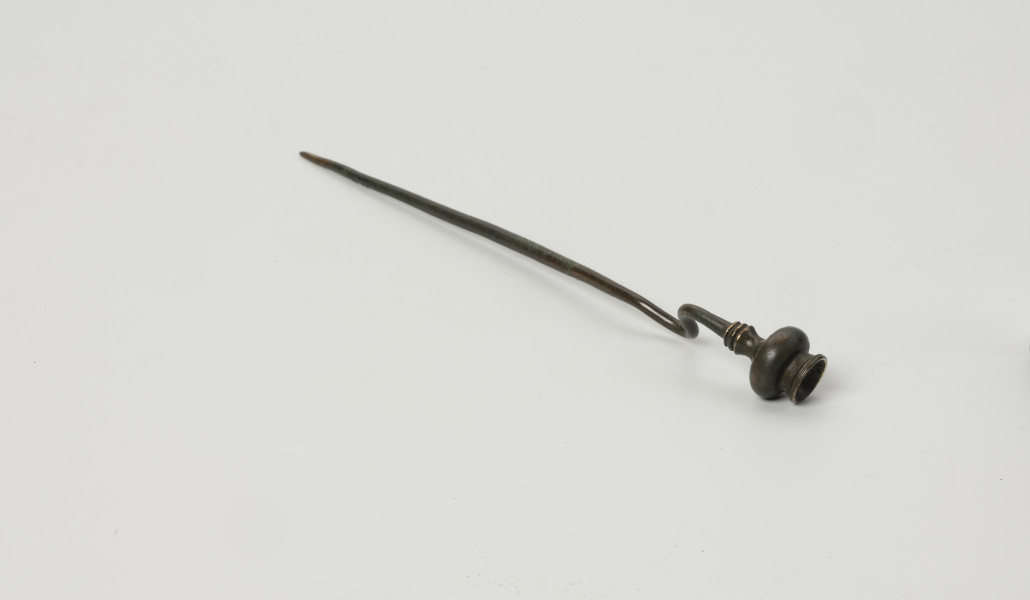
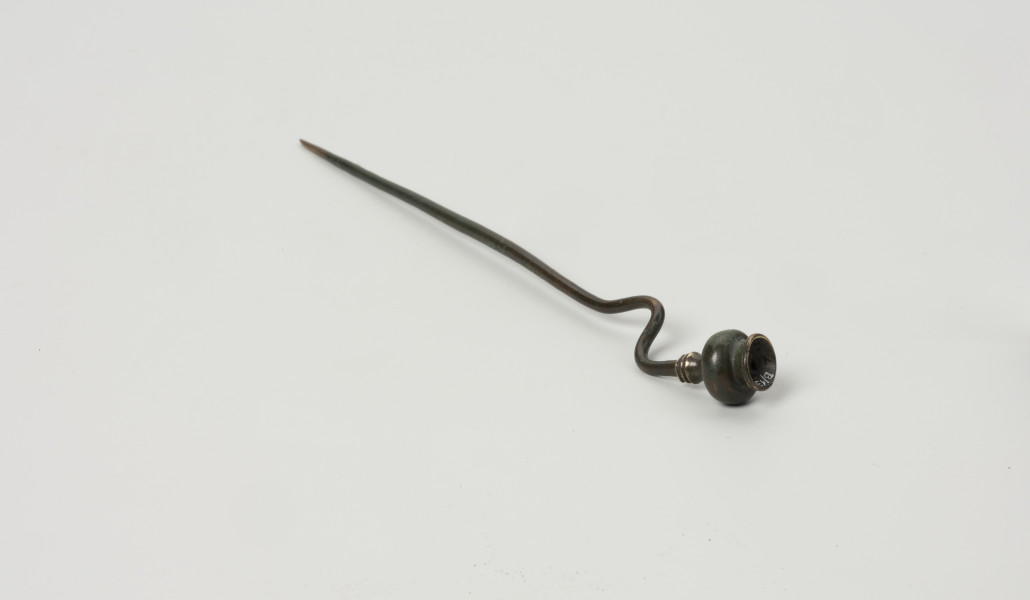
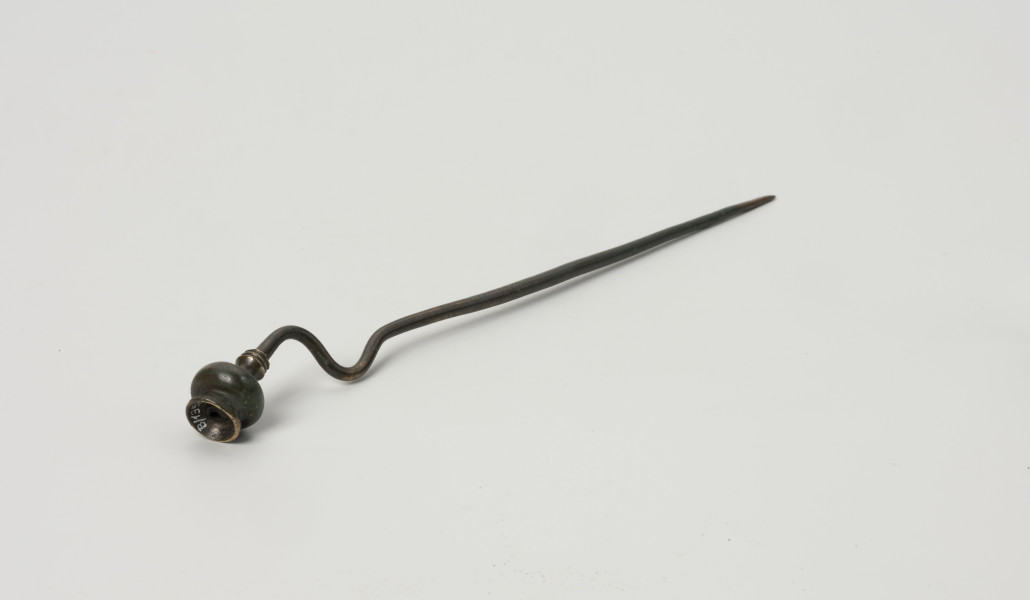
A remarkably well-preserved bronze pin with high exhibition value features a distinctively shaped neck, known as a swan-neck, which is topped with three decorative bulges forming the base for a prominent vase-shaped head. Unfortunately, no detailed information exists regarding the context of its discovery. Archival records only state that the pin originates from the village of Świchowo in Lębork County, Pomerania, and was purchased for the museum collection in 1937 from a local farmer. It can be assumed that he found the object by chance during routine fieldwork. In prehistoric times, pins were an important element of clothing. Beyond their decorative function, they also served a practical purpose, being used by both women and men to fasten garments. Swan-neck pins form a large category of archaeological finds associated with the Lusatian and Pomeranian cultures of the Hallstatt period, dating to approximately 750–400 BC. They were made from both bronze and iron. Their heads vary in shape, including ring-like bulges, cones, loops, and miniature vases. As they were part of clothing and signified the social status of the wearer, they are frequently found in graves. Dorota Kozłowska
Author / creator
Object type
pin (jewelry), adornment
Technique
casting
Material
bronze
Origin / acquisition method
acquisition
Creation time / dating
Creation / finding place
Owner
The National Museum in Szczecin
Identification number
Location / status
1500 p.n.e. — 700 p.n.e.
National Museum in Szczecin
800 — 1200
National Museum in Szczecin
around 750 p.n.e. — 550 p.n.e.
National Museum in Szczecin
DISCOVER this TOPIC
Museum of King Jan III's Palace at Wilanów
DISCOVER this PATH
Educational path