




Dagger
1400 — 1500
National Museum in Szczecin
Part of the collection: Bronze Age
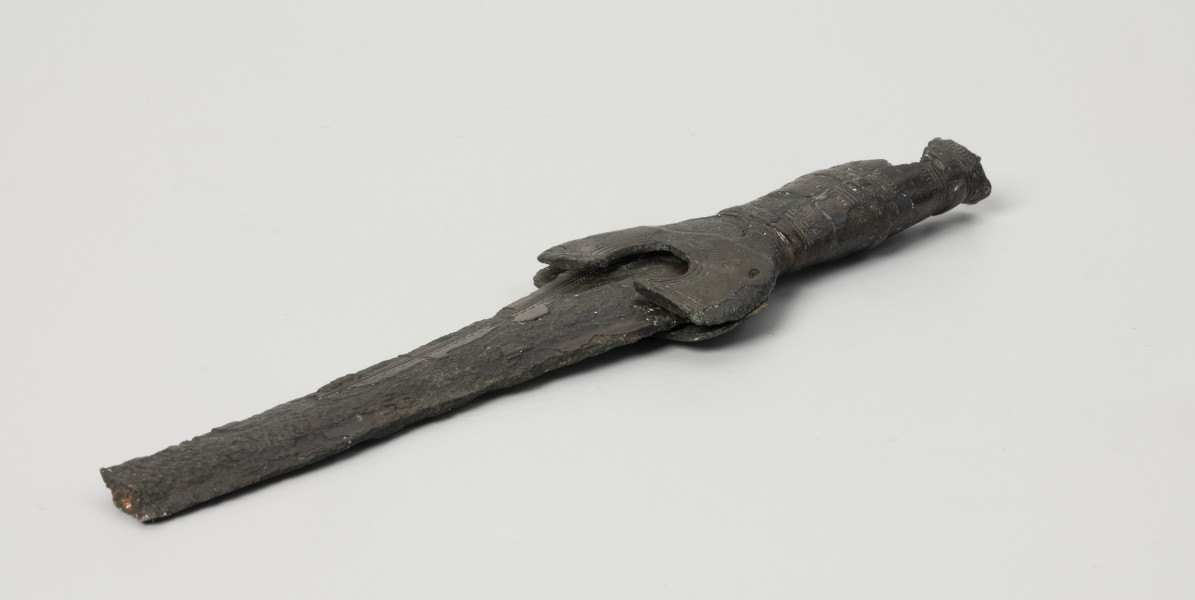
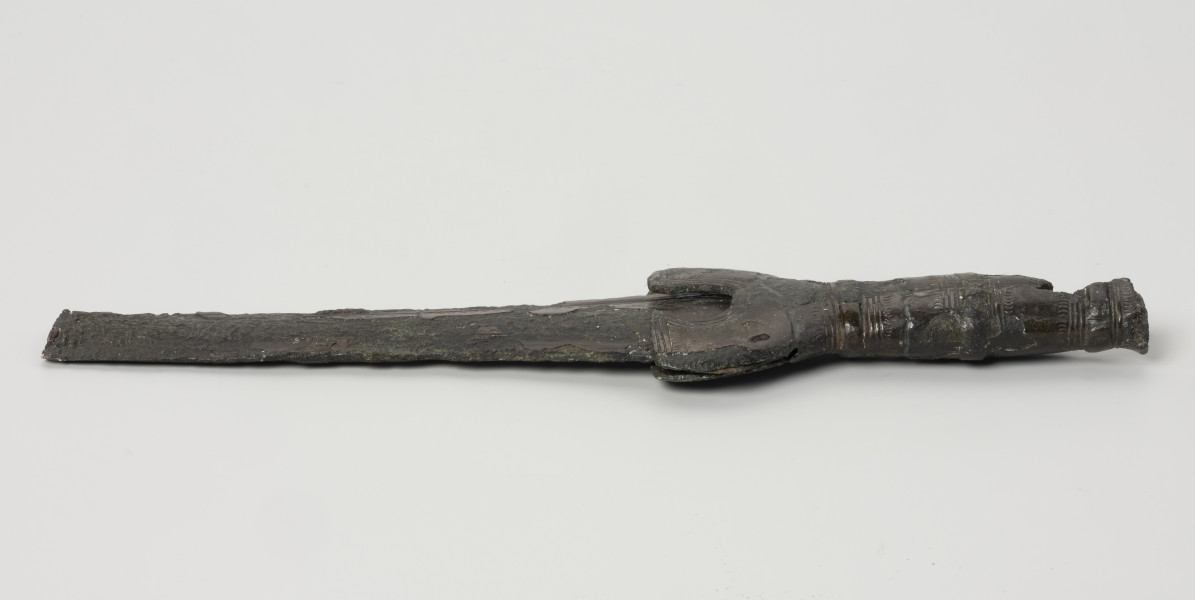
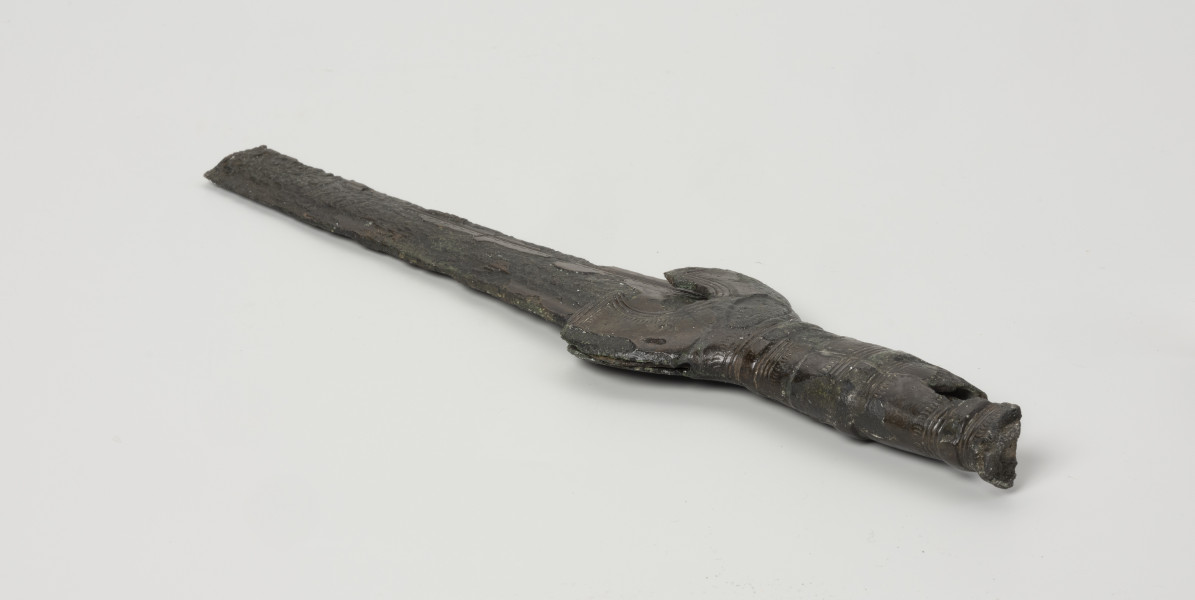
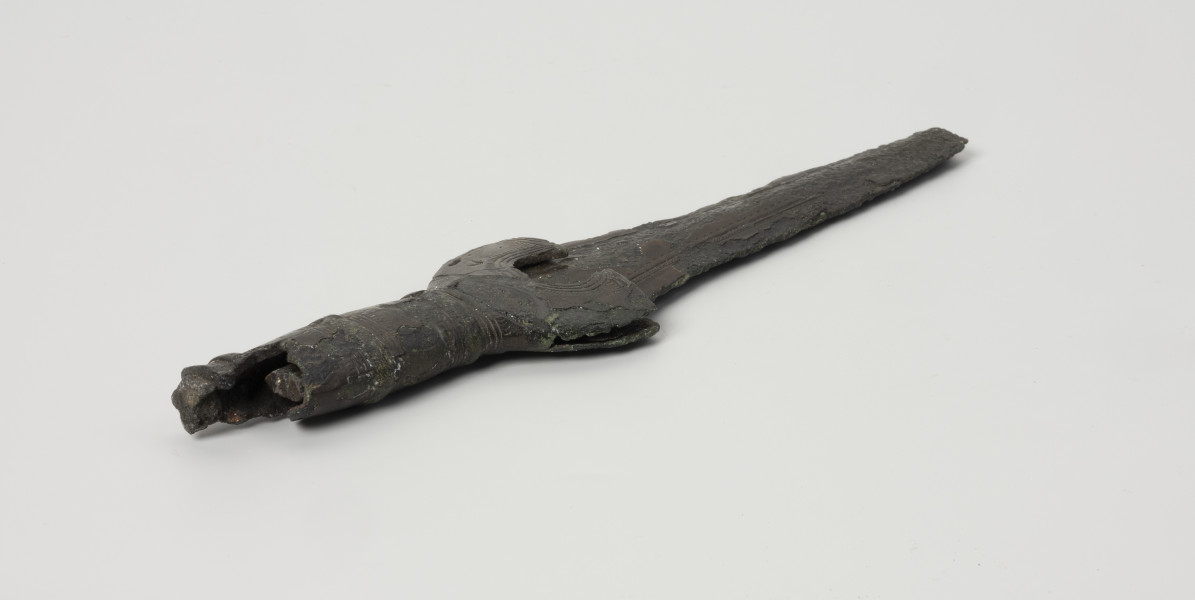
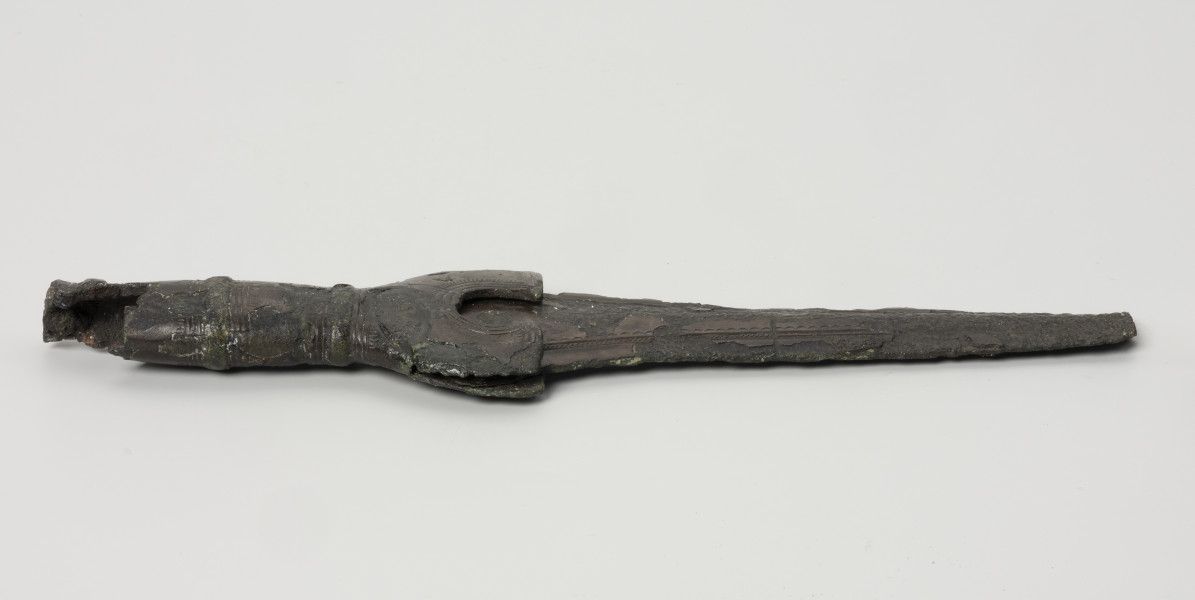
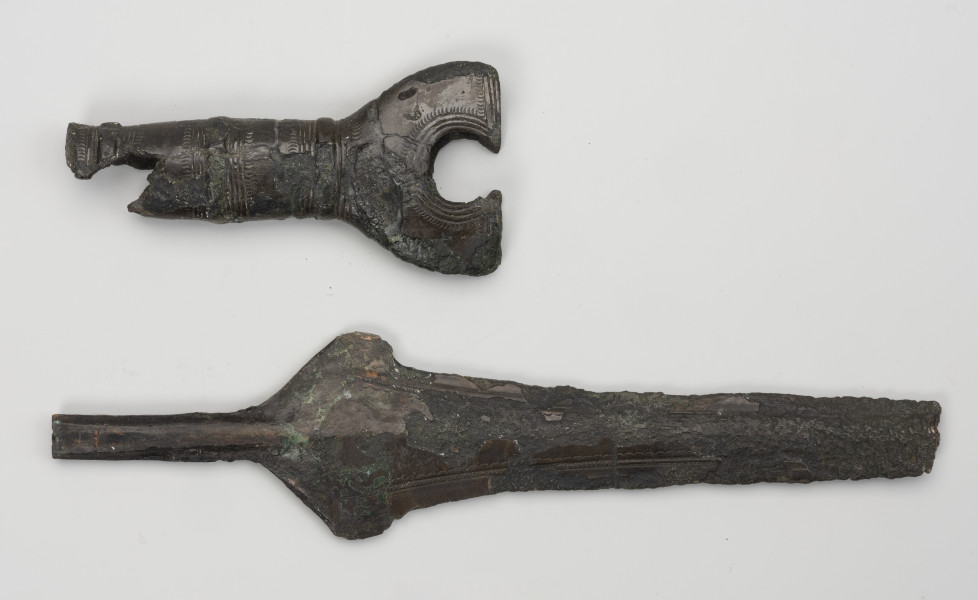
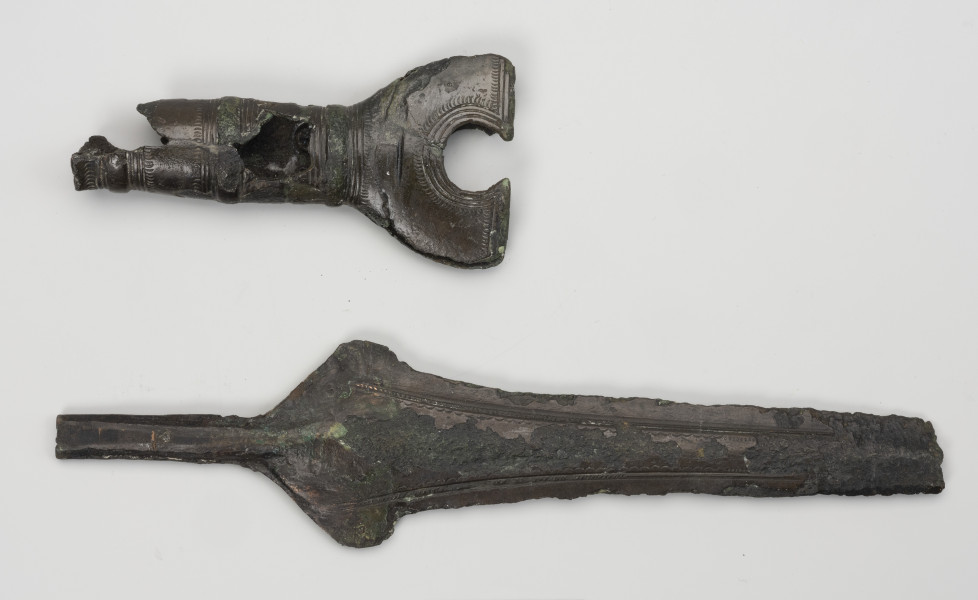
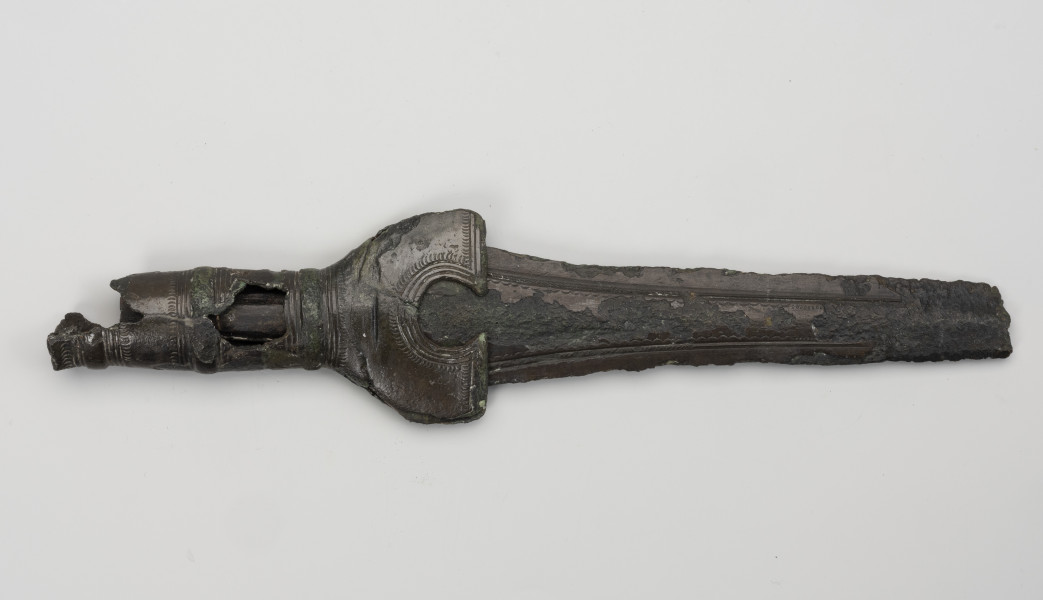
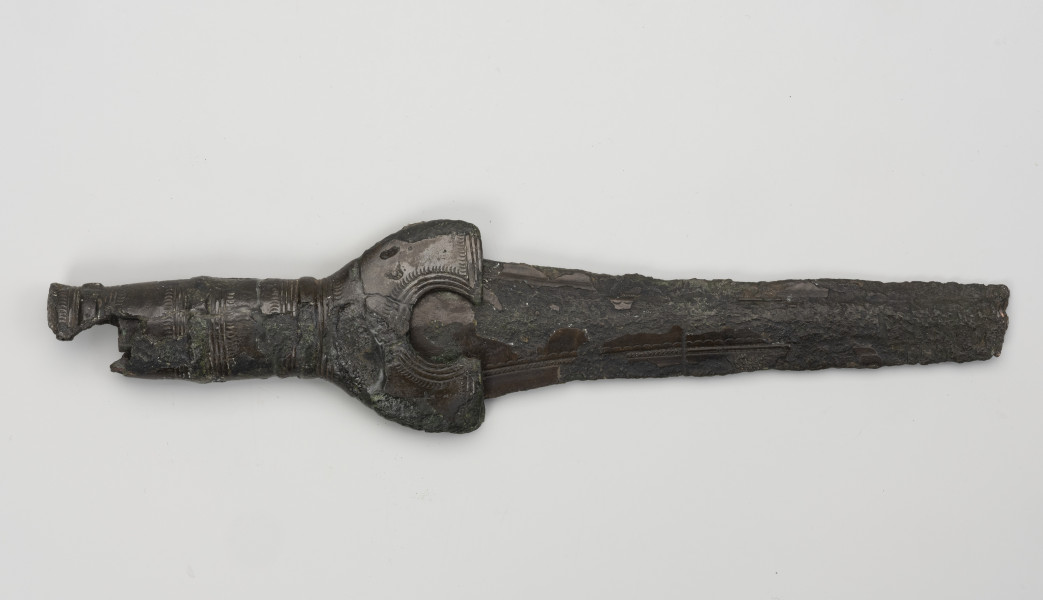
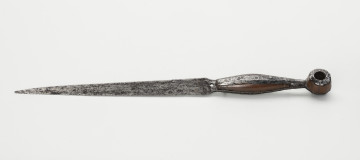
This intriguing sword, though only preserved in a 22.7 cm fragment, features a slender blade as its main component, with cutting edges on both sides. Traces of its original glossy surface have survived in some areas, revealing fine grooves on both sides, accentuated by delicate decorative elements in the form of small incisions and curved motifs. The sword’s hilt is equally ornate. Despite significant damage, its refined shape remains visible, with a smooth, polished surface adorned with engraved lines and small incisions. The hilt was most likely topped with two small volutes, allowing this specimen to be classified as an antenna sword, dated to Period V of the Bronze Age (approximately 900–750 BC). Around 180 examples of this type of weapon are known from across Europe, with concentrations in central Italy, southern Germany, Switzerland, northern Germany, and Pomerania, where 25 antenna swords have been recorded. The vast majority were produced in local workshops, with only three identified as imports from the southwestern Alpine region. This specimen was donated in 1935 by Gizela Behm from Kliniska Wielkie to the Pommersches Landesmuseum in Stettin (Pomeranian Regional Museum in Szczecin). The only known details regarding its discovery suggest that a farmer found the sword around 1933 in a field between Kliniska Wielkie (formerly Groß Christinenberg) and Łękinia (formerly Friedrichsdorf), a now-abandoned settlement located about 3 km west of Kliniska. Dorota Kozłowskac
Author / creator
Object type
sword
Technique
casting, engraving
Material
bronze
Origin / acquisition method
acquisition
Creation time / dating
Creation / finding place
Owner
The National Museum in Szczecin
Identification number
Location / status
1400 — 1500
National Museum in Szczecin

1500 p.n.e. — 700 p.n.e.
National Museum in Szczecin
1501 — 1600
National Museum in Szczecin
DISCOVER this TOPIC
Castle Museum in Łańcut
DISCOVER this PATH
Educational path