



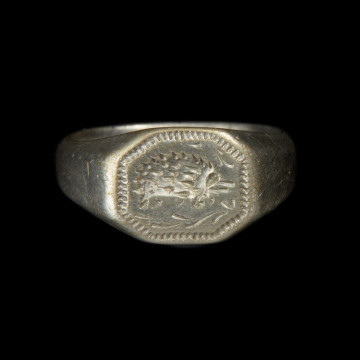
Signet ring with hedgehog
przełom XIV i XV wieku
National Museum in Szczecin
Part of the collection: Craft and industry products of Szczecin
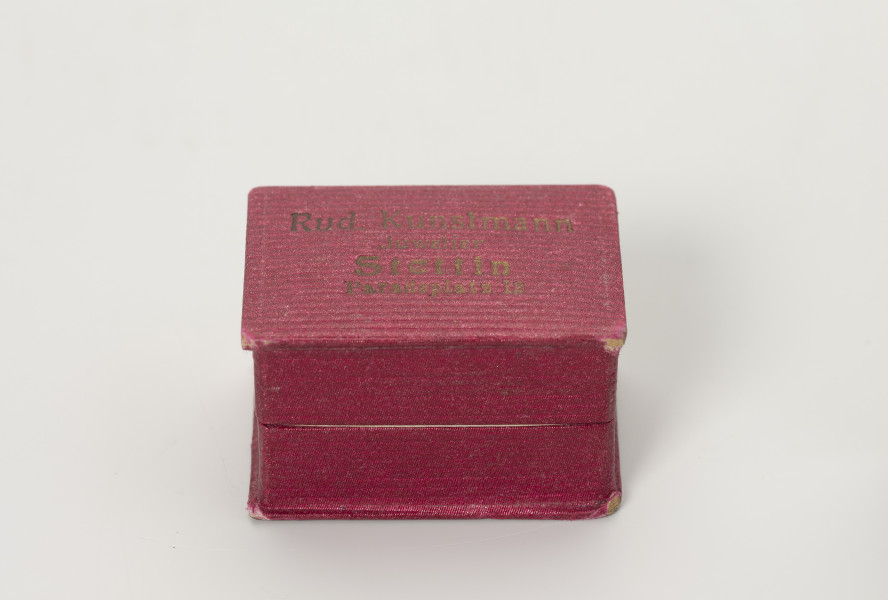
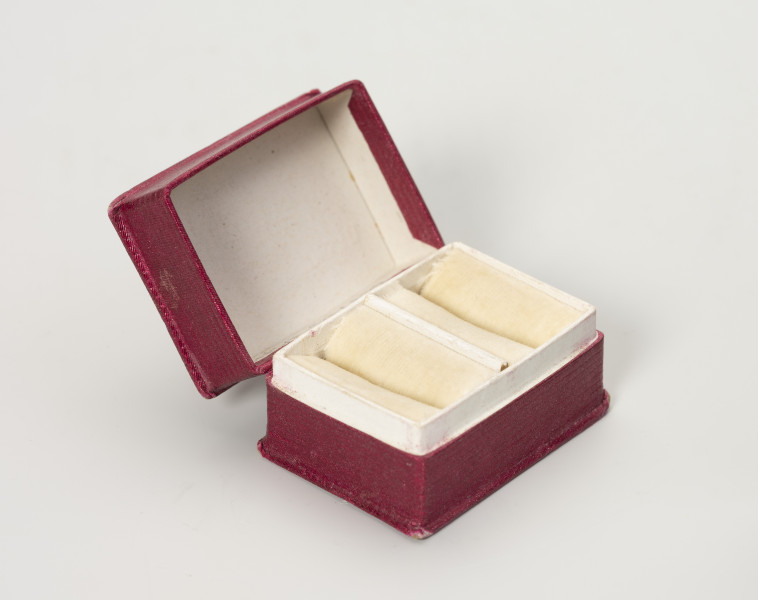
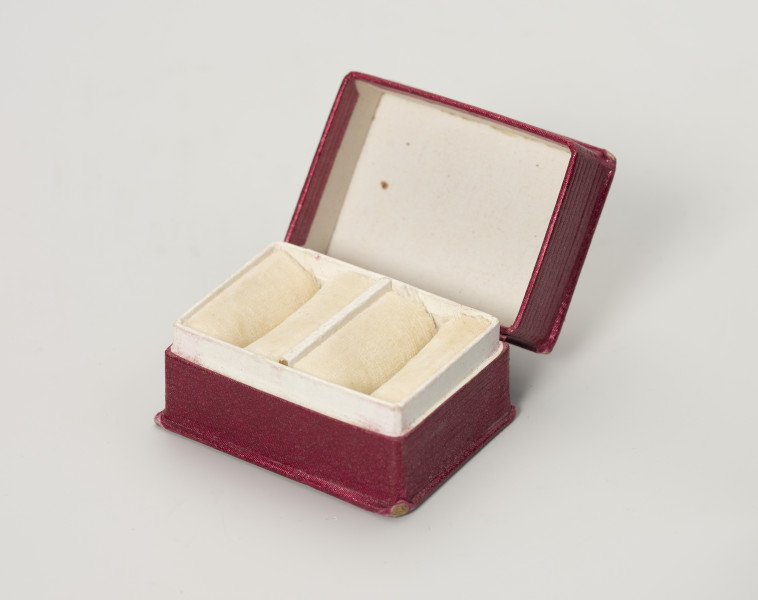
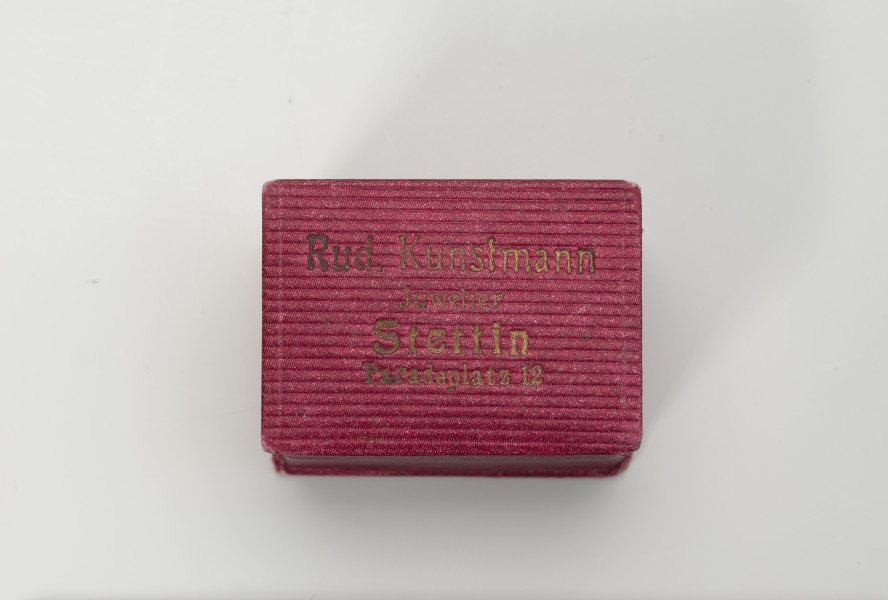
In the 19th century, Szczecin's Parade Square (Plac Parad, now Aleja Niepodległości), located near the Old Town, was one of the city's main thoroughfares. It was flanked on one side by the Baroque city gate (Brama Portowa, or Harbour Gate) and on the other by the White Parade Square (Biały Plac Parad, now Plac Żołnierza Polskiego), where in 1894, a monument to Emperor Wilhelm I was unveiled. Lined with an avenue of trees and surrounded by the newly built Pomeranian Landowners' Palace (Pałac Ziemstwa Pomorskiego), the Prussian Royal Post Office, tenement houses, and department stores, the area became, at the turn of the 19th and 20th centuries, an attractive location for shops and service establishments seeking to attract a wealthier clientele. The young goldsmith and jeweller Rudolf Kunstmann moved his business here in 1903, to Paradeplatz 12. The city's address books show that he appeared on Szczecin's market in 1896, attempting to run a jewellery business first at Mühlenbergstraße 12 (Hetmana Stefana Czarnieckiego Street), in 1897 at Papenstraße 16 (Staromiejska Street), and later, from 1898 to 1902, at Schulzenstraße 26-28 (Soltysia Street). In 1934, he sold the establishment on Paradeplatz to another goldsmith, Carl Kesseler, who continued to operate there until at least 1943. Kunstmann himself, on the other hand, moved to the village of Finkenwalde (now Zdroje – the right bank district of Szczecin) to a townhouse on Mühlenstraße A6. From the occasional advertisements placed in magazines and the more extensive entries in address books, it is clear that Kunstmann was not only a goldsmith and jeweller, but also a master goldsmith and a sworn expert in the field. He offered gold and silver jewellery, ladies' watches and men's watches with top-quality mechanisms, as well as a large selection of wedding, christening and commemorative gifts. The establishment also provided engraving and repair services. Malgorzata Peszko
Author / creator
Object type
box, packaging
Technique
cutting, gluing, sewing, assembling
Material
cardboard, fabric
Origin / acquisition method
donation
Creation time / dating
Creation / finding place
Owner
The National Museum in Szczecin
Identification number
Location / status
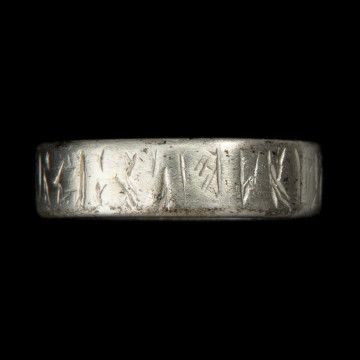
przełom XIV i XV wieku
National Museum in Szczecin
przełom XIV i XV wieku
National Museum in Szczecin
National Museum in Szczecin
DISCOVER this TOPIC
Castle Museum in Łańcut
DISCOVER this PATH
Educational path