




Prayer wheel
1901 — 1950
National Museum in Szczecin
Part of the collection: Asian art
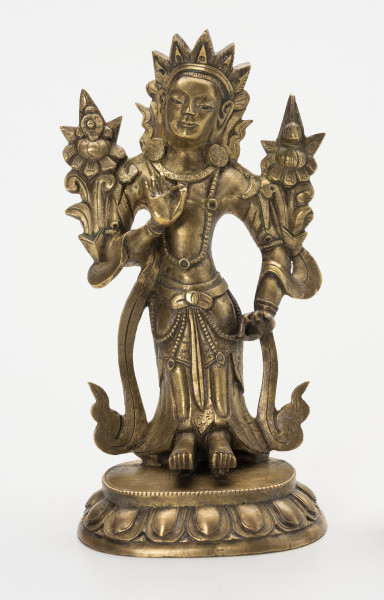
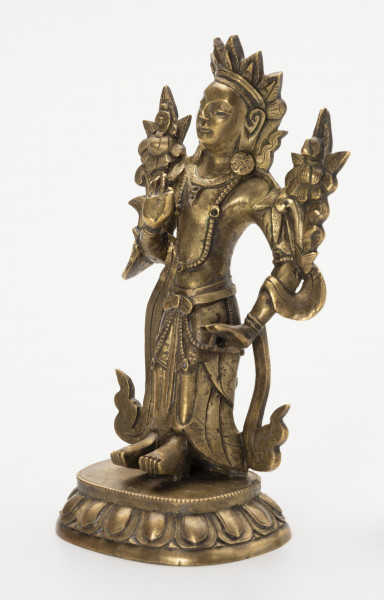
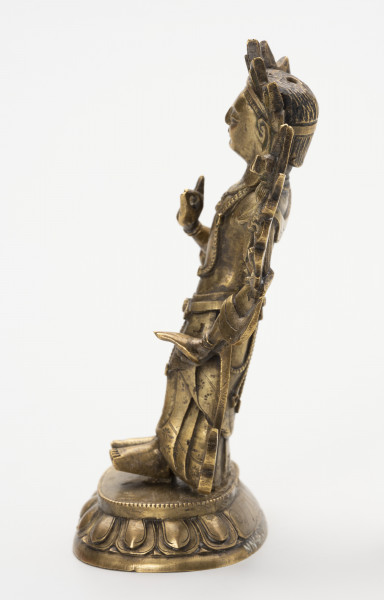
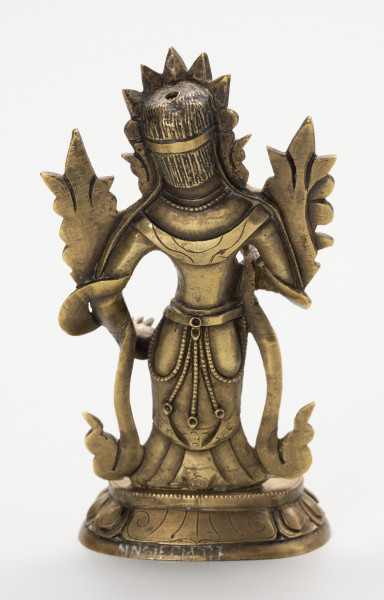
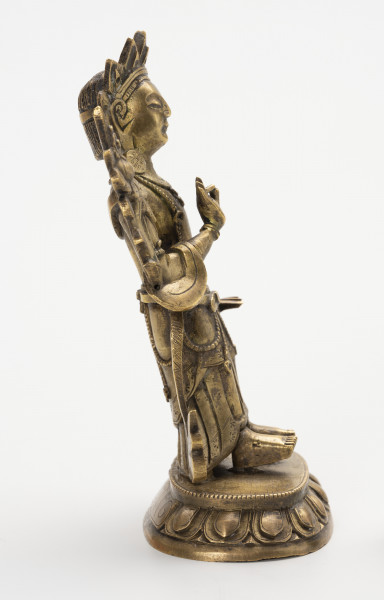
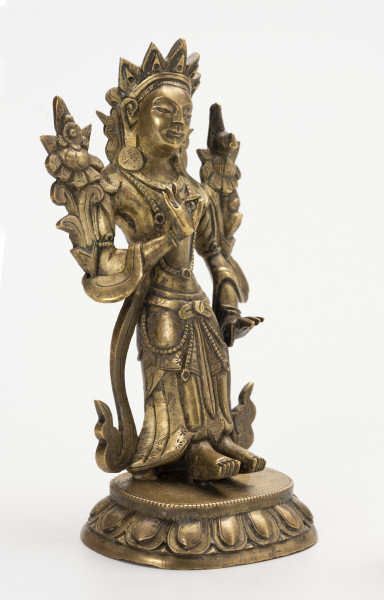
Dressed in royal robes and princely jewellery, the figure stands on a lotus pedestal. A lotus floweremerges frombehind her right hand, which she has arranged in a gesture representing the discussion and transmission of teachings, called a Vitarka Mudra, in which the tips of the thumb and index finger join together to form a circle. This Buddhist sacral figurine depicts the Bodhisattva Avalokiteshvara Padmapani (Sanskrit Padmapāṇi, Tibetan Phyag na padmo, meaning Lotus Bearer). Padmapani is the basic form of Avalokiteshvara (Tibetan Chenrezig) – the bodhisattva of compassion and mercy, the most popular deity of Tibetan Buddhism, more often worshipped than Buddha himself. The characteristic signs of Padmapani are the lotus flower and a small statue of Amitābha Buddha in the diadem. The presented depiction shows a lotus and another symbol of Avalokiteshvara – meaning compassion antelope skin.
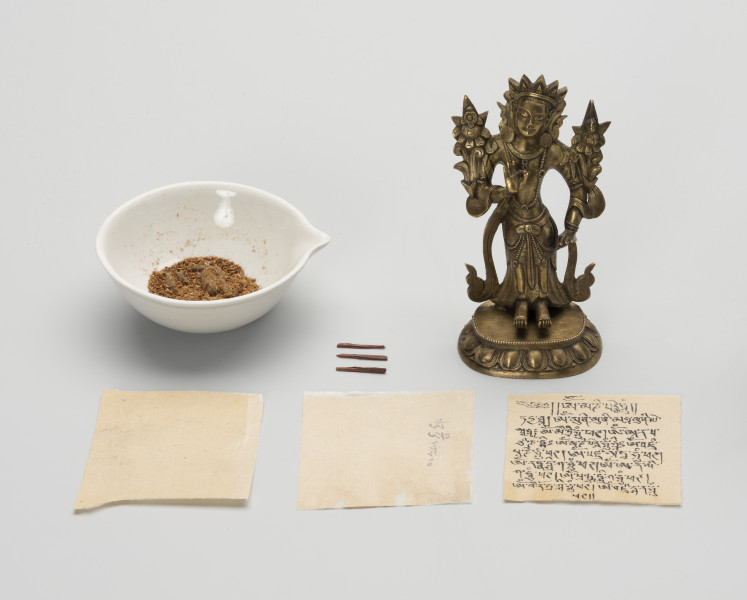
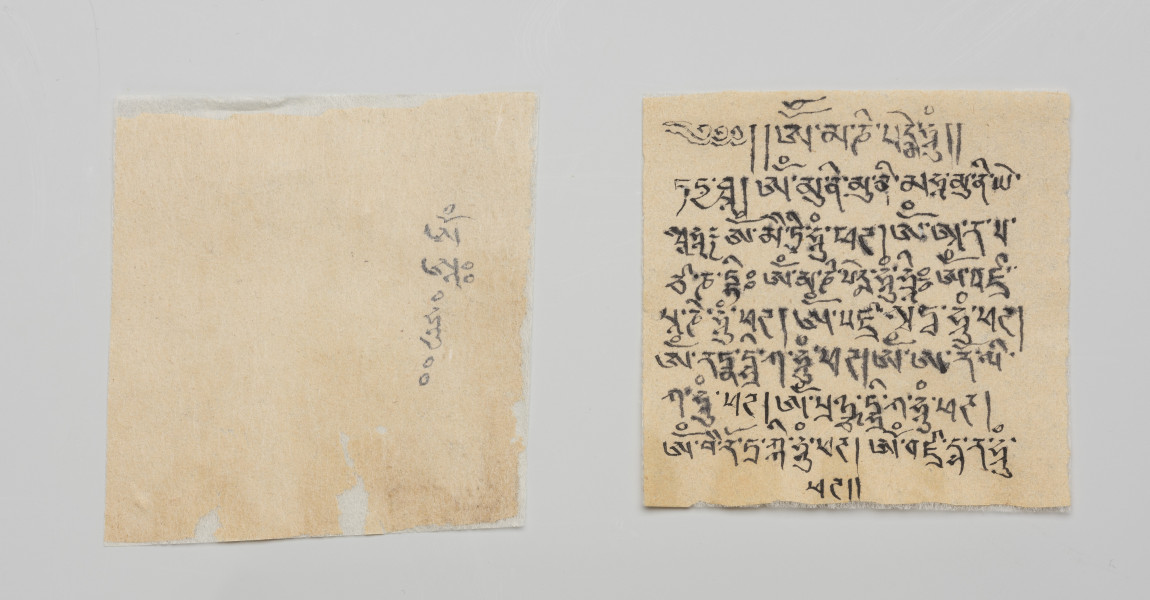
In 2021, during conservation work, rice, seeds, clay and three rolls of paper with mantras and the consecration text written on them (most likely these are three syllables representing the living Buddha, energy, mind and space) were taken out of the interior of the statue.
Buddhist statues support the meditator in their daily practice. Their outer form expresses the perfect body of the Buddha, the rolls of mantras and the relics hidden inside are the perfect speech of the Buddha, while his perfect mind symbolizes the blessing bestowed by the lama or guru. The consecration ritual during which the statue is filled follows the instructions of a given lineage, resulting from a specific tradition of Buddhism. In Tibetan Buddhism, the main religion of Mongolia where the statue comes from, such a ritual is of the greatest importance in the Kagyu tradition, in which the teacher giving the blessing is the greatest inspiration and example for the student on his or her way to enlightenment.
Katarzyna Findlik-Gawron
Author / creator
Object type
figurine, sacred object, religious text
Technique
lost-wax casting, gilding, kaligrafia
Material
bronze, paper, tusz czarny, clay, ziarna ryżu, seeds, plant-derived material
Origin / acquisition method
purchase
Creation time / dating
Creation / finding place
Owner
The National Museum in Szczecin
Identification number
Location / status
1901 — 1950
National Museum in Szczecin

1891 — 1910
National Museum in Szczecin
1901 — 1984
National Museum in Szczecin
DISCOVER this TOPIC
National Museum in Szczecin
DISCOVER this PATH
Educational path