



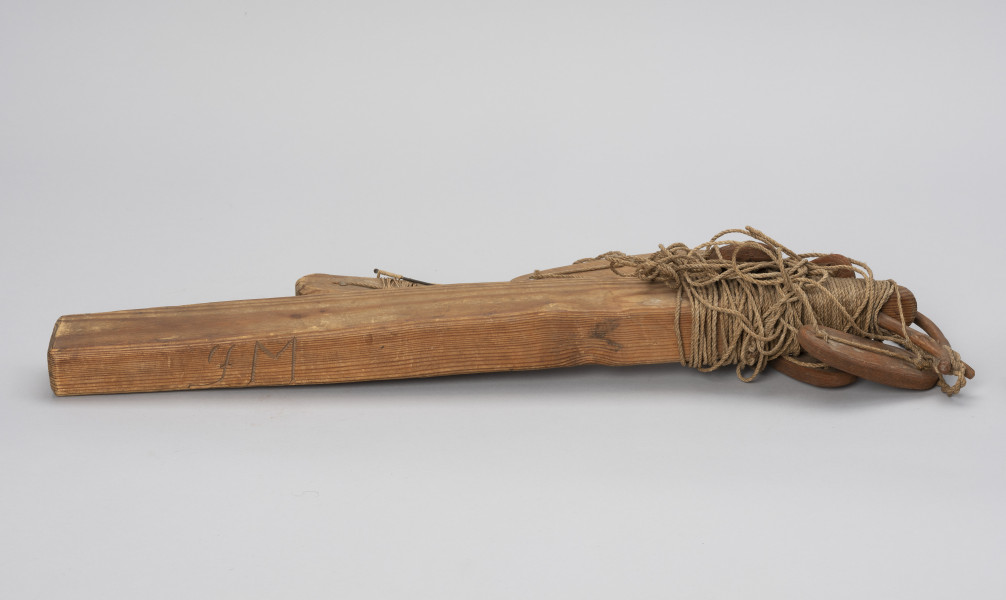


Floating fishing rod
1920 — 1950
National Museum in Szczecin
Part of the collection: Traditional fishing
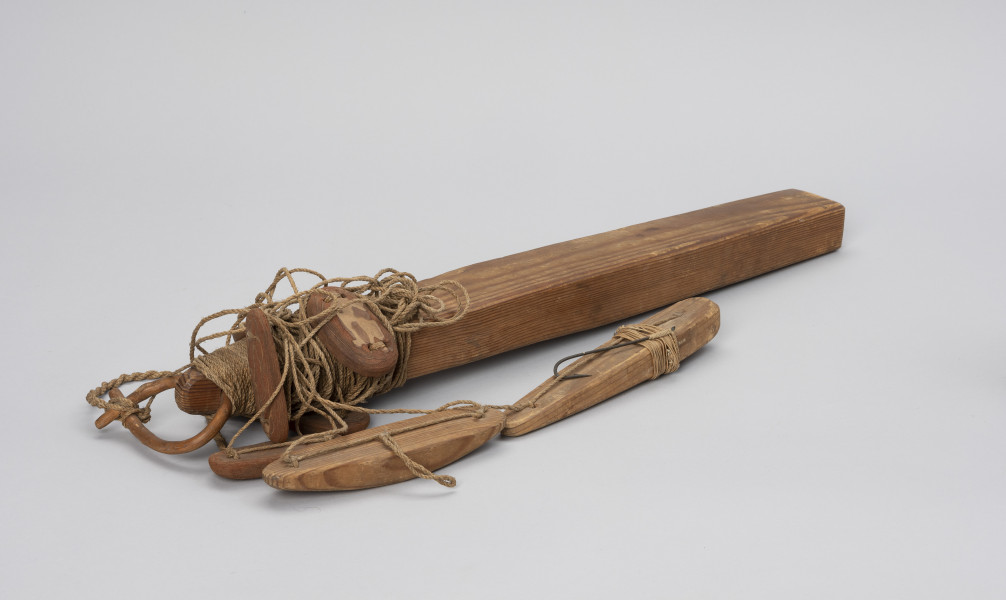
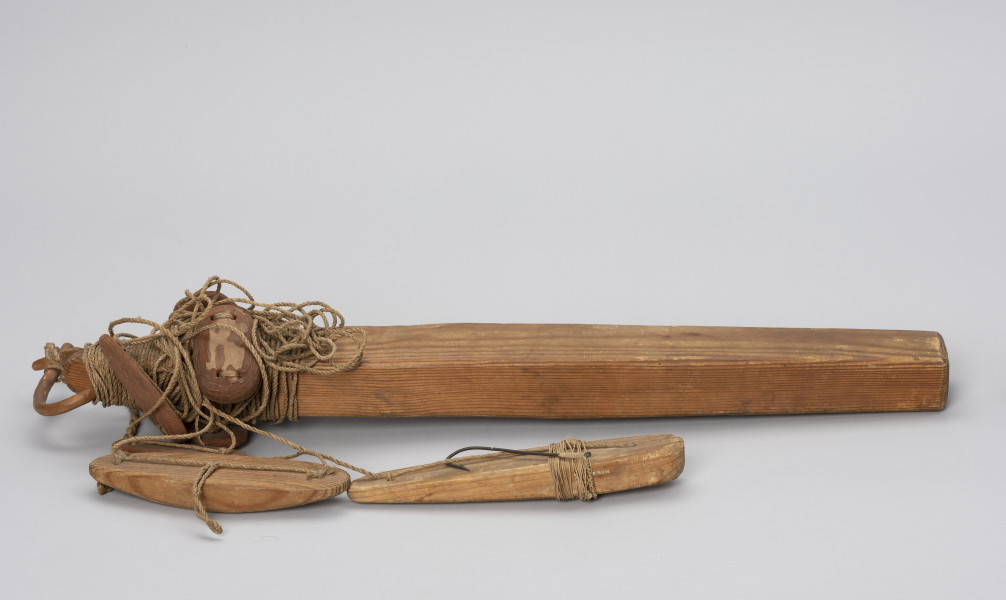
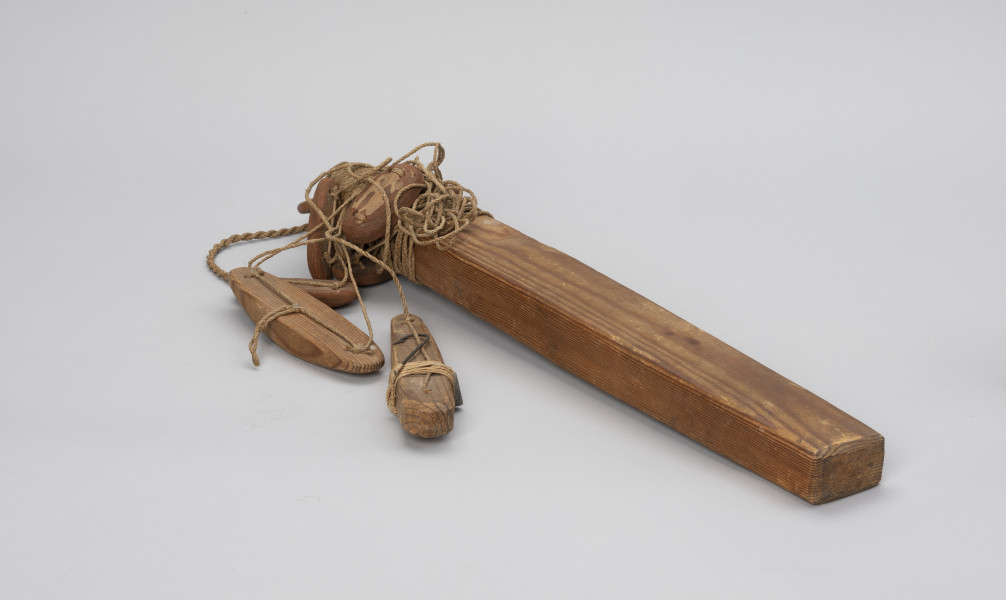
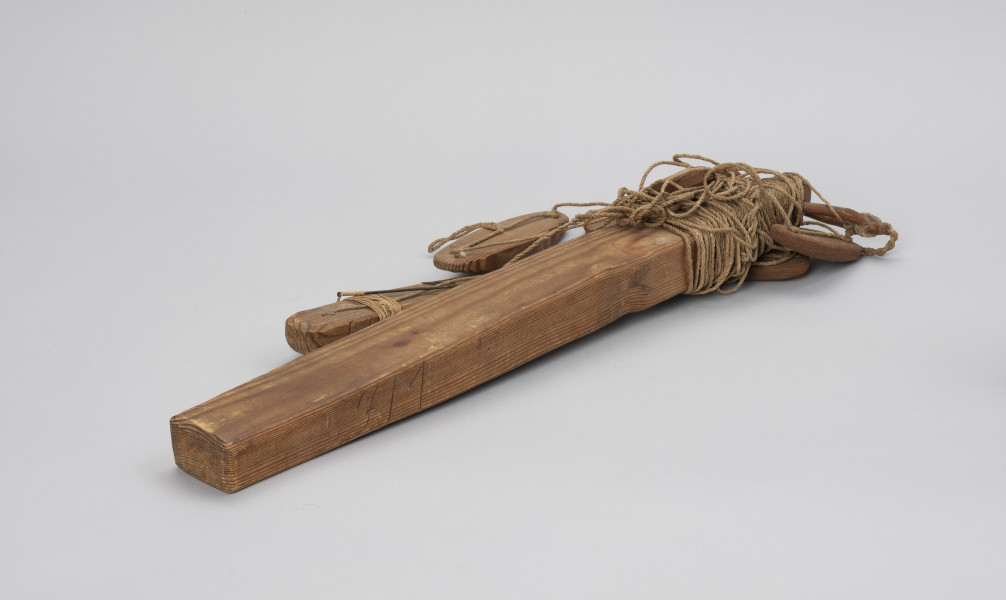
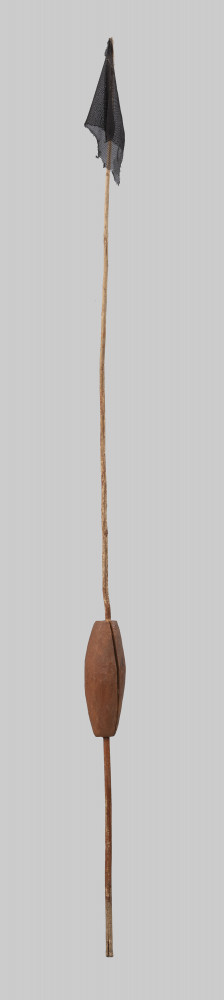
Takle are stationary or drifting fishing tools with single- or multi-hooked lines used for catching individual salmon. The example here consists of a large wooden float (koba) and a line with 7 floats – 2 made of wood and 5 of cork. The line is finished with a hook on which live bait fish was attached, weighted down with a conical sinker. The koba and the smaller wooden float are marked with a personal mark (merk) in the form of the initials "FM" which signified ownership. Fishing was often a team effort, but small tools and auxiliary equipment belonged to individual fishermen and were always marked. If various items washed up ashore, these merki helped in identifying the owner.
Takle were set in bays and the coastal zone of the open sea, in October or November, and retrieved in March or April. These tools required a lot of work because they needed to be checked by the fisherman almost daily, to collect the caught fish and replace the bait. A single fisherman could set about 100-200 tekle, and the locations were marked with buoys with red flags.
In the Pomeranian Ethnography Department of the National Museum in Szczecin, in addition to the presented drifting takla, originating from Wolin and donated in 1949, there are two more stationary takle in the collection.
Małgorzata Kłosińska-Grzechowiak
Author / creator
Object type
takla (setline float)
Technique
forging, bending, planing
Material
wood, bark, sznur, lead, bawełniana nić
Origin / acquisition method
donation
Creation time / dating
Creation / finding place
Owner
The National Museum in Szczecin
Identification number
Location / status
1920 — 1950
National Museum in Szczecin

1901 — 1950
National Museum in Szczecin
1901 — 1950
National Museum in Szczecin
DISCOVER this TOPIC
Castle Museum in Łańcut
DISCOVER this PATH
Educational path