




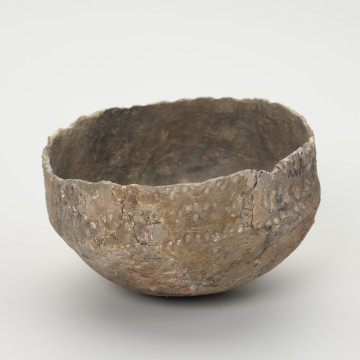
Spherical-bottomed vessel type IVA1 (Vistula)
3100 p.n.e. — 2500 p.n.e.
National Museum in Szczecin
Part of the collection: Stone Age
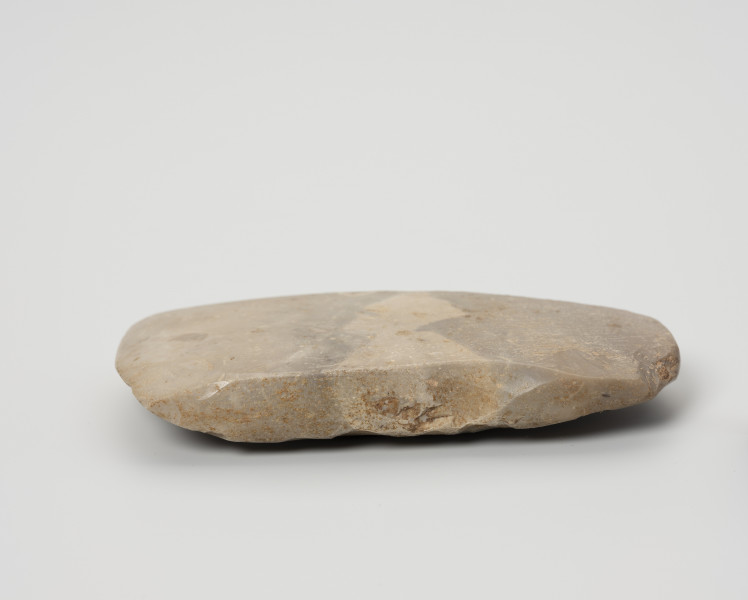
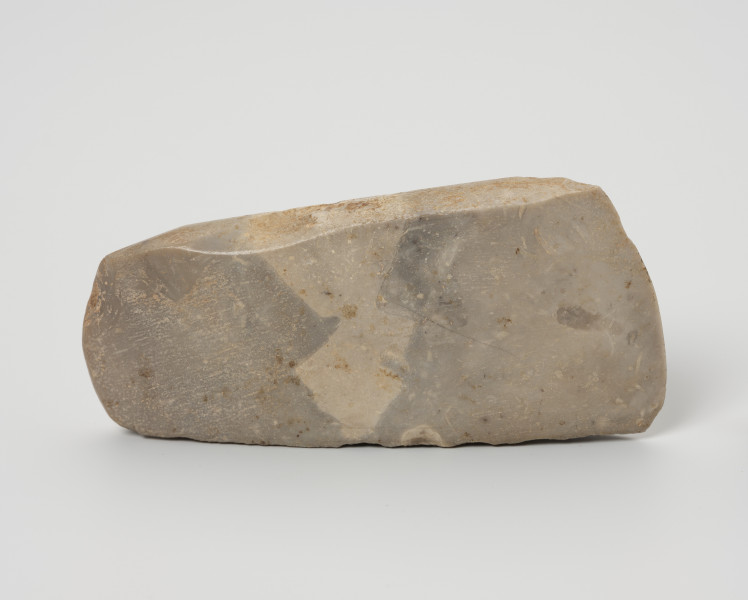
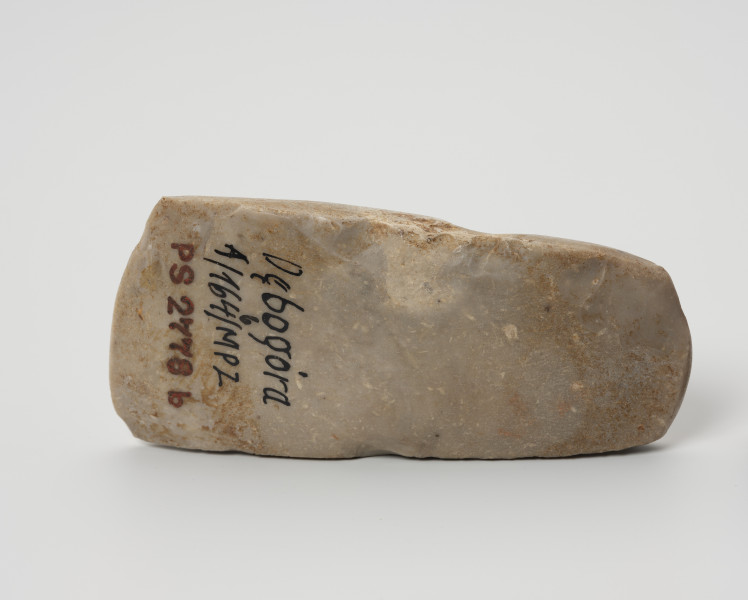
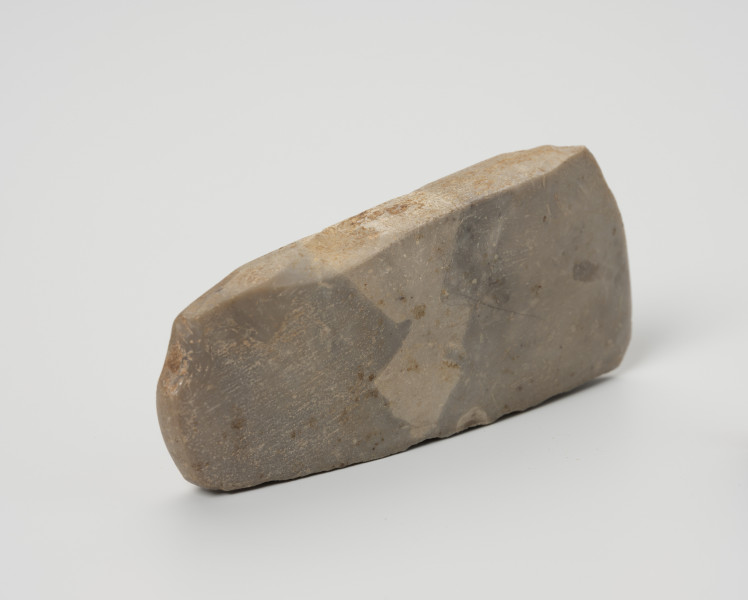
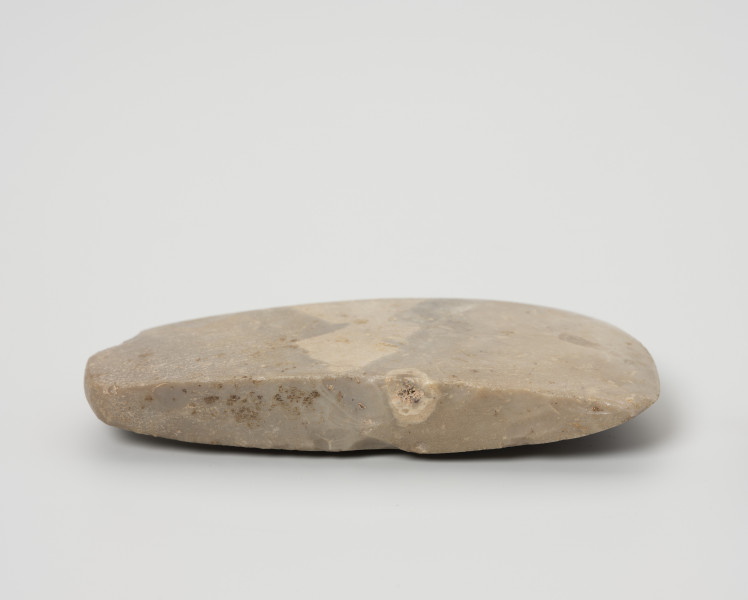
A small, fully polished flint axe was part of the grave goods discovered in a tomb belonging to the Globular Amphora culture, which can be dated to between the end of the 4th and the first half of the 3rd millennium BCE. The tool had been placed inside a decorated clay bowl, which was also included among the grave offerings. The find attracted considerable local attention, with regional newspapers quickly reporting on the accidental discovery of the tomb. It was uncovered in early February 1934 in a forest near Dębogóra during earthworks linked to the construction of a road. In press coverage, the find was described as a “tomb of giants,” said to be constructed from four upright stone pillars around one metre high, topped with a large granite boulder. Inside, there was reported to be an urn filled with ashes, placed on a flat stone. The age of the burial was said to be unknown. However, when Hans Jürgen Eggers (1906–1975), curator of the archaeological collection in Szczecin, arrived on site, he learned that the tomb had been destroyed during the blasting of the stone in a forest owned by the Dębogóra estate. He was nonetheless able to establish that the structure had consisted of large stone slabs forming a box-like chamber, half of which lay beneath an erratic boulder with a diameter of three to four metres. This large stone was not deliberately placed as a capstone over the chamber – the tomb had instead been constructed at its base, likely to lend the structure a monumental appearance. One expression of how megalithic ideas were adapted was the reuse of older megalithic monuments – originally built by communities of the Funnel Beaker culture – by groups belonging to the Globular Amphora culture. Another way this tradition was maintained was through the burial of the dead in stone-slab graves shaped like a chest or box. Such was the structure of the Dębogóra tomb, set at the base of a glacial erratic. A similar form may have characterised a grave discovered in the early 20th century in Wierzchowo, in Drawsko County, where a flint axe and a decorated clay bowl were found beneath a large boulder. Krzysztof Kowalski
Author / creator
Object type
axe
Technique
knapping, core reduction (lithics), grinding, smoothing
Material
chalk flint
Origin / acquisition method
acquisition
Creation time / dating
Creation / finding place
Owner
The National Museum in Szczecin
Identification number
Location / status
3100 p.n.e. — 2500 p.n.e.
National Museum in Szczecin
3500 p.n.e. — 2100 p.n.e.
National Museum in Szczecin
around 750 p.n.e. — 550 p.n.e.
National Museum in Szczecin
DISCOVER this TOPIC
Museum of King Jan III's Palace at Wilanów
DISCOVER this PATH
Educational path