



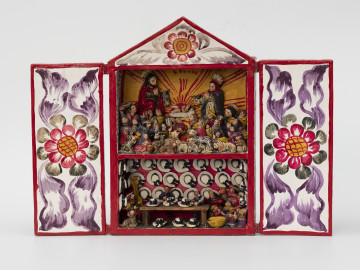
The Nativity of Baby Jesus (a hat Seller)
circa 1970 — 1975
National Museum in Szczecin
Part of the collection: Goldsmith craftsmanship
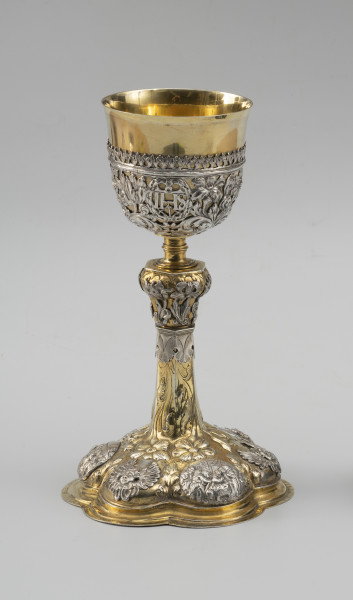
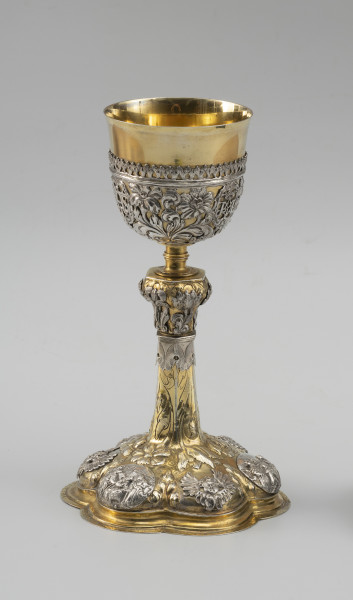
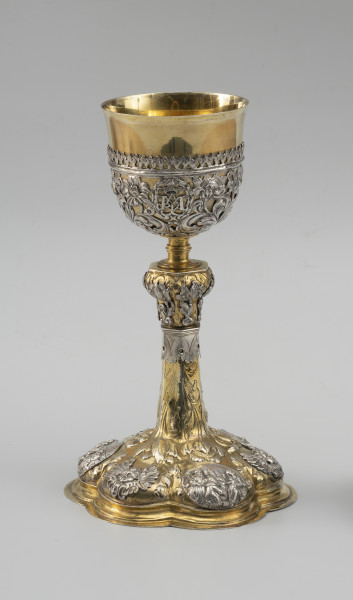
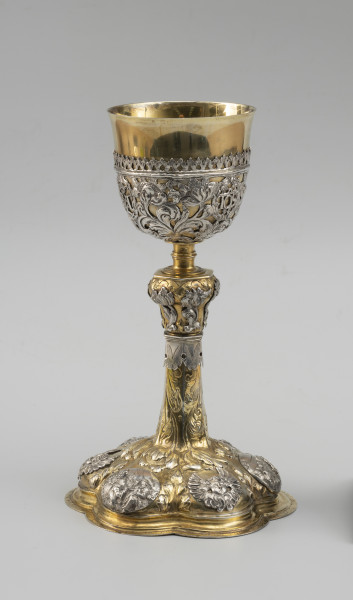
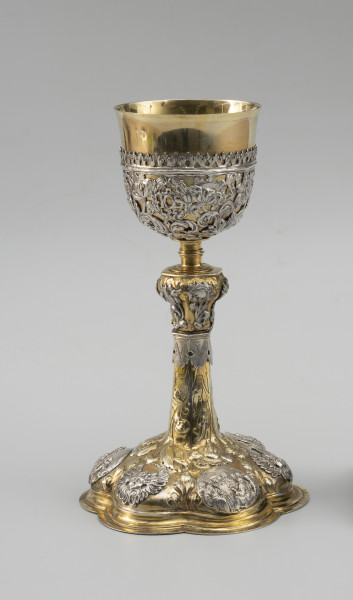
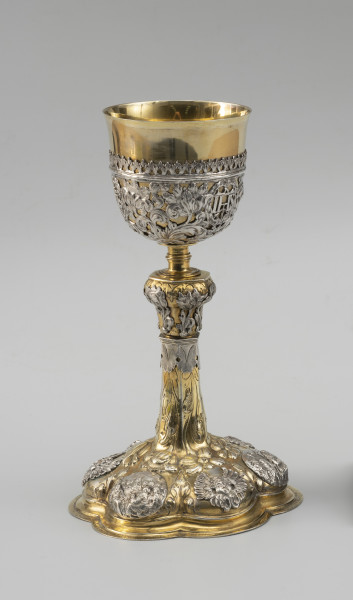
The Baroque chalice was donated, as indicated by the inscription on its base, to the church in Chełmsko Śląskie. It is characterised by its slender form and balanced proportions. The body of the vessel is embossed, engraved, and adorned with silver relief plaques and openwork overlays, which contrast with the golden background. The six-leaved base features oval plaques depicting scenes of the Nativity of Jesus, the Adoration of the Magi, and the Last Supper, interspersed with winged angel heads. The chalice’s decoration also includes flowers typical of the second half of the 17th century, such as tulips and irises on leafy stems. Particularly notable is the incorporation of Christ, Mary, and St. Joseph's monograms into the openwork basket of the cup. While the tradition of placing Christ’s and Mary’s symbols on chalices dates back to the Middle Ages, the addition of letters representing St. Joseph highlights the devotion to the Holy Family characteristic of Counter-Reformation Silesia.
This cult of the Holy Family was initiated by Bernard Rosa (1624–1696), a theologian and philosopher who served as the abbot of the Cistercian monastery in Krzeszów. In 1669, he founded the secular Confraternity of St. Joseph with the aim of renewing Catholic faith in Silesia. Alongside St. Joseph, the Holy Family, then referred to as the “Created Trinity”, was particularly venerated. The confraternity quickly gained immense popularity. By the early 18th century, it had over 100,000 members. On lands belonging to the abbey, Bernard Rosa built numerous churches and chapels, including the Baroque Church of the Holy Family in Chełmsko Śląskie, constructed between 1670 and 1680. The chalice, which originates from the church’s furnishings and whose decoration reflects the dedication of the temple, was likely crafted in the last quarter of the 17th century by an unknown Silesian goldsmith.
Monika Frankowska-Makała
Author / creator
Object type
goblet, liturgical objects
Technique
forging, repoussage, casting, engraving, cutting out, gilding
Material
silver, gold
Origin / acquisition method
purchase
Creation time / dating
Creation / finding place
Owner
The National Museum in Szczecin
Identification number
Location / status
circa 1970 — 1975
National Museum in Szczecin
circa 1450
National Museum in Szczecin

circa 1505 — 1515
National Museum in Szczecin
DISCOVER this TOPIC
Museum of King Jan III's Palace at Wilanów
DISCOVER this PATH
Educational path