




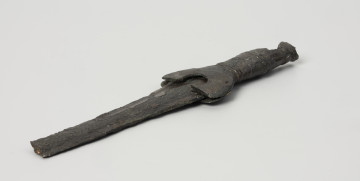
A fragment of a bronze sword
900 p.n.e. — 750 p.n.e.
National Museum in Szczecin
Part of the collection: Bronze Age
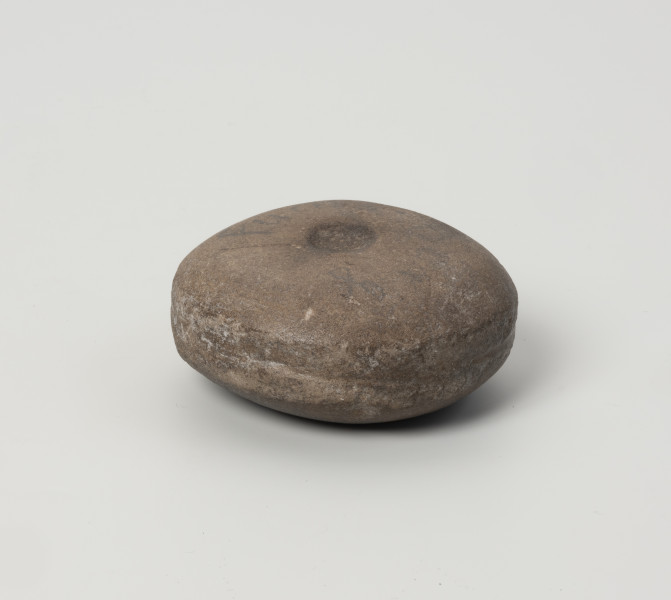
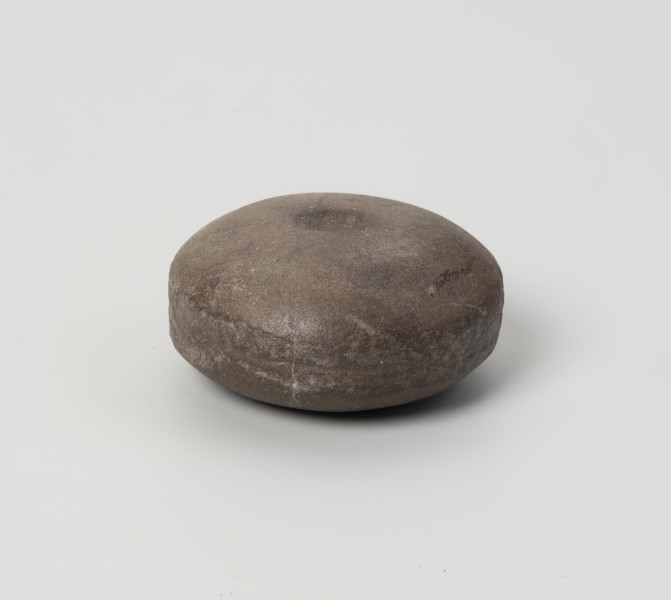
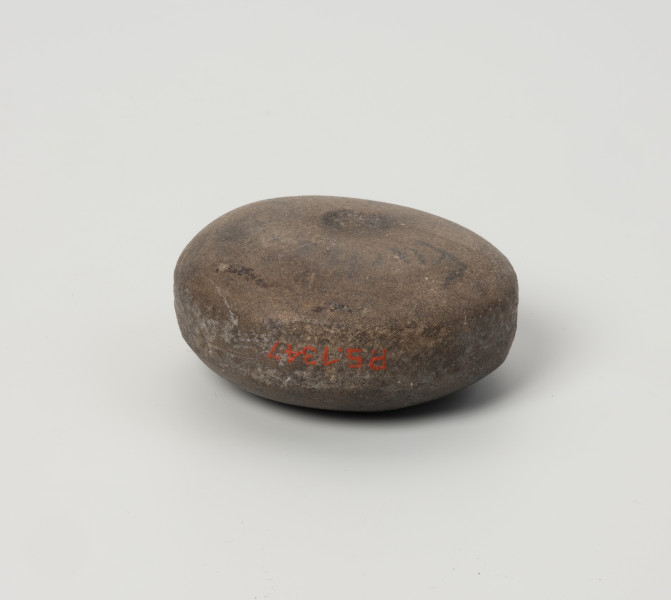
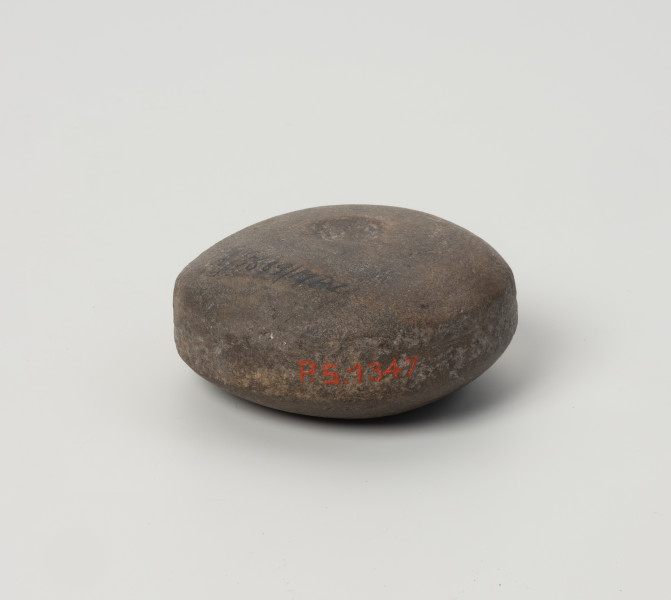
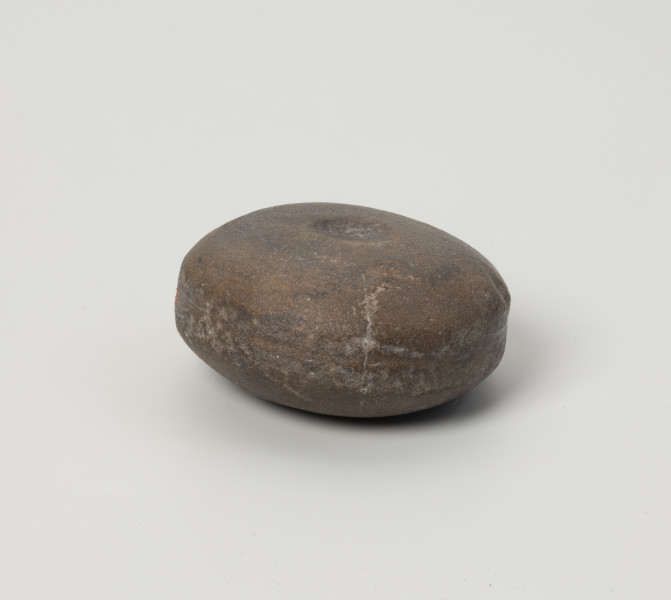
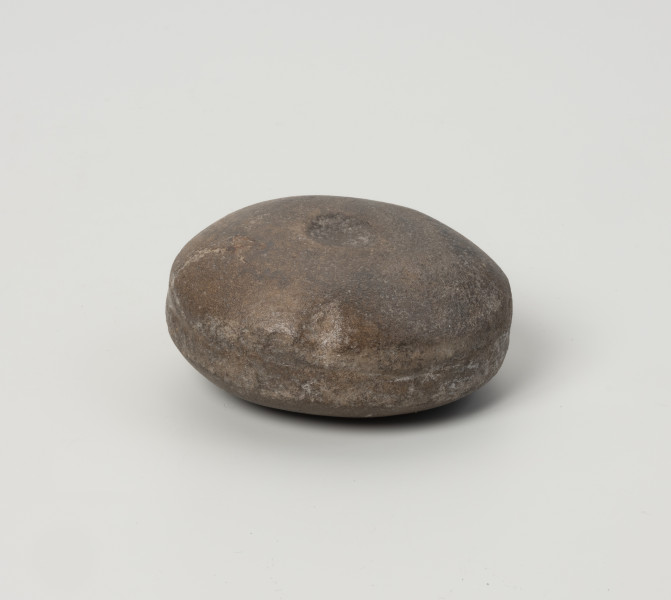
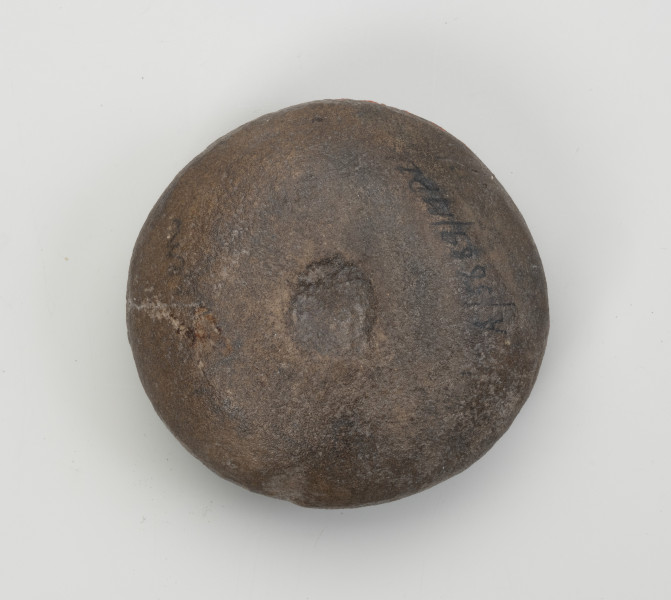
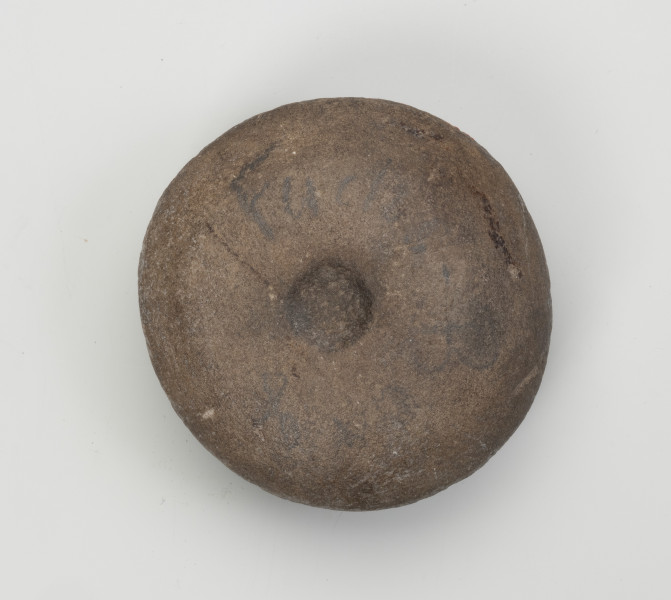
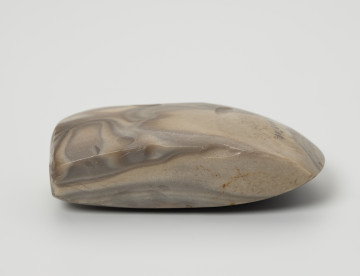
This mysterious stone object measures just under 7 cm in diameter and has the shape of a flattened sphere. Circular depressions are visible at both poles, while a broad, faintly outlined groove runs around its circumference. Tools of this type belong to a category of finds known as grooved or fluted stones (German: Rillensteine, Kannelursteine). The specimen on display was discovered in the village of Swobnica, in Gryfino County, West Pomerania. It was donated to the museum collections in Szczecin by Reinhold Richter, deputy headmaster of a school in Szczecin. Judging by its old catalogue number (P.S. 1347), this likely took place in the late 1920s or early 1930s. Grooved stones, characteristic of the settlement sites of the Lusatian culture, are dated to approximately 1500–800/700 BC. They have been found over a large area of Europe, from Denmark and southern Sweden in the north to Italy and Croatia in the south, from eastern France in the west to Poland and western Slovakia in the east. Nearly 50 specimens have been recorded in Pomerania, falling into several distinct types: nearly spherical or flattened spheres, almost biconical forms decorated with broad encircling grooves, and rare asymmetrical examples. Most are of medium size, with diameters ranging from 5.5 cm for the smallest to 20.5 cm for the largest. The function of grooved stones remains enigmatic, as there is no clear archaeological context to determine their use. Several theories have been proposed regarding their purpose. The least plausible is that they were slingshot stones. In one instance, they were interpreted as "doorstops." More generally, they have been described as tools, though without further clarification of their specific function. Some researchers associate them with metalworking, suggesting they were used for cold-working iron, such as in the production of wire or metal bands. The latest analytical studies are gathering evidence that at least some grooved stones may have served as weights. Dorota Kozłowska
Other names
Rillensteine, Kannelurensteine
Author / creator
Object type
tool
Technique
grinding
Material
stone
Origin / acquisition method
acquisition
Creation time / dating
Creation / finding place
Owner
The National Museum in Szczecin
Identification number
Location / status
900 p.n.e. — 750 p.n.e.
National Museum in Szczecin
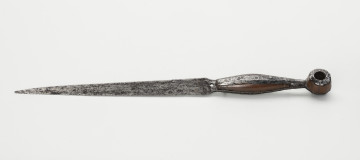
1400 — 1500
National Museum in Szczecin
3500 p.n.e. — 2100 p.n.e.
National Museum in Szczecin
DISCOVER this TOPIC
Museum of King Jan III's Palace at Wilanów
DISCOVER this PATH
Educational path