




Composition of circles in outline
1970
National Museum in Szczecin
Part of the collection: Asian art
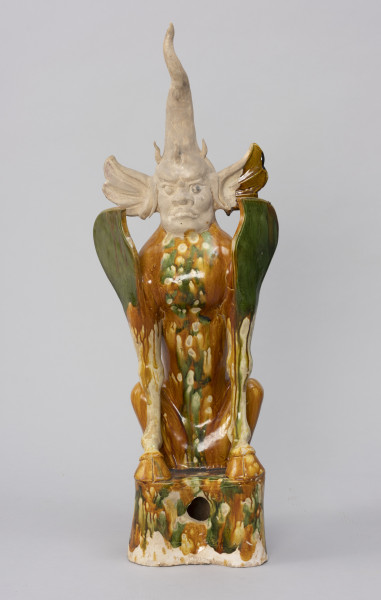
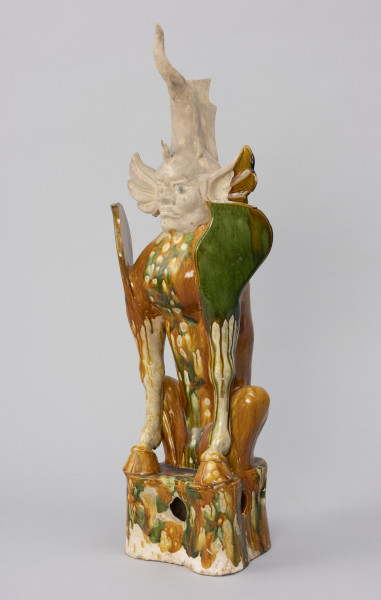
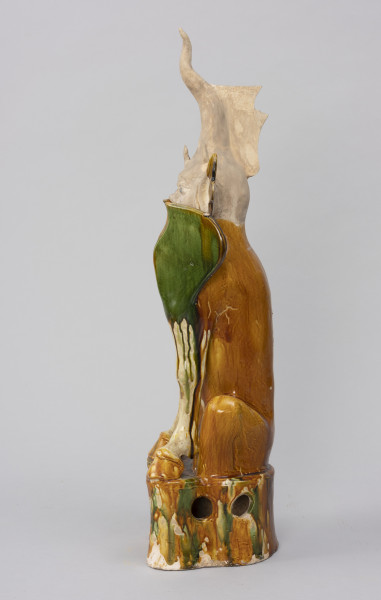
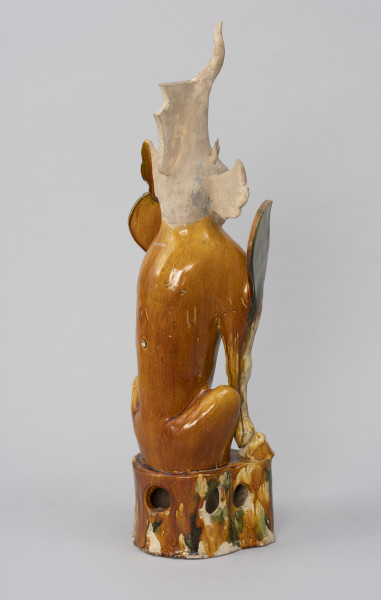
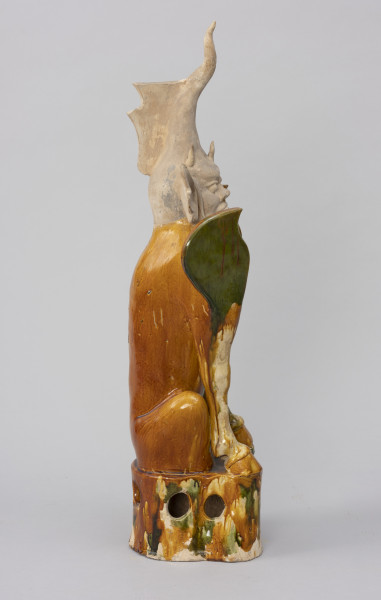
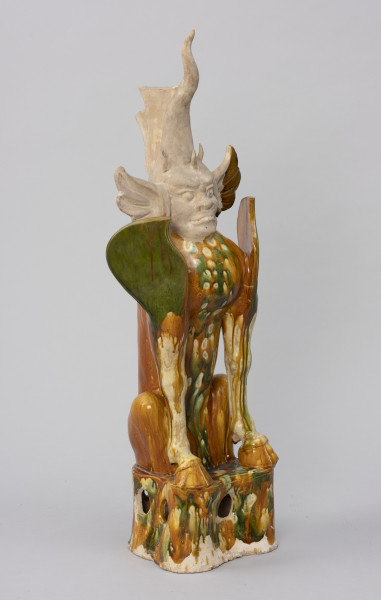
One of the many supernatural beings found in Chinese literature and art are Zhenmushou – Guardians of tombs, guarding the deceased from anyone who would try to disturb their peace in the afterlife. They were often depicted in the form of fantastical, hybrid creatures with human and animal physical features. Zhenmushou were placed in the tombs in pairs, just in front of the coffin, with their faces turned outwards. Over time, their silhouettes became more and more dynamic and expressive in form. They were given a terrifying appearance with horns, claws, spikes, fangs, hooves, wings. Their bulging eyes, stern looks, or cruel expression on their faces were to terrify everything that would attempt to invade the tomb. An example of such a figure is the presented piece with a human face, but a horned head, set on the torso of a winged lion with bull's hooves. The beast sits on its hind legs, but its body indicates readiness to jump.
It was created during the reign of the Tang dynasty (618-907), when glazed sancai ceramics, usually produced as grave furnishings, flourished. This name, meaning "three colours", is used to describe a decorative technique consisting in leaving some parts unpainted, while others are covered with yellow, green and brown glaze or white engobe in various shades and intensities.
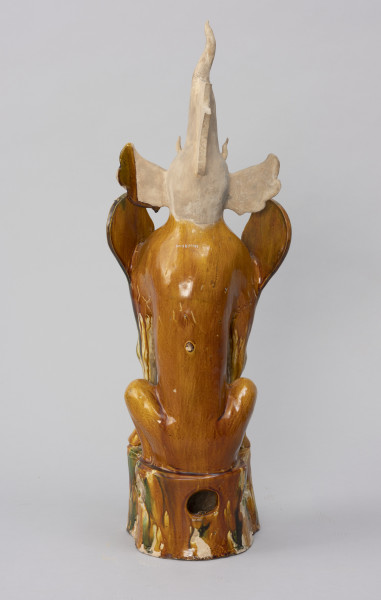
The piece comes from the German collection, which was transferred to the National Museum in Szczecin after the war. In 2010, the figure underwent conservation works where a fragment of the right wing, the upper part of the large horn and the missing tiny horn on the forehead were reconstructed. On the back of the head and horn there is a damaged, unglazed cup-shaped element. Some analogies suggest that it is a remnant of a fiery mane, which might have reached the conical horn of the figure.
Katarzyna Findlik-Gawron
Author / creator
Object type
sculpture, figure, grave goods
Technique
mold casting, firing, sancai (three-color glazing)
Material
ceramic, glazing
Origin / acquisition method
acquisition
Creation time / dating
Creation / finding place
Owner
The National Museum in Szczecin
Identification number
Location / status
1970
National Museum in Szczecin
1501 — 1600
National Museum in Szczecin
1801 — 1910
National Museum in Szczecin
DISCOVER this TOPIC
Castle Museum in Łańcut
DISCOVER this PATH
Educational path