



Perforator
9600 p.n.e. — 4100 p.n.e.
National Museum in Szczecin
Part of the collection: Court art of Pomeranian dukes in 16th and 17th century
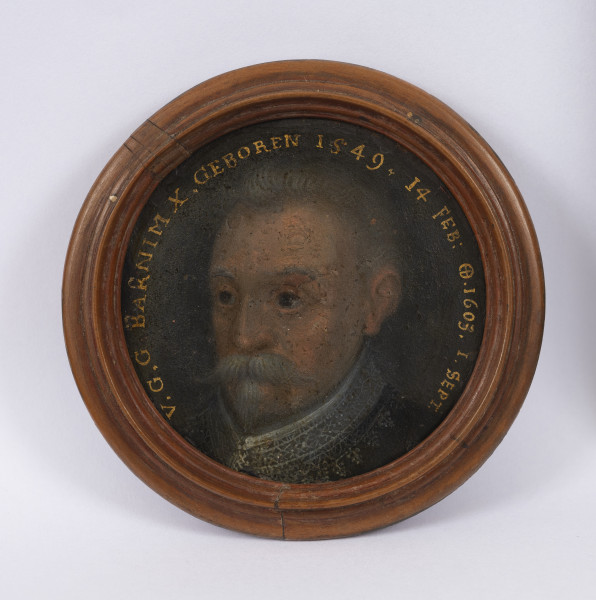
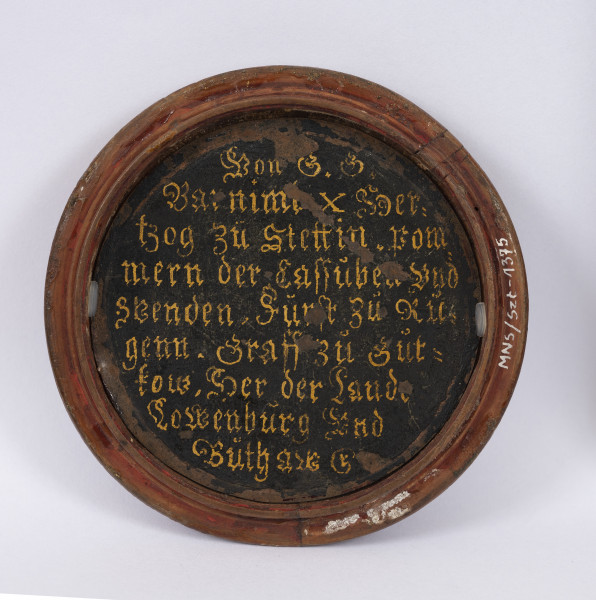
Miniature painting, known since the 15th century, gained significant popularity across Europe in the 16th century. These small portraits depicted the faces of townspeople, aristocrats, and rulers alike. Portraits of rulers were often encased in elaborate jewelled settings and served as gifts exchanged between princely families, particularly during marriage negotiations. They also adorned various utilitarian objects, such as the lids of boxes or draughtsmen pieces. An example of this is the wax portraits created by Heinrich Rapusch (active before 1579–1616) around 1591, from the collection of Saxon Elector Christian I (1615–1691). These included depictions of Pomeranian dukes Barnim IX (1501–1573) and John Frederick (1542–1600). The miniature on display features a portrait of Duke Barnim X (1549–1603), from the Wolgast branch of the Pomeranian dukes, rendered by an unknown artist. From 1569, Barnim ruled over Darłowo, later assuming control of the Bukowo estates and Bytów starosty in 1573. After the death of his brother John Frederick in 1600, Barnim became Duke of Szczecin, though he governed the duchy for only three years until his death in 1603. The portrait of Barnim was likely painted posthumously, as suggested by commemorative inscriptions around the edge and on the reverse of the copper plaque. In the 18th century, the medallion was kept in the library of the Church of St Mary in Kołobrzeg. In 1879, it was purchased by the Society for Pomeranian History and Antiquities (1824–1945) from the church council. Before World War II, it became part of the collections of the Provincial Museum in Szczecin (1927–1945). After the war, the medallion was housed in the National Museum in Szczecin but was stolen in 1975. Six years later, it surfaced in the collection of Stiftung Pommern in Kiel. In 1996, the foundation returned it to the Szczecin museum. Justyna Bądkowska
Author / creator
Object type
painting
Technique
oil technique
Material
copper
Origin / acquisition method
acquisition
Creation time / dating
Creation / finding place
Owner
The National Museum in Szczecin
Identification number
Location / status
9600 p.n.e. — 4100 p.n.e.
National Museum in Szczecin
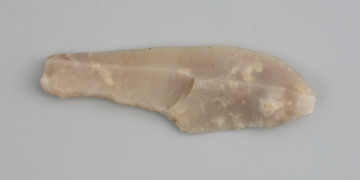
11900 p.n.e. — 11000 p.n.e.
National Museum in Szczecin
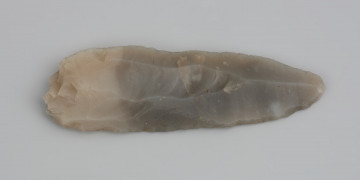
11900 p.n.e. — 11000 p.n.e.
National Museum in Szczecin
DISCOVER this TOPIC
National Museum in Szczecin
DISCOVER this PATH
Educational path