

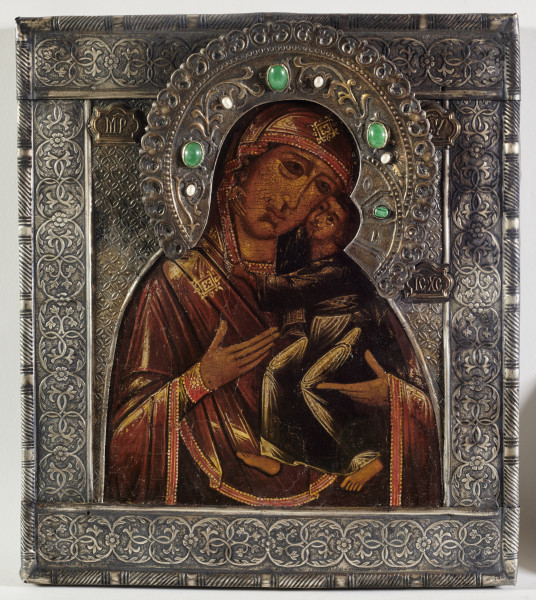


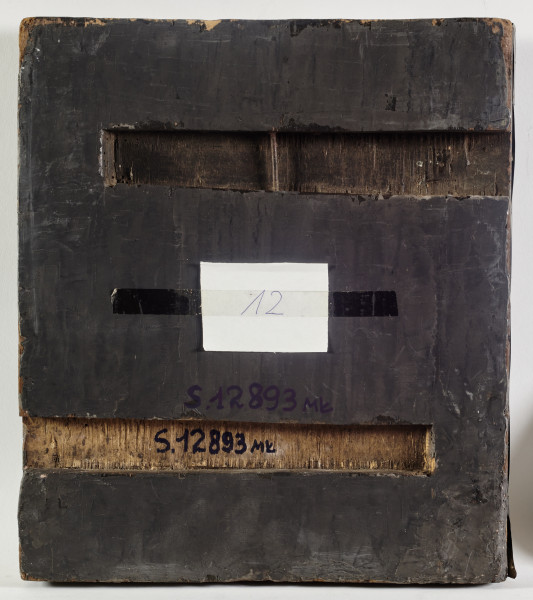
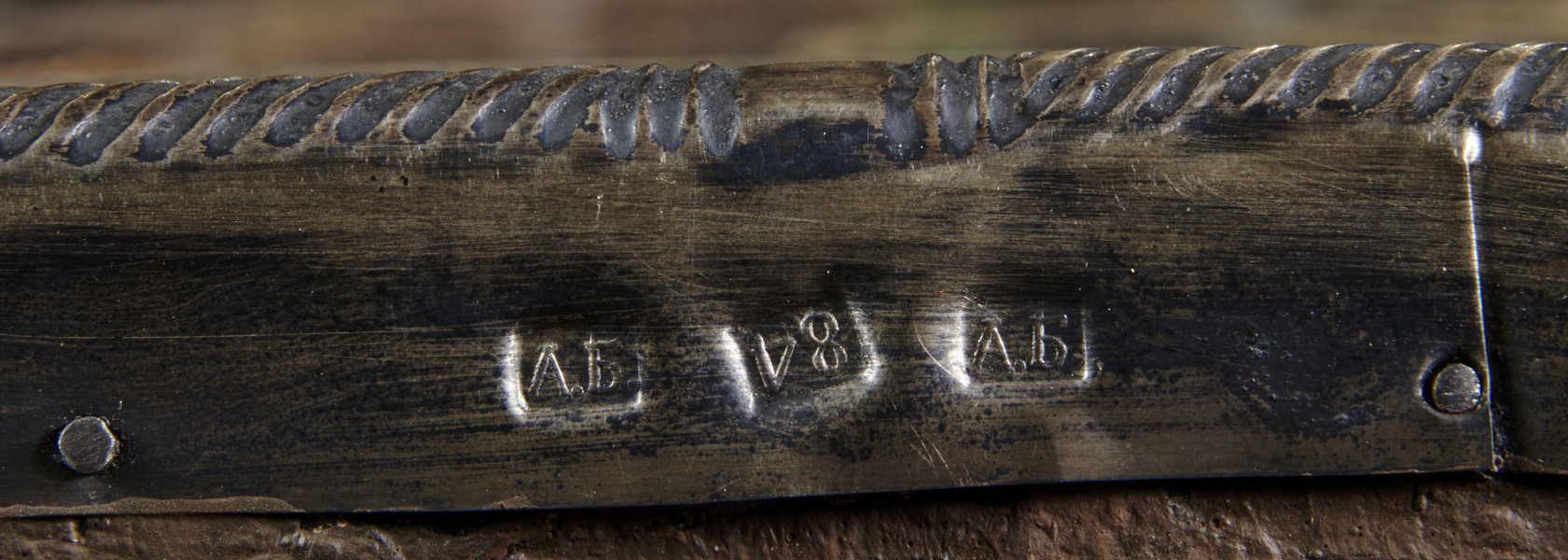
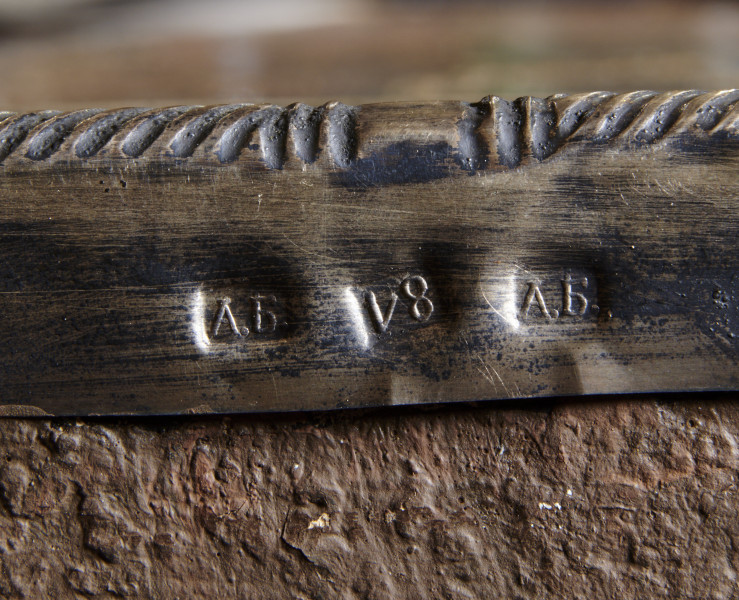
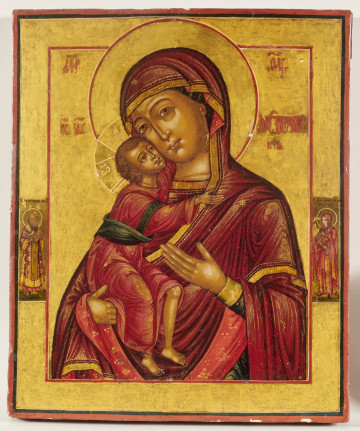
The Mother of God Eleusa, The Mother of God Fyodorovskaya Eleusa
1. połowa XIX wieku
Castle Museum in Łańcut
Part of the collection: Ikony
The prototype of the exhibited icon is an image of the Mother of God Eleusa of Tolga which was known in Russia since 1314 and called the revealed icon. It is one of three variants of the image. Traditionally, the origin of the prototype is associated with Prokhor, the bishop of Yaroslavl located in the upper course of the Volga. On his way back from the Upper Volga area, an icon appeared to the bishop at night, hovering on a streak of unearthly light at the estuary of the Tolga River (a tributary of the Volga). A men's monastery was built at the revelation site and the image housed there became famous for its miracles. One of the more famous ones was the healing of Tsar Ivan IV the Terrible who had problems with his legs. On that occasion, the ruler founded a masonry temple for the miraculous image. The Tolga monastery operated until 1926. Following its liquidation, the icon was moved to the museum. Until 1987, the monastery housed a penal colony for juvenile offenders. It was only in early 21st century that the painting returned to the renovated church. The image of the Tolga Mother of God is almost a perfect reflection of the Feodorvskaya Eleusa from the nearby Kostroma on the Volga. A distinctive feature of Tolga Eleusa's paintings are the “walking” legs of the seated Christ and his long dark green robe.
Teresa Bagińska-Żurawska https://orcid.org/0000-0002-9243-3967
Author / creator
Object type
ikony
Technique
tempera, metaloplastyka
Material
deska, distemper, chalk, Stop
Creation time / dating
Creation / finding place
Owner
Muzeum - Zamek w Łańcucie
Identification number
Location / status
1. połowa XIX wieku
Castle Museum in Łańcut
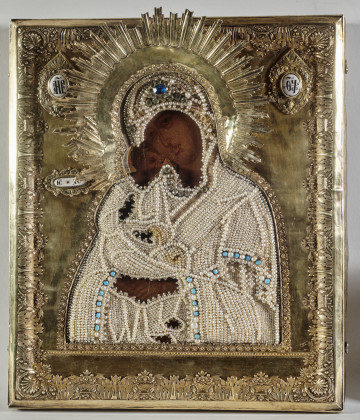
1. połowa XIX wieku
Castle Museum in Łańcut
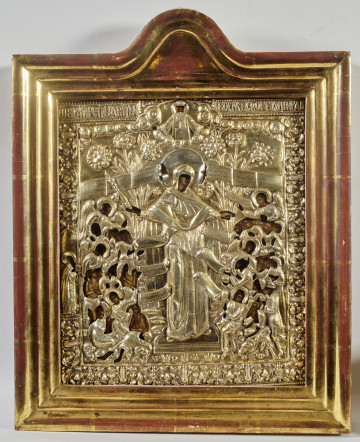
koniec XVIII wieku
Castle Museum in Łańcut
DISCOVER this TOPIC
National Museum in Lublin
DISCOVER this PATH
Educational path