

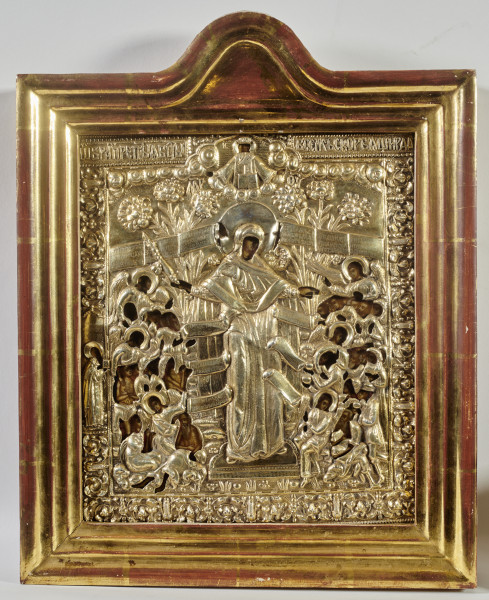


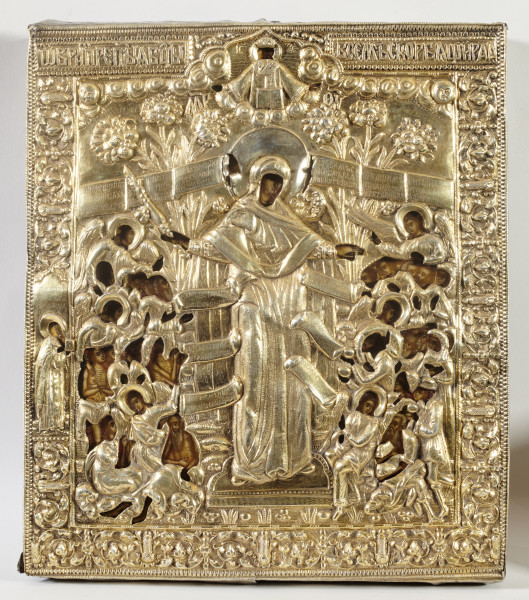
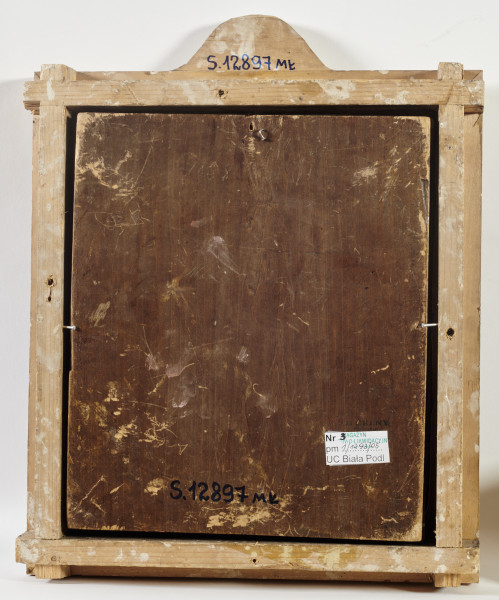
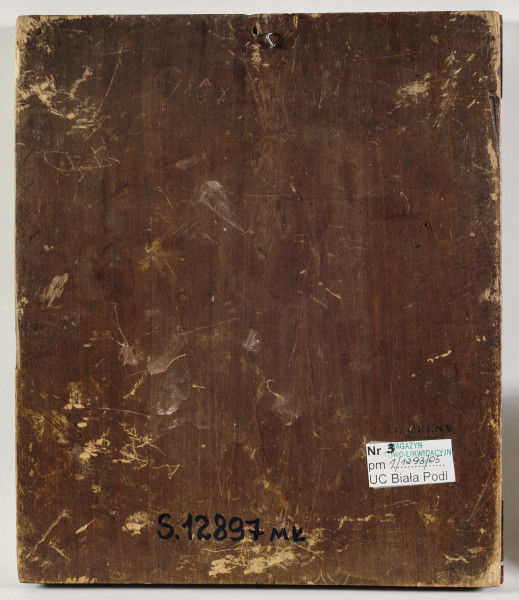
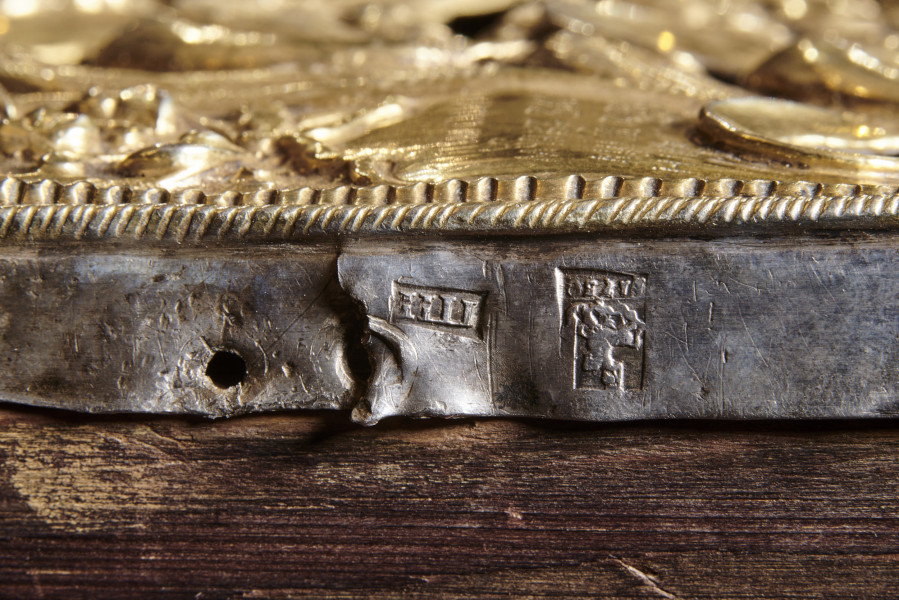
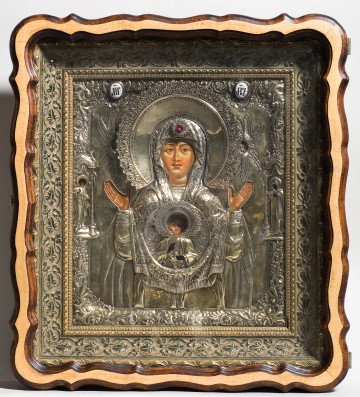
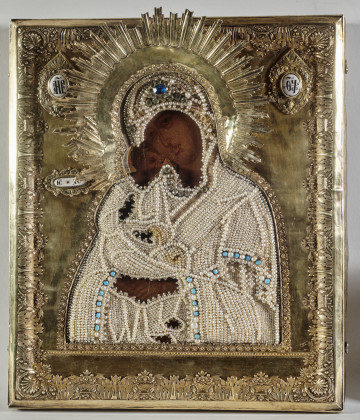
The Mother of God Panagia, Incarnation, Znamienie
XIX century
Castle Museum in Łańcut
Part of the collection: Ikony
The icon is a popular and common image of the Mother of God in Russia. The name comes from the words of a liturgical hymn, i.e. a stichera in honour of the Mother of God, “Joy of all the afflicted and Advocate of the wronged”. The first painting devoted to that theme was painted in 1683 by Ivan Bezmin, a painter employed in a studio working at the Moscow Kremlin treasury-armoury called Oruzheynaya Palata. It was based on European art introduced to Moscow in 17th century. It is not known whether the icon truly found its way to Moscow's Orthodox Church of the Transfiguration in Ordynka, but in 1688, the icon of the Joy of All Afflicted, which originated from that church, became the source of grace of the miraculous healing of Eutymia, sister of Patriarch Joachim. Since then, the Joy of All Afflicted began to be placed on icons, surrounded by the Mother of God of the sick and needy. This widely revered and reproduced image has popularised in many differing variants. In 1711, when the capital was moved to St. Petersburg, Tsar Peter I's sister, Natalia Alexeyevna ordered a copy of the Moscow icon for the palace church in St. Petersburg. That copy also became famous for its miracles, venerated by the Tsar's family, aristocrats and simple folk alike, and supplications were made to it by more than just the Orthodox and Christians as such.
Teresa Bagińska-Żurawska https://orcid.org/0000-0002-9243-3967
Author / creator
Object type
ikony
Technique
tempera, pozłotnictwo, metaloplastyka, stolarskie
Material
wood, chalk, distemper, gold, silver, glass
Creation time / dating
Creation / finding place
Owner
Muzeum - Zamek w Łańcucie
Identification number
Location / status
XIX century
Castle Museum in Łańcut
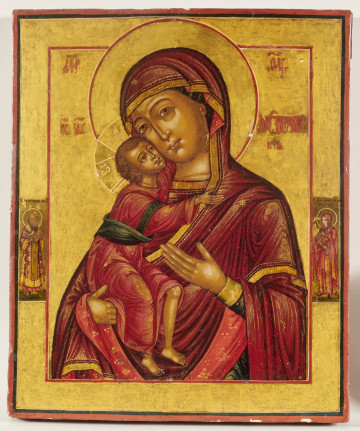
1. połowa XIX wieku
Castle Museum in Łańcut
1. połowa XIX wieku
Castle Museum in Łańcut
DISCOVER this TOPIC
Castle Museum in Łańcut
DISCOVER this PATH
Educational path