

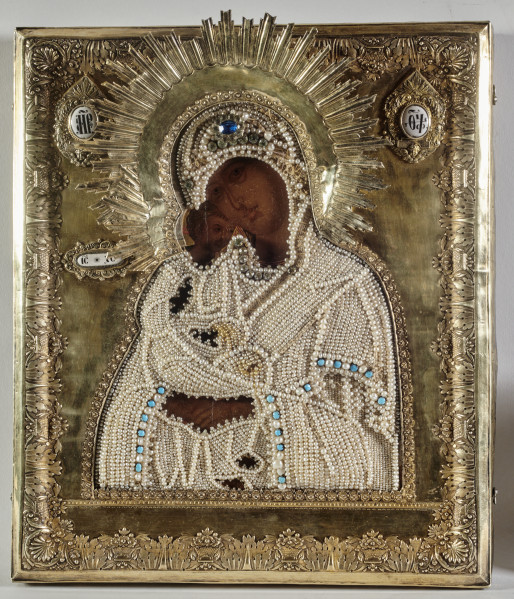


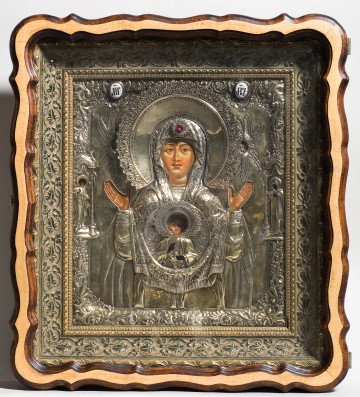
The Mother of God Panagia, Incarnation, Znamienie
XIX century
Castle Museum in Łańcut
Part of the collection: Ikony
The tradition of depicting the Mother of God dates back to the first centuries of Christianity. The Universal Council of Ephesus in 341 declared the dogma of the divine motherhood of Mary called the Theotokos, the Mother of God, as revealed truth. By giving birth to the Son of God conceived of the Holy Spirit, she came to participate in the mystery of God's incarnation and thus became an intercessor between Heaven and earth, a tender carer leading man to God. In Byzantium, the Mother of God, as the intercessor of mankind, was called Eleusa, or the merciful one. Over time, the term came to refer to images in which the Child keeps his cheek at the Mother of God's face and embraces her by the neck. Images of Eleusa became popular in 10th century. This kind of imagery in Russia became known as “Umilenie”, as the Greek word “eleos” meaning mercy was freely interpreted as tenderness, affectionateness, graciousness, and benevolence. In Ruthenia, where Mary’s cult was very deep and strong for centuries, many variants of the image were created. There is more composition freedom in the icons of “Umilenie” than in the icons of the Mother of God Odigitria.
Teresa Bagińska-Żurawska https://orcid.org/0000-0002-9243-3967
Author / creator
Object type
ikony
Technique
tempera, pozłotnictwo, metaloplastyka, haft, stolarskie
Material
wood, chalk, distemper, gold, silver, porcelain, pearl, turquoise, crystal, canvas, glass
Creation time / dating
Creation / finding place
Owner
Muzeum - Zamek w Łańcucie
Identification number
Location / status
XIX century
Castle Museum in Łańcut
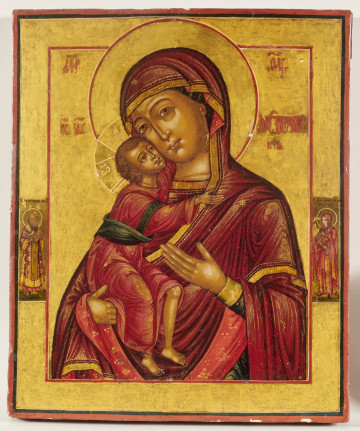
1. połowa XIX wieku
Castle Museum in Łańcut
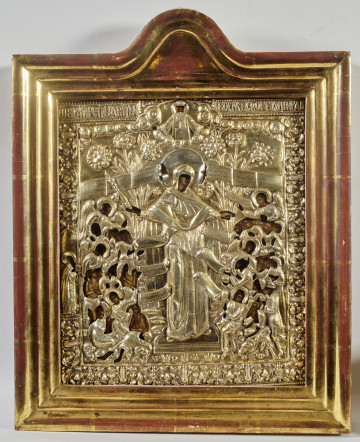
koniec XVIII wieku
Castle Museum in Łańcut
DISCOVER this TOPIC
Museum of King Jan III's Palace at Wilanów
DISCOVER this PATH
Educational path