





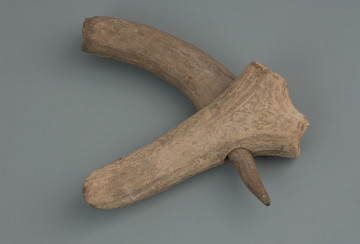
Punch
9600 p.n.e. — 4100 p.n.e.
National Museum in Szczecin
Part of the collection: Stone Age
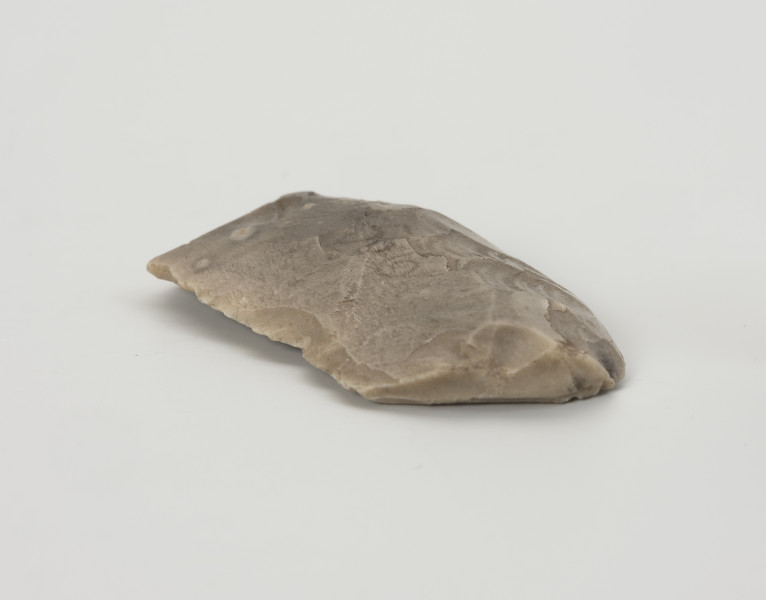
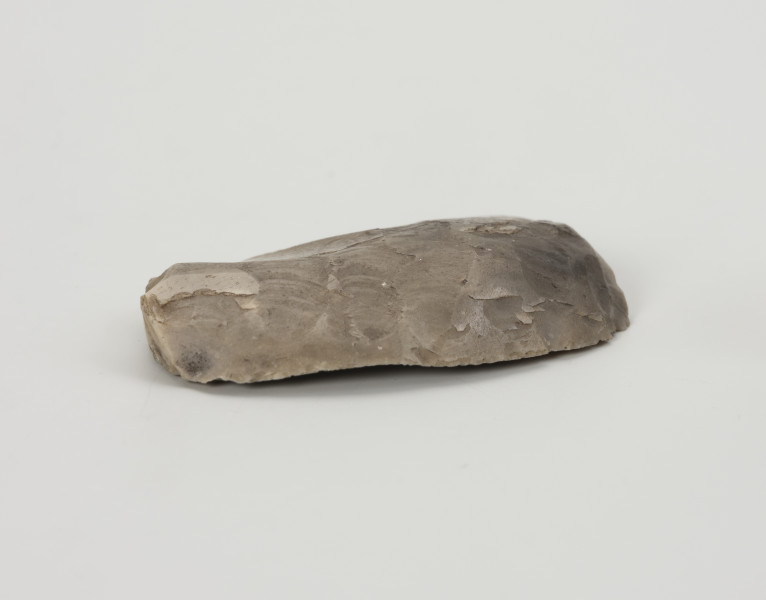
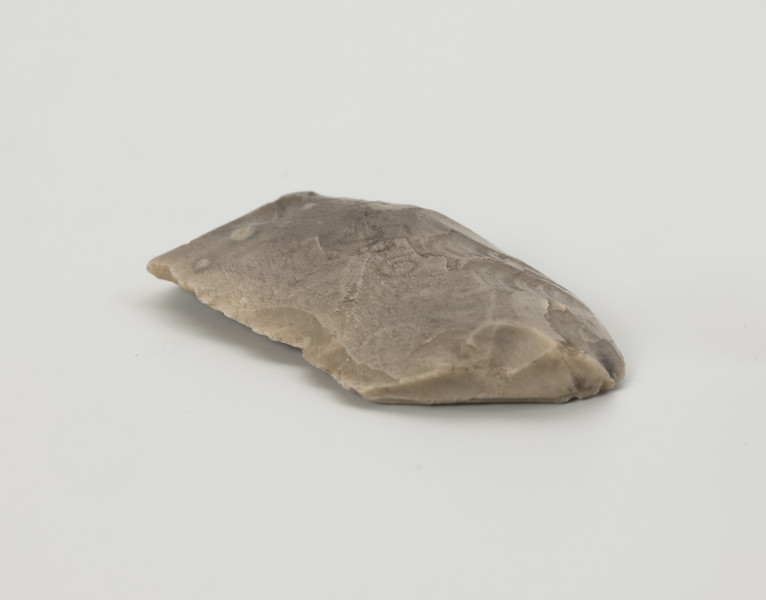
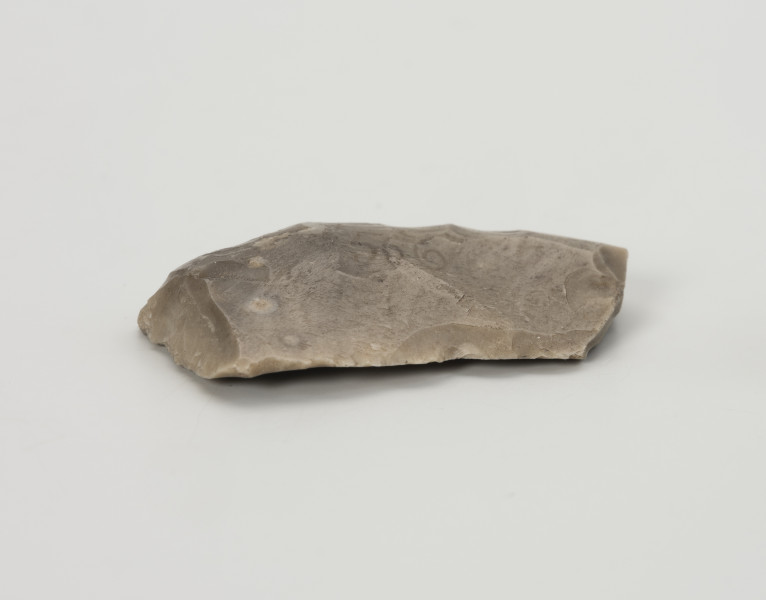
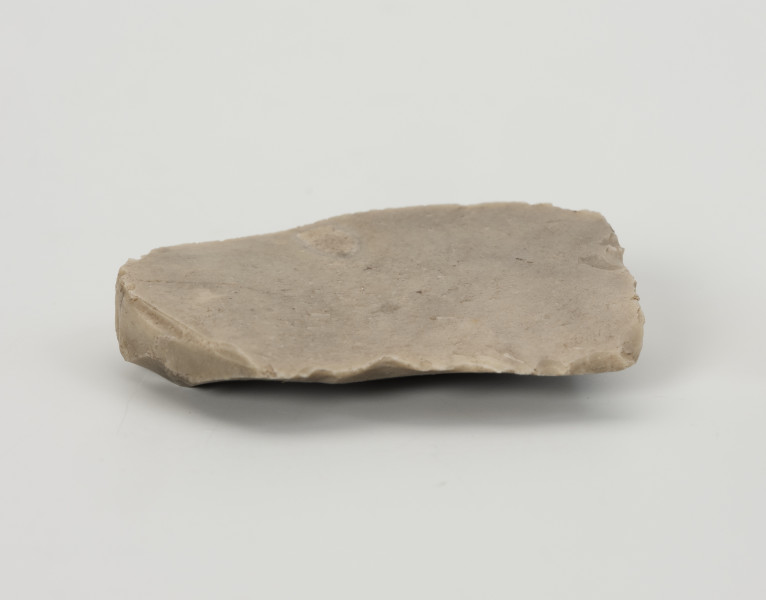
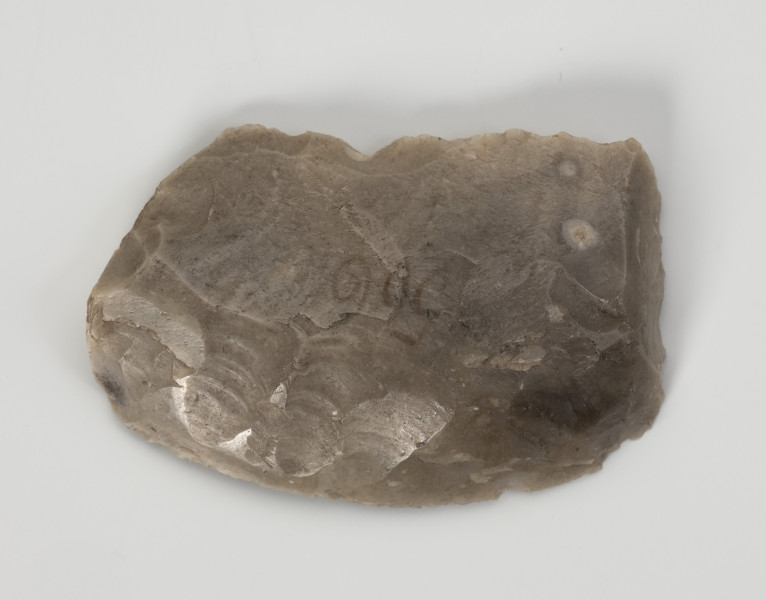
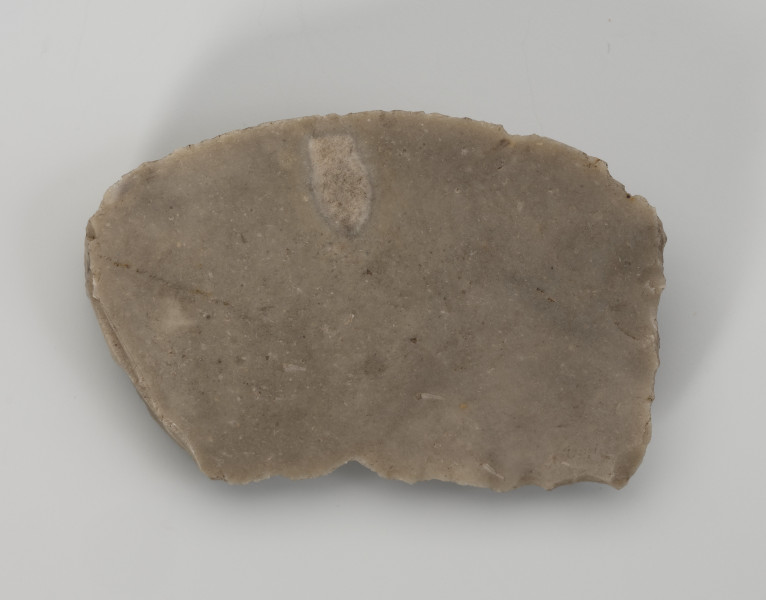
The date and circumstances of the discovery of the presented scraper are unknown. However, it is known to come from Mścięcino, formerly the German village of Messenthin, now located within the city limits of Police and Szczecin. An early inventory number and a faint marking on the surface indicate that the object was part of the pre-war collection of the Pommersches Landesmuseum Stettin. The same number appears on artefacts from a small group of items from various phases of the Stone Age, suggesting that they originate from a mixed, multi-cultural site. The scraper was made on a fragment of a flake struck from a high-quality Cretaceous flint. As the proximal end is missing, it is not possible to determine the striking technique used. The most interesting feature of this object is the presence of ground surfaces on the dorsal side. This clearly shows that the flake was removed from a core shaped on a ground Neolithic axe. Unfortunately, the fragment is too small to allow for a more precise cultural attribution. Reworking axes into flint cores was a phenomenon observed only among some Neolithic communities in Pomerania and neighbouring regions. However, this method of raw material use was widespread in areas such as central Sweden and Norway, where flint did not occur naturally or was only available in poor-quality forms. Michał Adamczyk
Author / creator
Object type
scapers (flint tool)
Technique
knapping
Material
chalk flint
Origin / acquisition method
acquisition
Creation time / dating
Creation / finding place
Owner
The National Museum in Szczecin
Identification number
Location / status
9600 p.n.e. — 4100 p.n.e.
National Museum in Szczecin
7800 p.n.e. — 7000 p.n.e.
National Museum in Szczecin
9600 p.n.e. — 5400 p.n.e.
National Museum in Szczecin
DISCOVER this TOPIC
Museum of King Jan III's Palace at Wilanów
DISCOVER this PATH
Educational path