

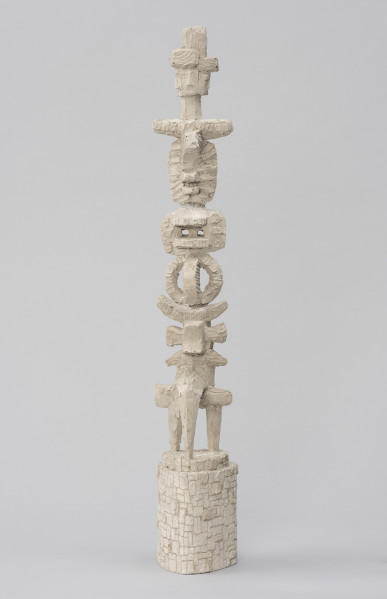
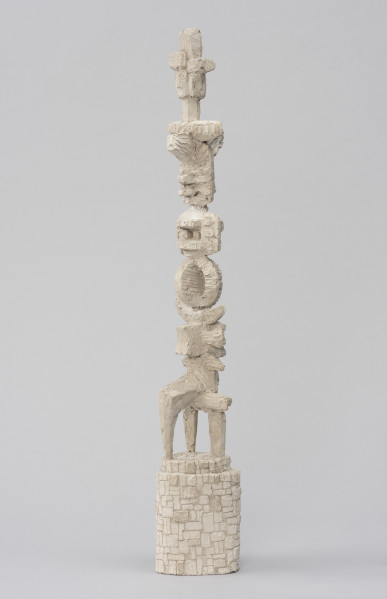
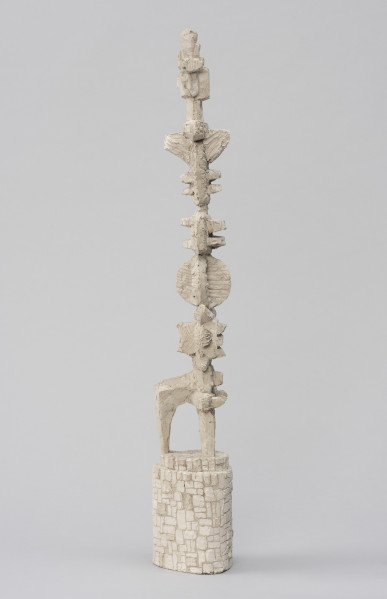
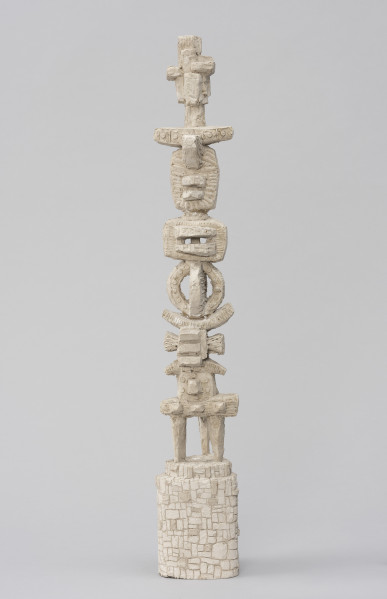
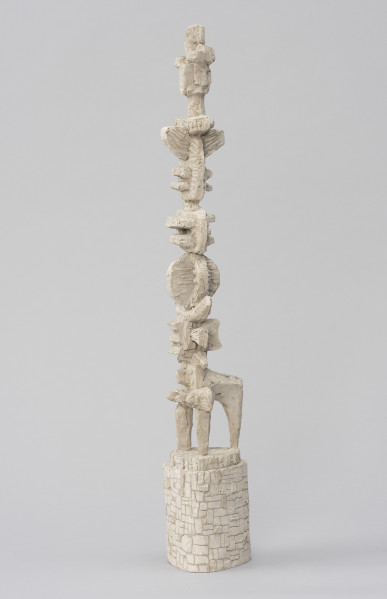
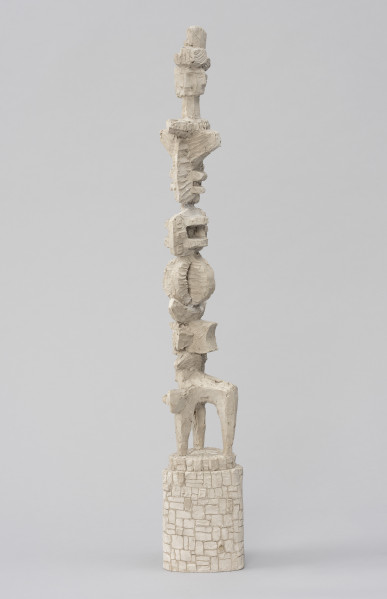
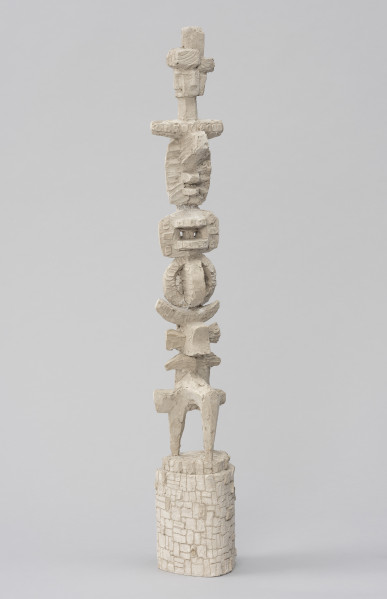
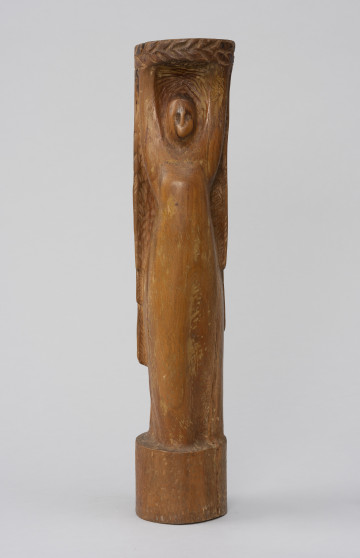
Harvest wreath
circa 1957
National Museum in Szczecin
Part of the collection: European classics of modernity
Born in Kiev, Sławomir Lewiński was artistically trained in Warsaw between 1940 and 1944. He attended the studios of avant-garde painter and stage designer Jan Golus (1895-1964), animalist sculptor Stanisław Komaszewski (1906-1945), fresh graduate of the Municipal School of Decorative Arts Jerzy Jarnuszkiewicz (1919-2005) and renowned statue maker Zofia Trzcińska-Kamińska (1890-1977). At the same time, he studied at the clandestine Faculty of Architecture of the Municipal Building School under Lech Niemojewski and Bohdan Lachert. It was then that he came into contact with the Serbian Jan Dymicz, who was able to pass on Lewińsky's Slavophile interests, directing his attention to the contemporary work of his multi-ethnic homeland.
Pan-Slavic motifs became particularly popular during the construction of the new European order after the Second World War. Polish music, literature, visual arts and theatre alluded to indigenous mythology, while after 1956 the primitive form, deliberately simplified in an early fashion, allowed the effect of 'patriotic' modernity to be achieved.
Lewiński took up the theme of the god Svetovit several times, constructing slender, semi-abstract idols. He probably derived this stylisation from a statue discovered in 1848 in the Ukrainian Zbruch, which soon found its way into the permanent exhibition of the Kraków Archaeological Museum. The four-faced pillar influenced the work of modern sculptors from that milieu: Maria Jarema (1908-1958), Stanisław Plęskowski (1934-2001), including Stanisław Rudzik (1939-), who settled in Szczecin. Like the latter, Lewiński also used idol compositions as urban visual accents - at the quatera of distinguished Szczecinians in the Central Cemetery or the entrance to Stefan Żeromski Park. They marked the boundaries of Polish possession on post-German territory, creating the myth of the Recovered Territories.
Szymon Piotr Kubiak
Author / creator
Object type
sculpture
Technique
narzut, modelling
Material
gypsum
Origin / acquisition method
donation
Creation time / dating
Creation / finding place
Owner
The National Museum in Szczecin
Identification number
Location / status
circa 1957
National Museum in Szczecin

1962
National Museum in Szczecin
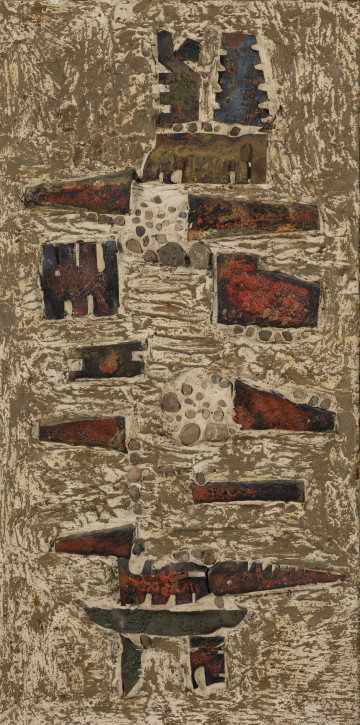
prawdopodobnie 1958 — 1959
National Museum in Szczecin
DISCOVER this TOPIC
National Museum in Lublin
DISCOVER this PATH
Educational path