

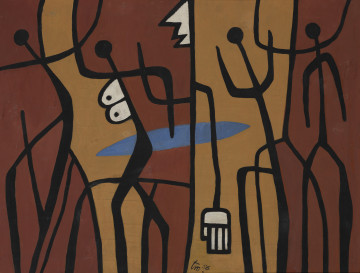
Dance
1956
National Museum in Szczecin
Part of the collection: European classics of modernity
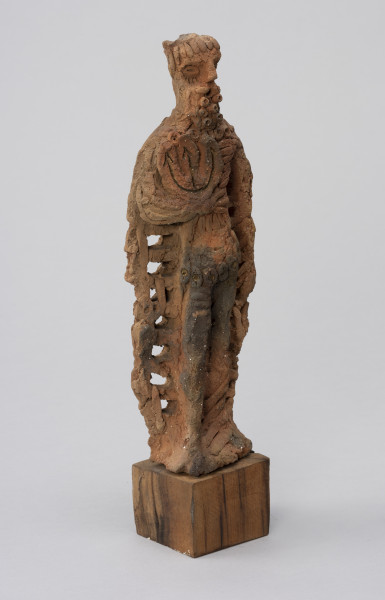
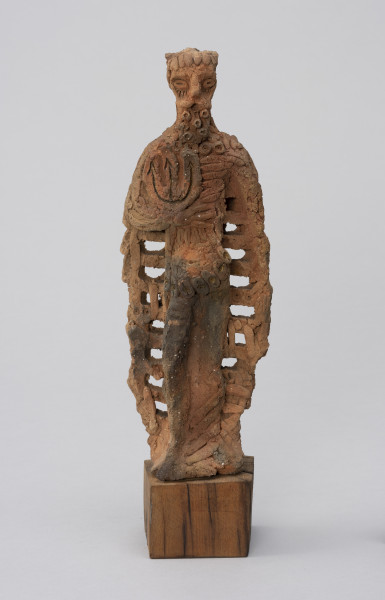
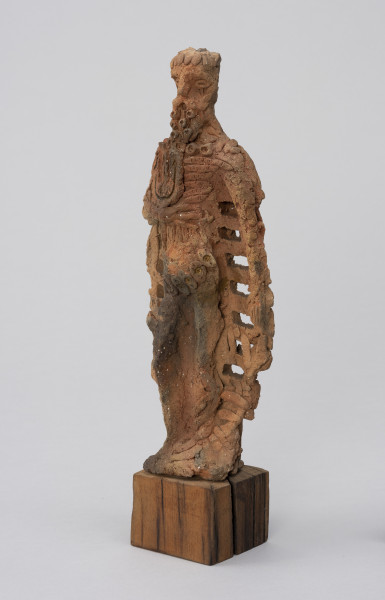
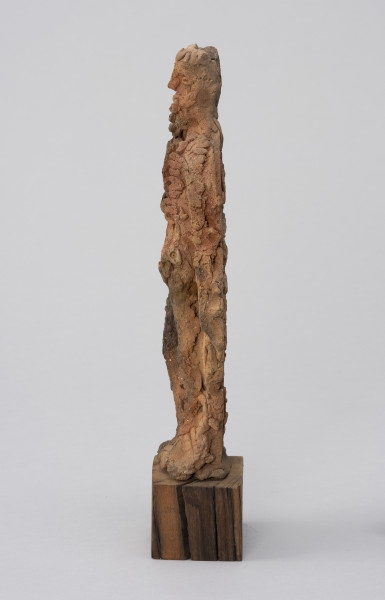
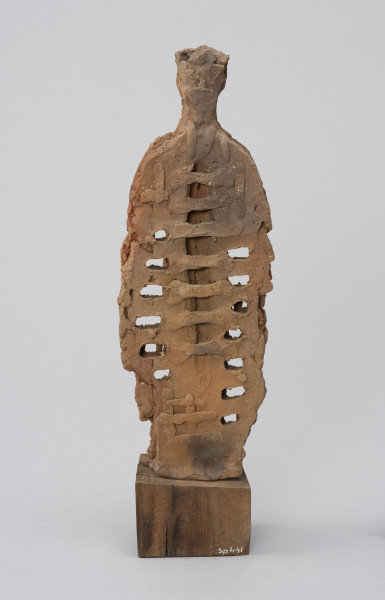
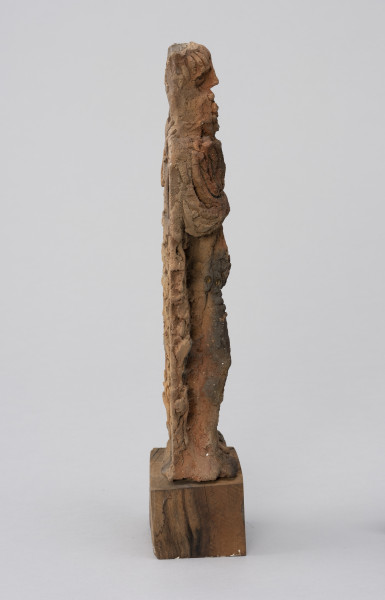
A return to the Baltic was an important slogan of the cultural policy of the Second Republic, even though it had only 147 kilometres of coastline. When, after the end of the Second World War, Poland's maritime identity was based on lands from Western Pomerania to Masuria, the Baltic deities gained an even more important rank in the local pantheon of state-forming imagery. Literature, music and theatre have been keen to invoke the names of the Slavic patron saints of the harsh North since the Romantic era.
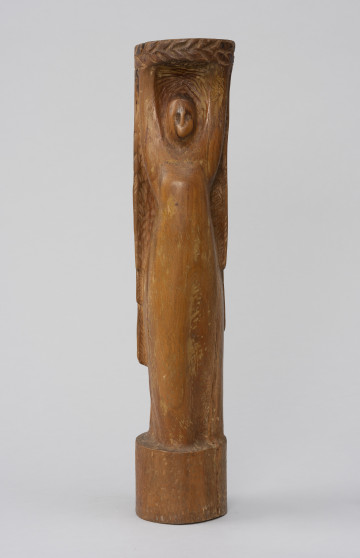
The high position was held in particular by Polabian Svetovit, sometimes identified with Rugiaevit (Rugiaeuit) and Triglav, as well as with the Ruthenian Perun and the Baltic Perkun. Visual artists imagined them as lost early sculptures with a primitive, naive form. Initially, they could only rely on verbal accounts from the Middle Ages, which included descriptions of fortresses dominated by a temple with a colossal statue. Discovered in 1848, a statue from the Ukrainian Zbruch, interpreted as Svetovit, was quickly associated with this type of artefact. Iconography at the time combined a three-tiered totemic pole with four faces with fantastic images of Svetovit or Triglav. The latter was worshipped in multicultural Wolin, inhabited by newcomers from the South, who saw in the northern deity their own ruler of the seas: "Neptune splits there in a threefold form: for this island is surrounded by three sea waters," wrote the 11th-century canon, Adam. The result of syncretic culture also seems to be the numerous depictions of Neptune or Poseidon by Sławomir Lewińsky – complete with Greco-Roman stature and attributes, but primitive in a Slavic manner.
Szymon Piotr Kubiak
Author / creator
Object type
sculpture
Technique
modelling, firing
Material
ceramic
Origin / acquisition method
legal transfer
Creation time / dating
Creation / finding place
Owner
The National Museum in Szczecin
Identification number
Location / status
1956
National Museum in Szczecin

1962
National Museum in Szczecin
circa 1957
National Museum in Szczecin
DISCOVER this TOPIC
Museum of King Jan III's Palace at Wilanów
DISCOVER this PATH
Educational path