

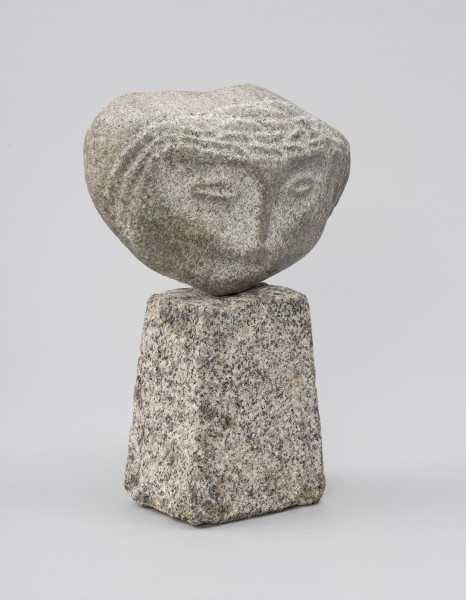
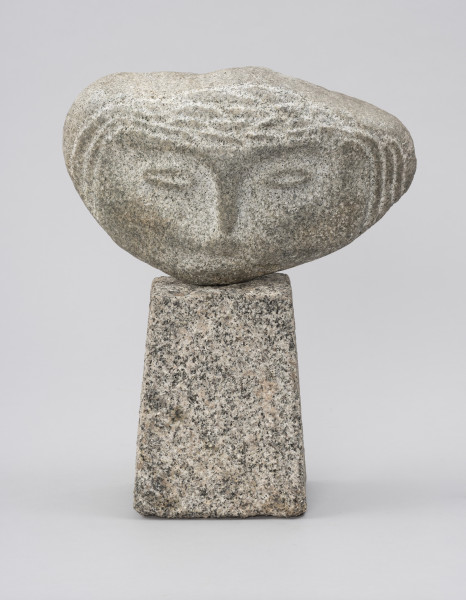
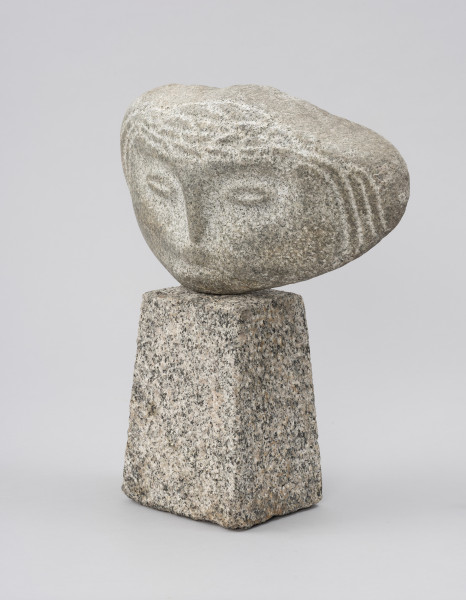
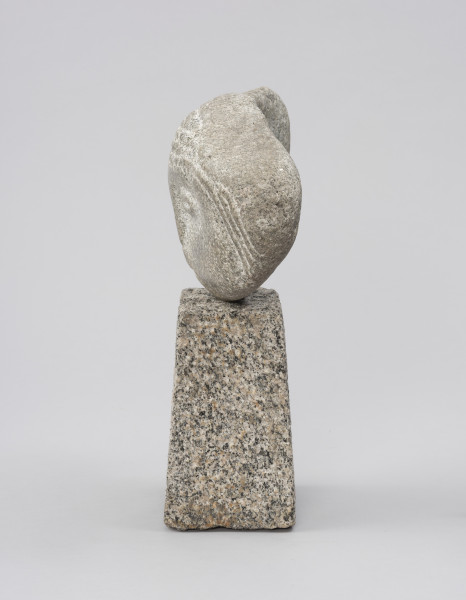
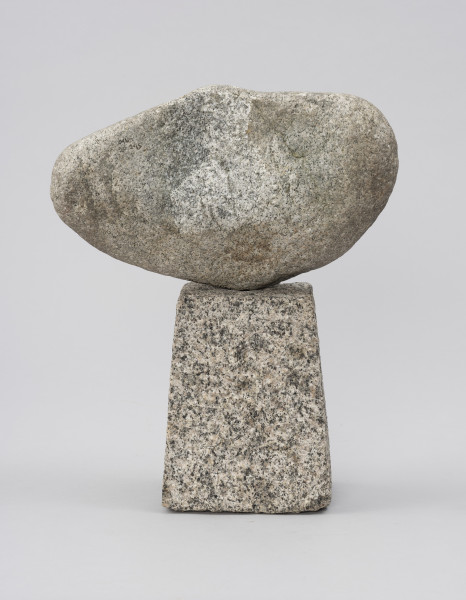
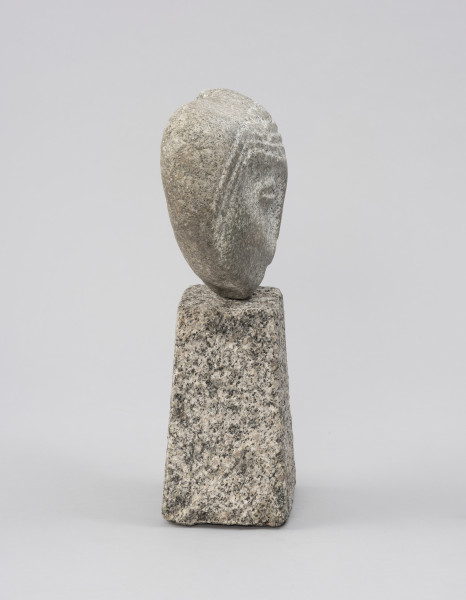

Early Slavic Woman I
between 1957 — 1960
National Museum in Szczecin
Part of the collection: European classics of modernity
The sculptor Sławomir Lewiński, having arrived in Szczecin from Bydgoszcz in 1946, lived in a double German villa near the Arkona Forest. The artist's closest neighbour was Tadeusz Wieczorowski (1904-1970) – a former colleague of Józef Kostrzewski (1885-1969) from the University of Poznan, a member of the pre-war archaeological expeditions in the newly discovered "Polish Pompeii" in Biskupin. Wieczorowski, who had been employed at the Bydgoszcz Museum just before the war, headed the Office of the District Commission for the Investigation of Nazi Crimes there from 1945. In 1947 he was appointed delegate of the State Archaeological Museum in Warsaw for the Szczecin Voivodship and curator of the Prehistory Department of the City Museum in the capital of Western Pomerania. He participated in the opening of the ducal sarcophagi in the castle, the study of the oldest relics of its walls and fragments of the wooden buildings of the castle and the Slavic period settlement. As head of the Archaeological Station (from 1954 of the Institute of the History of Material Culture of the Polish Academy of Sciences) he led excavations as part of the Programme for Research into the Origins of the Polish State.
Undoubtedly thanks to his friendship with Wieczorowski, archaeological inspirations appeared in Lewiński's work as early as the 1940s, and around 1960 they resulted in a series of full-plastic heads, idol statuettes and archaic relief plaques with which the arcades of the north wing of the rebuilt Gryfit residence were decorated. The fieldstones in which Lewińsky forged the images of the early Slav women were his favourite sculptural material at the time. Developed thousands of years ago by the forces of nature, they allowed artistic creation to be limited to minimal interference. The interest in this noble yet austere medium has sometimes been explained as a desire to unwind the plaster modelling technique common during the period of socialist realism.
Szymon Piotr Kubiak
Author / creator
Object type
sculpture
Technique
dłutowanie, grinding
Material
granite
Origin / acquisition method
legal transfer
Creation time / dating
Creation / finding place
Owner
The National Museum in Szczecin
Identification number
Location / status
between 1957 — 1960
National Museum in Szczecin

between 1957 — 1963
National Museum in Szczecin
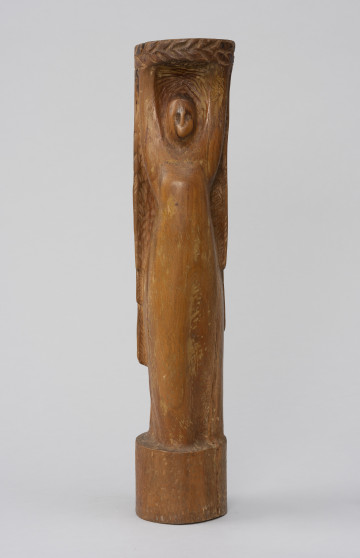
circa 1957
National Museum in Szczecin
DISCOVER this TOPIC
Museum of King Jan III's Palace at Wilanów
DISCOVER this PATH
Educational path