

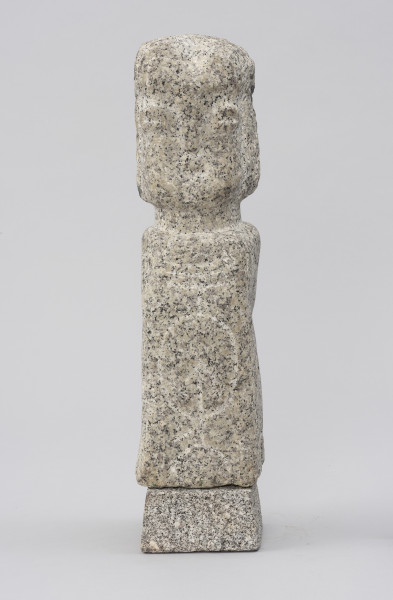
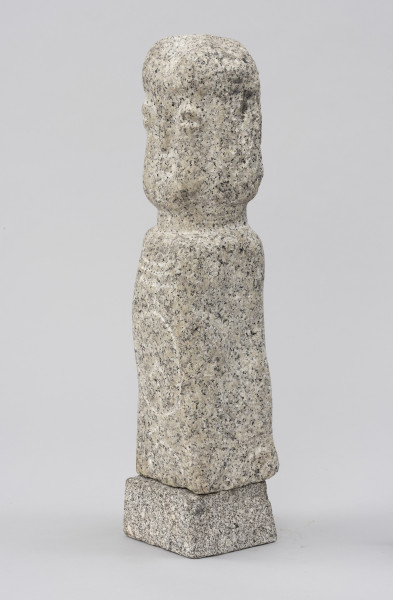
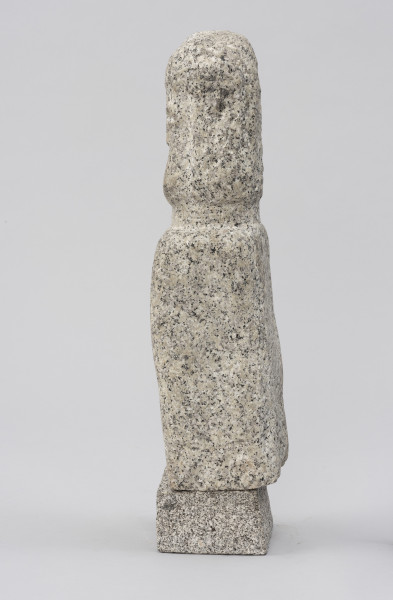
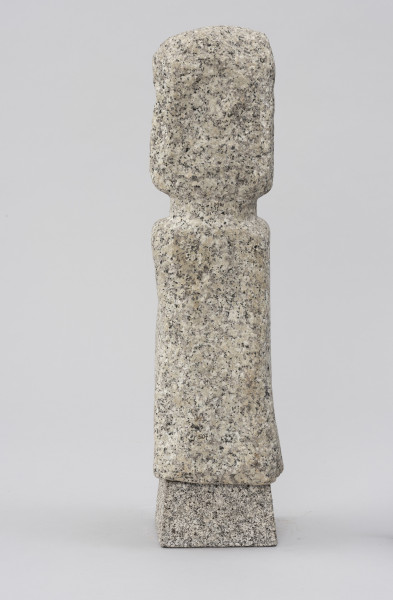
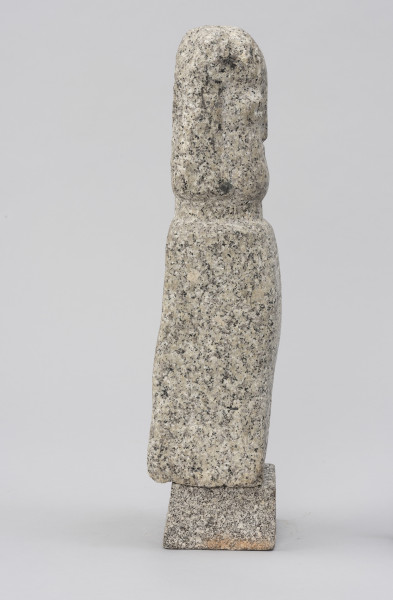
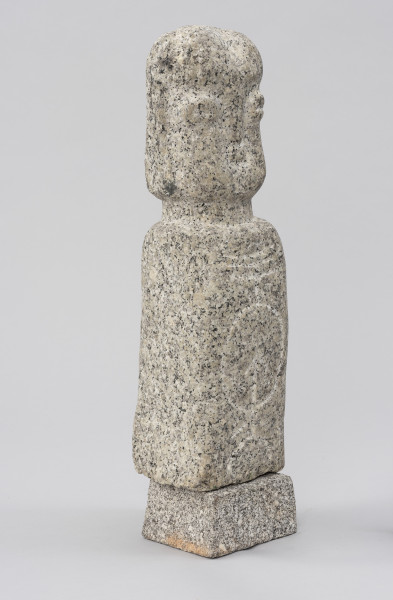
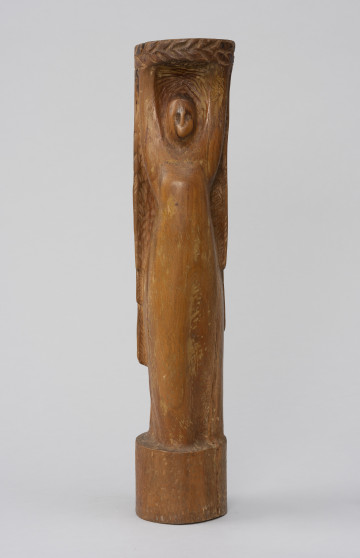
Harvest wreath
circa 1957
National Museum in Szczecin
Part of the collection: European classics of modernity
Born in Kiev, Sławomir Lewiński underwent his artistic training in Warsaw between 1940 and 1944. He attended the studios of avant-garde painter and stage designer Jan Golus (1895-1964), animalist sculptor Stanisław Komaszewski (1906-1945), fresh graduate of the Municipal School of Decorative Arts Jerzy Jarnuszkiewicz (1919-2005) and renowned statue maker Zofia Trzcińska-Kamińska (1890-1977). At the same time, he studied at the clandestine Faculty of Architecture of the Municipal Building School under Lech Niemojewski (1894-1952) and Bohdan Lachert (1900-1987). It was then that he came into contact with Jan Dymicz (1877-1945), a Serbian painter active in the capital after the outbreak of war. Slavophile interests, not unfamiliar to Polish culture of the 1920s and 1930s. could be conveyed to Lewińsky by the latter artist in particular, directing his attention to the contemporary work of his multi-ethnic homeland.
Pan-Slavic motifs became particularly popular during the construction of the new order after the Second World War. Polish music, literature, visual arts and theatre alluded to indigenous mythology, while after 1956 the primitive form, deliberately simplified in an early fashion, allowed the effect of 'patriotic' modernity to be achieved.
Lewiński was keen to address the subject of Slavic gods – either nameless or specified in the title. Two representations of Svetovit (MNS/Sp/1930 and MNS/Sp/1931) and Lela (Lelum) and Polela (Polelum) were created this way. The Eastern European counterparts of Kastor and Pollux, mentioned by the Renaissance geographer and historian Maciej Miechowita, gave flight to the imagination of 19th century writers: Juliusz Słowacki, Walery Przyborowski, Stanisław Wyspiański. Lewiński depicted his heroes in the manner of primitive statues discovered in the ancient lands of the Prussians, Scythians and Slavs.
Szymon Piotr Kubiak
Author / creator
Object type
sculpture
Technique
cutting, grinding, curving (engraving)
Material
granite
Origin / acquisition method
legal transfer
Creation time / dating
Creation / finding place
Owner
The National Museum in Szczecin
Identification number
Location / status
circa 1957
National Museum in Szczecin

between 1957 — 1963
National Museum in Szczecin

1972
National Museum in Szczecin
DISCOVER this TOPIC
Museum of King Jan III's Palace at Wilanów
DISCOVER this PATH
Educational path